
Exclusive Interview with Xianzi:
“If I Were Zhu Jun, I Would Also Say I Believed in the Law.”
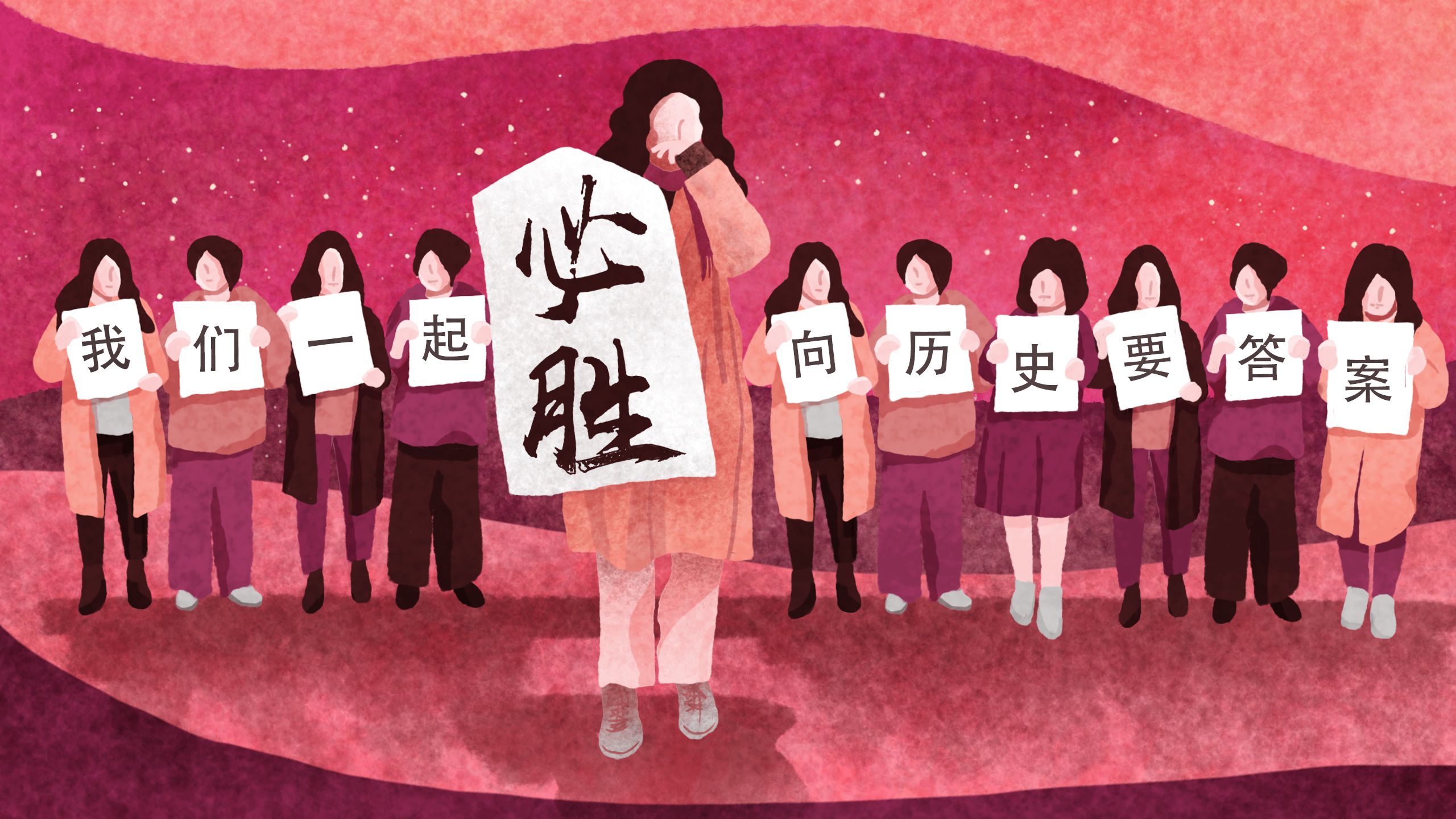

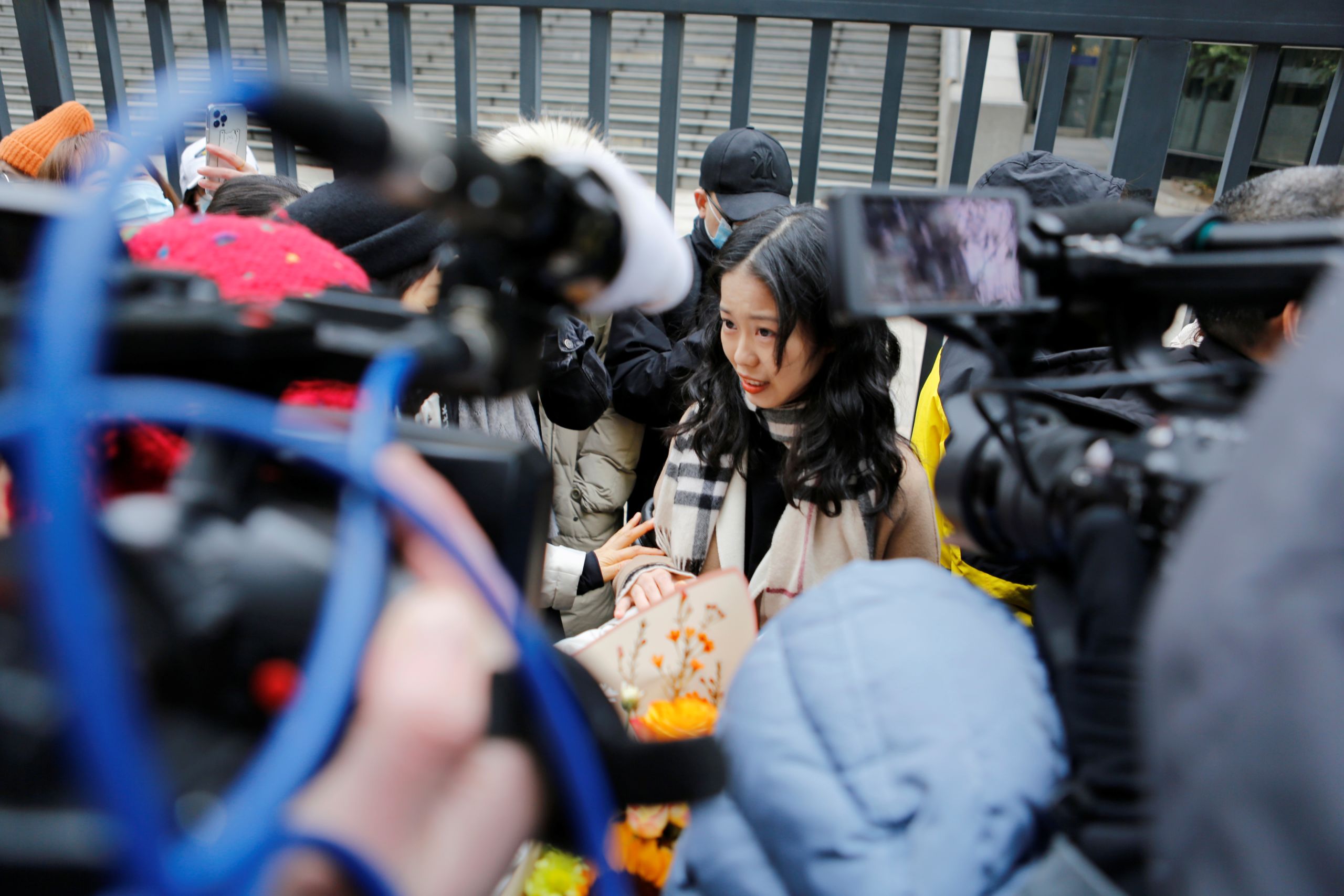
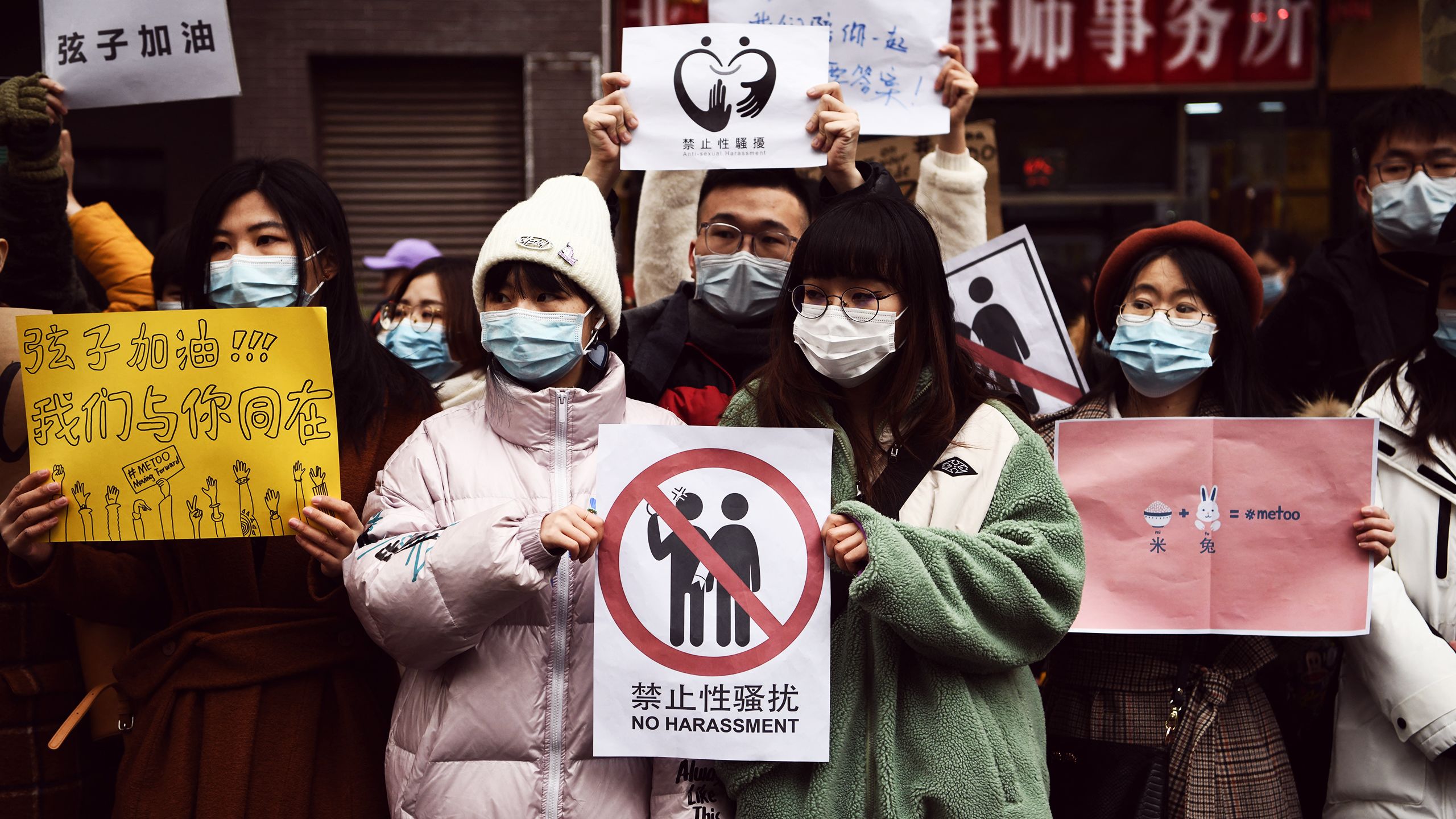
OOn Dec. 2, 2020, the case Xianzi v. Zhu Jun was held in Beijing Haidian District People’s Court, a dispute over liability for sexual harassment and harm. The trial was not open to the public, but on the first day, over a hundred supporters gathered outside of the court to express their support for Xianzi. This group of people, each holding an individual sign with a single character, displayed the slogan "We ask history for the answer." Xianzi received even more attention online, with at least five "live broadcasts;" many netizens hand-wrote notes and took photos showing support.
This became a historic moment in the post-MeToo feminist movement. While waiting for the next court session, we interviewed Xianzi.
WhyNot: Not long after the trial concluded, Ideal Journalist (@oneoutstandingReporter) wrote the article "Forcing Open the K127 Door––A True Investigation of the Zhu Jun 'Sexual Harassment' Case," which brought a wave of public support for Zhu Jun, and you came under attack. How did you feel after reading the article?
Xianzi: I didn’t feel anything. I probably scanned the article once; he hinted that Mai Shao and I are foreign forces. Witnesses on Zhu Jun’s side seem to have accepted interviews, and Zhu Jun also accepted an interview, and the post-trial heap of subjective judgements have nothing to do with the case.
I had also previously written an article, which clearly talked about what happened in that makeup room as it happened. Xiao Meili helped me write it, and that night when it came out, I knew Ideal Journalist would respond to that article.
But I myself am not really concerned with how others see this matter. When many people trust you, you don’t need to spend time on those who don’t, like those above. I want a dialogue with those people who support the MeToo Movement. They support gender issues, and are more willing to understand different cases. There are many people who have gone through a MeToo moment and come to understand these gender issues - this is complementary. In this kind of polarized online environment, I do not anticipate all people will understand or support me.
WhyNot: Recently, when the case against Deng Fei was lost, Zou Sicong said the experiences of seeing events as a reporter, and then being a person caught up participating in a court hearing, were very different. On your pathway to pursuing litigation, did you have any strong emotions? Did you have any places that made you really struggle, where you had to take more time and energy to cope?
Xianzi: That case’s circumstances were very unjust because it placed the reputational damage and the burden of proof on He Qian, the girl who exposed Deng Fei’s sexual harassment. The burden of proof for the prosecution also was on her. So it doesn’t matter if you are the plaintiff or the defendant - when you are the one who was sexually harassed, you must endlessly provide proof, and the other party has it pretty easy. He only has to pour dirty water over you endlessly to smear your reputation, and he’s fine.

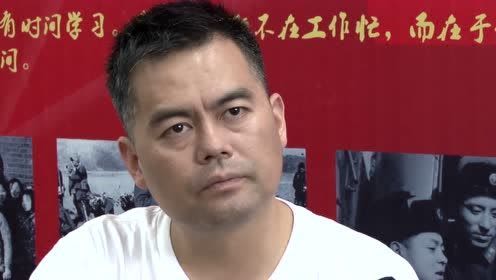
Deng Fei (Web image)
Deng Fei (Web image)
The harassment took place in a closed room, and after I reported the incident, it didn’t matter if it was DNA or the inquiry at the time, neither were done properly. In this process, you don’t have a way to prove on your own what happened in the room. The call for so-called proof is that you come up with audio and video evidence - but there is no way I would have this type of thing - so how do I know I have been sexually harassed?
So when you are in the process of suing, you cannot come up with the evidence the court wants. The court wants evidence that can satisfy a criminal case, for example audio or video recordings from the scene or a DNA test. If you don’t have this, as long as the other party doesn’t agree, doesn’t admit anything, then you have no way to prove yourself.
You have to spend a long time showing that your own character is normal, that you are in a stable man-woman relationship, that you are a woman who treats man-woman relationships with care, that you are not out for fame or victory, that you are not entrapping the other party. And you have to spend a lot of effort to prove these things by yourself.
In court I had to say that I had been with my boyfriend for five years, that this was my first serious relationship with a man, and that my boyfriend’s family situation was not of high standing ––meaning I was not with my boyfriend for money and that my overall relations with men and women were fine. You have to say all of this in court. My experiences in society are very simple, but in the public arena, the label "foreign forces" is an excuse to shut you up –– it just shuts you up instantly. Then they blame you for hyping everything, and hint that your relations with men are too close and say you’re delusional. The other party can continue to endlessly pour dirty water over you and smear you. Deng Fei and Zhu Jun can completely avoid the truth, and choose not to participate or to admit a thing, and you don’t even get the chance to ask them anything. Ideal Journalist is now hinting that Mai Shao and I are foreign forces, and Zhu Jun is retweeting this. Is there anyone who will accuse him of having no principles as a result of this? No one will ask if foreign forces have anything to do with his sexual harassment.
Deng Fei lied in court, saying he did not know He Qian. But it was as if the court did not have any respect for ethics, no matter how low amoral he appeared to be. On the contrary, you (as the victim) have to spend a ton of energy to prove you are a perfectly moral person and are completely unflawed in order to take the ongoing attacks from the other party.
Our case is also facing procedural injustice. In 2014 when I reported the case, the police went to my parents and that itself was unjust.
From my point of view, you are not confronting the person, whether it is Deng Fei or Zhu Jun; behind them is a powerful society, which protects men, avoids talking about sexual violence, and deliberately suppresses victims. If you confront this, it will be completely detrimental to you, structurally and culturally. Structurally, you will encounter many injustices in the process of handling the case, including the judge’s ruling on your freedom of speech and the reputation of the other party. The standards considered are very different. Culturally, the moral requirements for both parties are different. There are no moral requirements for the accused man, and the moral requirements for the accuser are infinitely high, far exceeding the price you should pay for accusing someone of sexual harassment.
I think most cases of sexual harassment are very exhausting. You enter this system in the hope that you can gain dignity, but when the other party keeps attacking you, you actually no longer have personal dignity, and instead this process endlessly wears your dignity down.

WhyNot: So even if women try their best to prove themselves, it may not be of much use in court. In other words, in courts and in the social culture as a whole, it is assumed that women have a very high obligation to prove their innocence?
Xianzi: Maybe Zhu Jun is a special example because society has not imposed male moral requirements on him. Instead, it is a moral standard for the host of the CCTV Spring Festival Gala, so perhaps his personal image will be affected after the criminal charges appear.
But what do you say about Deng Fei, Lei Chuang, and people like Liu Meng? Right now, the development of Deng Fei's public welfare foundation is on fire, and Liu Meng continues to do his thing. Allegations of sexual harassment have had no effect on them.
Another reason is that everyone feels that sexual harassment is not a big deal. Many people say that after being accused of sexual harassment that person has a "social death", which is actually not at all likely. You are in this social environment, for example, where you hear a man making a dirty joke at the dinner table, or you see a man forcing a woman to drink alcohol, everyone sees him –– but he will not die in the social sense. No one thinks those instances are serious.
When you are an intern, if your teacher wants to touch you, or tell you something inappropriate, do you want to make a fuss about it? It’s unnecessary. He will feel that sex for women is some kind of resource. When you are harassed, it is not that you are being harassed, but that you are using your gender to gain something. Possibly one of your teachers will treat you better because of this harassment; possibly as the new person in an office , you’ll have dinner with the boss, and this is beneficial to you.
So in these kinds of situations, when women spend energy investigating sexual harassment, other people fundamentally do not understand. They think you are abnormal. They think for sure that you must have some ulterior motive, for sure there must be some other purpose –– is it that you want to harm the man?
As for these men’s own views of sexual harassment, they feel that it’s like going out for a drink with you, and in a moment of carelessness a glass breaks and water splashes all over you ––that it’s just a small incident. They don't think this is a matter that has offended your personal dignity. They would say "Oh my god, if he touches you for a second, will you just kill him on the spot?"
A man cannot be criticized. If you want to criticize him, you will kill him on the spot. Even if he cheats, even if he abandons his wife, even if he publicly keeps a mistress, or a group of concubines, he will not be criticized. Even if he makes huge mistakes in business, if he forces employees to work twelve hours a day six days a week (996), he will not be criticized. Ok then, now tell me if you (as a woman) say a dirty joke to a woman, or if you touch a woman, you will be criticized –– men generally cannot understand this and will think that is abnormal.
First of all, people will not judge a man’s morality, and on top of that, they will not use the possibility of him sexually harassing others as a way to judge a man’s morality. So they have no way to understand your attitude towards this problem, understand your emotions, and understand why so many people support you. The only logic they can understand is that you must be a foreign power.
WhyNot: Before the court’s session, you told your supporters not to lose hope in the MeToo Movement over this case. But your previous interview mentioned Lin Yihan, emphasizing the need to pay attention to individual cases and to value personal experiences. How do you understand the relationship between individual MeToo cases and the overall movement? Some people say that you have become a representative of the movement, or at least the person who has garnered the most attention. If the public's attention to the entire movement is focused on you, then how do you deal with your own relationship to the movement as a whole?
Xianzi: Probably because Zhu Jun is very famous, everyone also pays close attention to me, and I also participate in the public arena a lot. They will regard me as a representative of MeToo, but I think if you look carefully, everyone implicated in different cases have paid a lot. In fact, none of those involved have paid for their own affairs only.

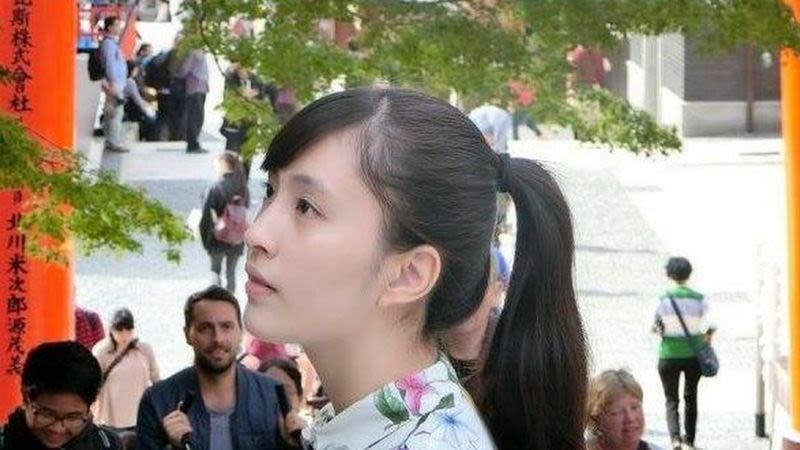
Taiwanese author, Lin Yihan, committed suicide shortly after the publication of her novel Fang Si-Qi's First Love Paradise, which tells the story of a teenage girl being sexually abused by her tutor. There were speculations that the story implies back to Lin herself. (Source: Facebook / Lin Yihan)
Taiwanese author, Lin Yihan, committed suicide shortly after the publication of her novel Fang Si-Qi's First Love Paradise, which tells the story of a teenage girl being sexually abused by her tutor. There were speculations that the story implies back to Lin herself. (Source: Facebook / Lin Yihan)
Everyone has paid dearly. It surpasses the sexual harassment itself and the pain of litigation. Everyone is willing to bear it, or maybe it’s because each party has a sense of social responsibility to do this. Especially when it comes to litigation, they will have a strong sense of social responsibility.
If I always appear in the public domain, does it mean that MeToo is being discussed all the time? I have not disappeared, and all along have been involved in MeToo as a personal witness to gender-based violence. I still hope that everyone can realize that there are actually many people caught up in these issues who have stood up. Especially when these victims are willing to connect with others, they are constantly reminding everyone that these events are actually related. You encounter gender-based violence not because you are unlucky, but because of society, or the law, or the power structure. These cause the personal dignity of many weak people to be easily violated and not taken seriously.
I hope everyone does not see this case as only one specific case, but instead connects it with others to see that a regular person was caught up in the middle of a common circumstance, and that is why they met with such a terrible situation.
Whether or not I am a symbol for MeToo, or later become a symbol of defeat, my biggest hope is to make everyone think about the victim implicated in these situations. You won’t just be thinking of that person; you'll also think of MeToo. You’ll end up thinking about all those people who stood up, and their situations, their efforts, and their hopes.
WhyNot: From an individual to the public, you not only are involved in MeToo, but you have broken through into public opinion and have the status of an activist. It seems like others cannot break into so many fields. What contributed to your transformation? What did it feel like to go from an implicated party in a lawsuit to a public figure?
Xianzi: It’s just to say, I probably made my life really public because I chose to make online (action) a part of my life.
But it was like that with He Qian. We were all working on Jingyao’s case at the time, and He Qian had been helping all along. At the time, we had about three or four people in our group, and along with a close friend, then there was He Qian, Jingyao, and Huahua. We participated in many cases together.
I think it’s still hard for people to imagine what a victim of sexual harassment can do. It’s like everyone has a stereotype of victims of sexual violence, but it’s really not like what they’re thinking. Everyone has their own life, their own character, their own hopes to do certain things, and above all do not want to be immersed in an injury. Gender-based violence is only in your life in the specific moment it occurs; afterward, it affects you, but it is not your entire life.
Within MeToo are many of these people who have been hurt, and they all have other identities. Some work as lawyers, some work with the women’s federation to help others, like He Qian who was also a lawyer. Everyone was astonished ––can gender-based violence victims create a public debate online? But I think that all gender-based violence victims after encountering it, no matter if they fully come out or partially, they are willing to participate publicly because they need a process for self-affirmation.
Probably everyone who sees me, the main thing they see is the label of a gender-based violence victim attached to me. This is still a new label, but actually the way I do things and live as a regular 20-something woman who, when she had the opportunity, went to do what she had to do.
A gender-based violence victim is able to feel deep empathy for other victims’ cases as if they happened to her too. Many MeToo people, when we got to know each other––including from the Liang Gang case, the Shenzhen new recruits rape case, including Jingyao––everyone was willing to help each other. This time before the court session, they recorded me, and that recording was a form of public action because when you openly express yourself, you are supporting a person you may not know, and moreover, you are helping her carry a heavy burden.
#Here4Jingyao @XiaowenLiang17 @pinerpiner @FeministChina @theasianfmnst pic.twitter.com/3BwX5mIV2J
— Global4Jingyao (@global4Jingyao) January 10, 2020
WhyNot: I was pretty surprised by the tremendous capability you showed in this process. There is also a lot of violence and uncertainty in public spaces. For example, netizens have a lot of negative comments about sexual harassment victims and women. How do you cope and reconcile with this?
Xianzi: Due to this unexpected turn of events, I have been publicly expressing myself on Weibo since 2018. In this process many people get to know you, like you, and you make friends with some influential bloggers. You also form really strong relationships with many women; my fans include many women, including lesbians and transgender people. Everyone becomes good friends, and it’s only in this process that that can happen.
Establishing close relationships on an online world of strangers very much depends on what kind of person you are. If you go on about misfortunes, for example, probably people will generally fear you. Ideal Journalist is like that. He gains traction because of his dirty methods, and nothing more, but it is not a real capability; it’s only spouting off negative emotions. True capability is whether or not people are willing to pay the price for something.
MeToo has touched on a sore spot for many young people because it is about a person’s individual dignity, no matter male or female; it is about whether an individual has the right to protect their own body and self; it is about whether or not you truly have the right to voice your own pain. I think that on this basis, many young people regard my case as a public affair that they can participate in. In fact, this is a noble force because it is about the issue of justice itself. There are people who are willing to pay a certain price for justice. They will speak out, no matter if they risk their (Weibo) public account being blasted (deleted) or being attacked online. They will still go to support you, even when there may be a real risk.
I do not see this as a result of my own personal energy; they have their own capabilities.
I did not predict that at the end of this year I would meet with such forceful attacks, including calling me a foreign force. But in the previous two years, you establish these close relationships, and in the end, everyone comes to protect you.
If it weren’t me, it would be another woman. If she hadn’t voiced what happened online, and spent two years’ time speaking publicly, it would be much worse. How would she be able to respond to these attacks? But who like me would spend two years doing all of this? Many people do not have the circumstances that allow them to do this, and many do not have the time.
I think this is really horrible. If these kinds of attacks were normalized, then other women wouldn’t have the power to express themselves ––Jingyao is abroad and can mitigate the effects for herself, but what if it’s a vulnerable woman? She probably wouldn’t have any standing to say a single thing; this is the place of public opinion that makes me fearful. It is not only the harm to me personally, but also that they are constructing a terrorizing atmosphere.
WhyNot: In your interview you said that you discovered that your own misfortune was a kind of good fortune for others, and that you therefore believe you do not have a reason or any grounds to give up the fight against power. Why do you have this kind of feeling?
Xianzi: It is difficult to replicate the situation with Mai Shao and me. We spent two years throwing ourselves into this case. During this period, we received attention and support, regardless of whether it was support from the community or our parents and families; all were helping us with resources. And the media’s support is hard to copy.
If with all of this we were to admit defeat, if now for instance, we could no longer stand it, then who is left with MeToo? You have to be there. You cannot say that we victims all cannot make public expressions, and that MeToo doesn’t need public expression.
After Mai Shao and I stood up, many people were paying attention. We also accepted many media interviews, and met many people. After I went to Shanghai for a case, I helped that person connect with Gu Yu, and also linked up with the lawyer Luo Xiang. All of this was due to everyone paying attention to my case, only because of that attention was I able to do all of this. So now it’s very hard for me to say that I would give up, that I want to go have my own life back.

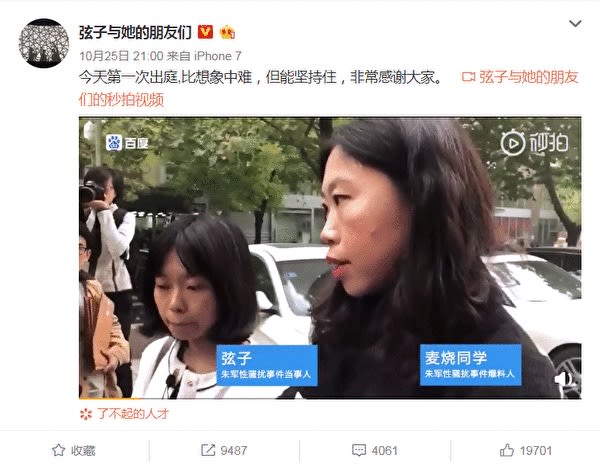
Xianzi and Mai Shao (Source: Xianzi's Weibo)
Xianzi and Mai Shao (Source: Xianzi's Weibo)
A short time ago, I watched a movie based on a true story; I think it was set in America in the 1980s, and it was called The Accused. In the movie, there was a girl out drinking who was raped by three men. These three stood in a circle and watched the rape –– and she ended up going after them with a lawsuit. This was the first American court case ever broadcast live, and this process was extremely frightening. If it were me, I’d be scared, and think "Ok, we might as well give up." But if people in the midst of this give up, a child today, in the future many years later, will still have to report a similar case to the authorities, and that grown child will face the same situation. So I think that me pursuing this case is not enough; I have not spent all of my energy yet, at the very least I want to give it a shot. I think that "giving it a shot" to me is necessary –– you cannot give up the process of experiencing this yourself.


Movie The Accused
Movie The Accused
WhyNot: You once published an article rejecting the label of feminism, which caused quite a stir in feminist circles. It was interpreted as a separation between you and feminism. Do you still have similar ideas? Where do you feel there is tension between feminism and yourself?
Xianzi: The main thing is that I cannot say I am some kind of ideologue, and I have no way to make a promise about my character like that. Say I were a feminist, I would probably have to put these concepts into practice many times in my life. But many times, I have fallen short, including in my relationship with my boyfriend, so I have no way to stand up and say that I myself am a feminist.
Also, the Internet has its own disciplinary power. When you are online, you have no way to be a perfect feminist, maybe because of your attitude toward sexual minorities, your attitude toward marriage, your attitude toward individuals in other gender-based legal cases, your attitude toward men. And all this causes you to spend a ton of energy debating with others about what a feminist really is. At present, feminism has not succeeded; we currently have not done a thing, and society still is patriarchal. But have we spent too much time discussing what a feminist is –– truly what is its significance?
Xianzi's article on rejecting the label of feminism.
I really hate this topic because when you see people stating that a feminist cannot sympathize with being gay, if you want to sympathize with individuals who are gay, you are not a feminist. If you are married, you also are not a feminist, and if you don’t say "Marriage is for donkeys" then you also are not a feminist.
To be a feminist in your own life, I think it is a process of putting things into practice, not a process of talking.
I thought when I wrote that article in 2018, everyone would think that I was cutting ties with women. But as of today, my actions have proven that I never thought of severing these relationships. As for whether I should meet everyone's expectations of me, I think it's okay, and I haven't hurt anyone.
Maybe the group of feminists on Weibo who love to discuss identity have given up trying to cure me; they don't bother to talk about me. Maybe they have realized that no matter how they insult me, I will support sexual minorities and transgender people. But think about it for yourself. Compared to the attacks by Ideal Journalist, attacks by feminists are really nothing. They still have a real bottom line. Everyone is really anxious, because in the field of public opinion, the internal anxiety of women comes from the frustration of our struggles with the patriarchy. So you have to nitpick the perfect person, and you have to keep asking everyone to be perfect.
But the patriarchy’s attack on you is not for this reason at all. It is not at all because they feel that they are in a difficult situation in society. It’s because their dominant position has been challenged, so the substance is very different.
WhyNot: After you called the police in 2014, the police went to your parents wanting you to discontinue your pursuit of justice; after the exposure of Zhu Jun, Weibo deleted posts on a large scale, and MeToo began to be suppressed on all sides. Plainclothes police also interfered with supporters at the court hearing. Do you think the pressure of public power still exists for you?
Xianzi: It exists in the judicial sense. Only in January 2019 was the legal designation "disputes regarding compensation for harm caused by sexual harassment" established. So far, of all the sexual harassment cases only one has been called this, and only Liu Meng’s case won (Xianzi points out: Just after March 8, 2020, International Women’s Day, a Shanghai ruling on sexual harassment was won by a defendant, who was awarded nearly 100,000 yuan). Is it really the case that China only has in total only one instance of sexual harassment for a year? That’s impossible. In fact, the cases for reputation rights are the same. The entire burden of proof in the court relies on exposing the person sexually harassed. But in cases in the US, for instance, if Weinstein wanted to sue others for infringing on his reputation, he would have had to prove the subjective malice of the other party himself. He would have had the burden of proof. But those of us here who speak out have a very heavy burden of proof.
Actually, whether it is a case of reputation rights or a liability dispute over sexual harassment, the law does not protect the victim or their feelings.
We hope that through our life experiences and self-exposure, even if you expose your pain in court, at least that will get everyone to think, "why has only one case won?" Is there really only one instance of sexual harassment? And besides, even in a case like Liu Meng’s that was successful, there was no compensation. Is there no need for compensation? Even including civil lawsuits of sexual harassment, there is discretionary power. In your discretionary power as a judge –– really, where is the free part of your judgment? These are things we hope we can influence.
The current victims are still stuck on the nail board. Its logic is a closed-loop kind of logic: you have no way to prove sexual harassment, and you have no way to prove that you have no way to prove it. The law will not recognize that you have been sexually harassed, and even if it were to, the law will not acknowledge that you deserve compensation. It does not give you dignity, and the more the process is like this, the less are the girls who dare to call the police and dare to talk about their experiences.
Why do many men, like Deng Fei and Zhu Jun, who says he still believes in the law –– well because the law was on their side. As a sexual harasser, just open a webpage on written judgments and you can see that all sexual harassment cases have been lost by the plaintiffs. Of all of them, only in one case did the plaintiff win. You can say that you believe in the law. If I were Zhu Jun, I would still say that I believe in the law. The law will not let the injured person win. The law requires every woman to carry a voice recorder and a pinhole camera.

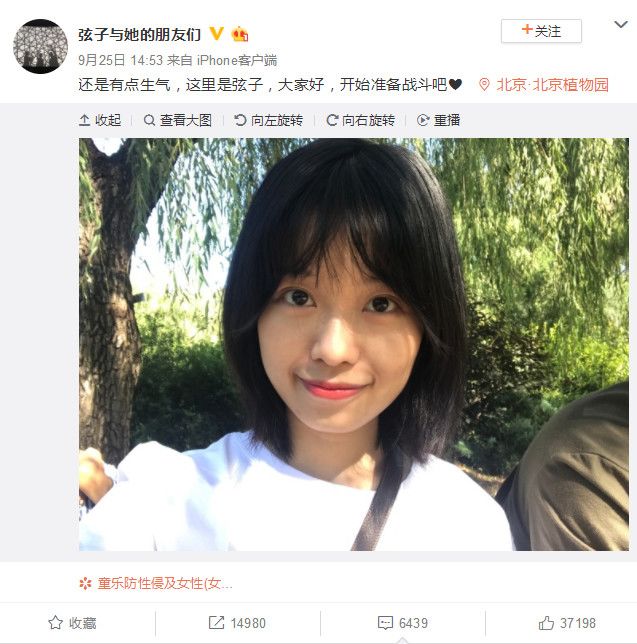
(Source: Xianzi's Weibo)
(Source: Xianzi's Weibo)

WhyNot: You and Zhu Jun both demanded a public trial. Why did the court disagree?
Xianzi: The court won't explain this to you. Including when you’re in the middle of litigation, there are only notices; you cannot get any explanations. Or there will be a very vague explanation, but it is not a real explanation.
If a woman voices her opinion during this process, she very easily is labeled a foreign influence. And everyone is unwilling to admit that justice requires progress and change. It seems that only men can mention judicial change. For example, for "legitimate defense," the previous standard was not right. After the case in Kunshan of "Brother Dragon" committing a revenge killing after an assault, it was clear that the standard of "legitimate defense" had to change. But in sexual harassment cases, you just have to mention that you are not satisfied with the sentence, and you are suddenly against the government. It seems as if women are only able to accept what is, and do not have the standing to criticize the government.
There is this saying - which started with MeToo - and it’s become a way to clear some of the dirty water thrown all over feminists to smear them. It’s "you’re pimping something" (like the Ku Wan Laboratory Weibo channel trying to discredit Zheng Churan and "Feminist Voices"). But essentially, still no one accepts a woman voicing her opinion.
They can easily turn girls (who are suing) into something else and say they are just a nuisance "provoking" government departments, just "provoking"justice, "provoking"universities, and "provoking" education departments. They still do not recognize women's claims about their rights. Men are particularly firmly locked in with the system. Like when Tan Weiwei sang a song, some at the BBC and the New York Times said he was giving a knife to foreign forces. Many people say that I lost face by accepting interviews with foreign media. I find that very strange. Every country has a MeToo movement. Whose face did I lose in the interview? Did I lose Zhu Jun's face? Is Zhu Jun's face the face of the country? MeToo is progress in any country because you know that women’s rights awareness in these countries is awakening. Without MeToo, it would be a very strange thing, and would prove that women have no way to voice terrible events. It is a good thing that we have placed MeToo into the global mainstream, but many men, and many hired Internet trolls, still say that you are a foreign power every day. I have not understood this logic. Don’t Chinese men allow women to say that they have been sexually harassed? They are tyrants who bind themselves to the image of the country, as if half of the women in China are not from this country, as if none of our women have a nationality.
WhyNot: When Ideal Journalist hinted that you were a foreign power, I didn't realize that such discourse was so common.
Xianzi: I realized this from a discussion with the police. In 2018, there was a discussion on Weibo that asked for more female police officers because many times when you report sexual harassment, there are no female police officers who can accompany you. It is male police officers who receive you and with a terrible attitude. This discussion quickly turned into (us) attacking the government. I thought it was strange at the time. Is the government all male?
They quietly admit that all rights belong to men, and men are the country. And if you dare to provoke these men, they will stand up and represent the government. There is a very cunning way of saying this. A man is very sensitive to the fact and realizes that our entire society, from culture to family, to colleges, to the workplace, is providing men with stable resources.
So whether you call for women not to marry, or you want to support gay marriage, or if you want more policewomen, or you want to fight a lawsuit against sexual harassment, a man will immediately bind himself to the country. You don't know who gave them such a big ego. But they do know that if these changes happen, it will affect their interests, so they have to beat you to react first.
This is not an exception. After being in a superior position for such a long time, they will bind themselves to those who can benefit them.
WhyNot: The climax of the MeToo Movement has passed. In the post-MeToo era, what challenges do you think the feminist movement, or victims’ rights protection, will face? What expectations do you have of the MeToo movement?
Xianzi: We are facing a collective counterattack from the patriarchy. They now use every kind of manner of speaking, and men disguise themselves as victims of the feminist movement. And then in the judicial realm, in a very short period of time, you saw a bunch of cases lost.
But I think we still have to hold on to the confidence that the status of women will certainly improve with the awakening of women, and one of the key things is that we are gradually mastering our own narrative.
Before, women actually did not have an opportunity to narrate history by themselves. This includes what kind of person you define yourself as, your own experience, for example, if you were joked about sexually, of if you were touched, which in fact is workplace sexual harassment. It was seen as because you are a woman, you should encounter these situations, they were seen very normal. And so the definition of all these narratives was controlled by men in the past. Whether it is a collective narrative of women or another, it’s always men telling the story.
But MeToo brought a huge change, and it gave women an awareness, which is that we must carry out our own narrative.
Whether it is a momentary judicial loss or an attack by the perpetrator, this narrative will never stop. Si Cong’s case was lost. I remember Zhu Xixi said that this is not He Qian and Si Cong being challenged, that it is the law, the court and Deng Fei all being challenged. We are willing to believe in her, we are willing to believe in women’s experiences, and we support women speaking out about their experiences. This constitutes our own narrative, and this is the beginning of everything. The beginning of the narrative is the beginning of everything.
If you look for the answer in history, who will give you this answer? It is not that we need to find men to ask for historical answers. We believe in women in the future. People who support gender equality in the future will give us an answer. The history we ask for is a right to record. How will the future judge what we are doing now, and how will the future judge the lawsuit we are fighting now?
In fact, MeToo is a movement of words and speaking. It encourages girls to tell their own experiences and stops us from giving the power to judge this experience to others, whether it is to the police who tell you not to file a report, or men who don’t even acknowledge what has happened, or those who humiliate the victims by slut shaming them. Whenever women start to be willing to express their own physical experiences, this is the history of women, and it is a very important beginning of a collectively written history. More and more women have this common understanding –– whether it is gender equality or feminism –– and there are more young men, men who empathize with women, and are aware of the dignity of the weak. Our most basic physical dignity is to be seen.
We didn't have the right to judge our own experience before because we couldn’t gain knowledge about these things, and the horrible experiences of women were not included in mainstream trends. So your own experience of being hurt was just your own experience of being hurt.
But I think from the start of MeToo –– and when I was talking to He Qian on the phone today –– I was saying that we must believe that our power will be mainstream in the future and we must not believe that Deng Fei will be mainstream. We are the ones who write down the question, and the other party needs to answer that question, whether it's the court or Deng Fei or Zhu Jun or the policeman I faced when I went to the police in 2014. As long as we are willing to write our own story, this is a kind of spiritual independence, independent of men, independent of the collective composed of men, you just write your own story.
All our value judgments must be reconstructed in this narrative, and your value judgments must be reconstructed in your own narrative. This is something that cannot be stopped, it cannot be attacked, and it will not be affected by current judgments. And when it has begun, there will be more and more of these narratives, which will be more and more solid, and more and more women will be willing to make their own judgments. So as far as the future is concerned, what we are doing, as long as it is true, will definitely be rewarded in the future. A true narrative must be true, and it will not be affected by current legal outcomes. So I am not very frustrated.


 Built with Shorthand