
The New Riders of the Pandemic
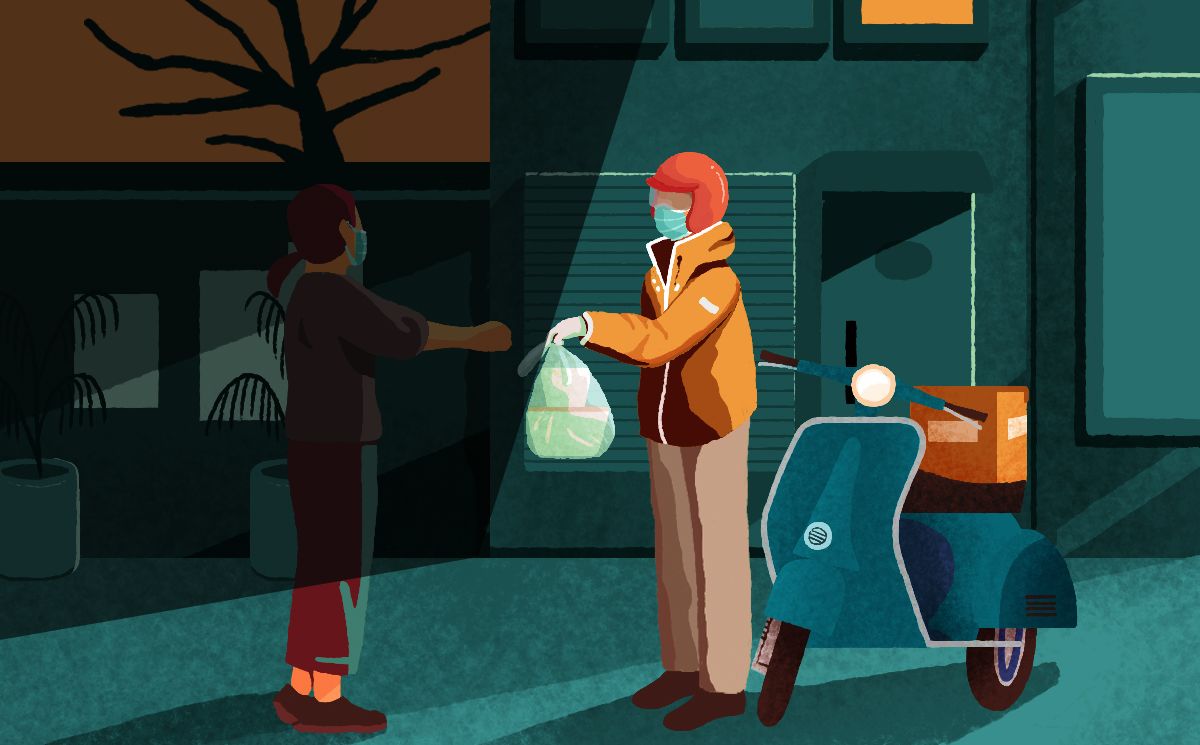

The coronavirus pandemic broke right at the start of the Lunar New Year travel rush in China, the biggest human migration on the face of the earth. Transportation routes were closed, and cities were locked down. People who had gone back home for the celebrations couldn't leave, and those who had stayed behind in their places of work had no work left. In desperation, they turned in droves to gig economy jobs like food delivery. WhyNot spoke to a former programmer, Cheng, and Ali, a former fitness coach who hopes working in the removals business will help him keep his buff physique.

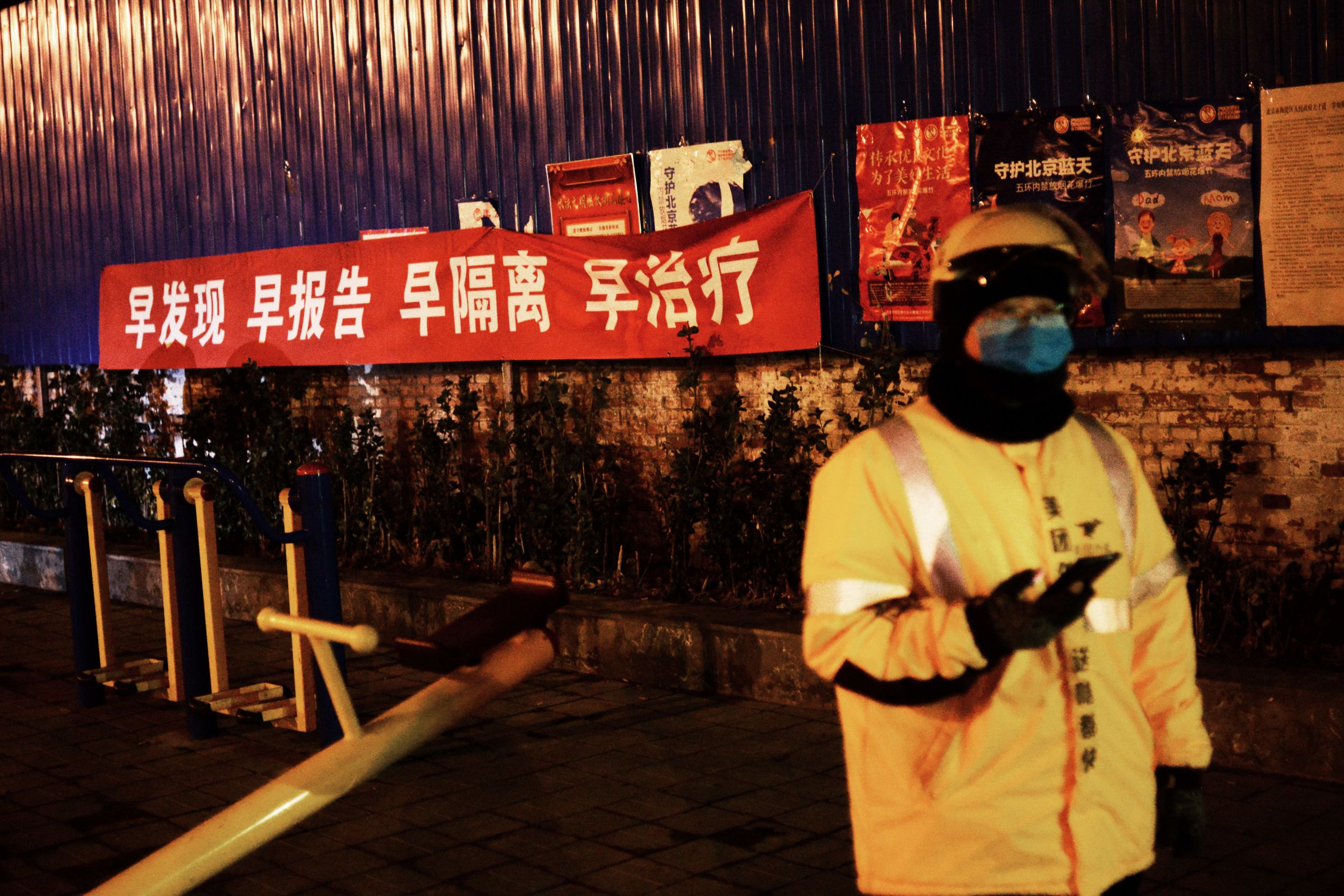
Programmer Cheng had actually come to Shenzhen looking for a job.
He had received an email from a former colleague who had moved to Shenzhen in January, recommending him a job in the tech company the colleague worked in. So he quit his job as soon as he received his the year-end bonus, gave notice on his apartment, and moved back to his hometown, Meizhou, with all of his belongings. The plan was to move his stuff to Shenzhen at a later date. He was also hoping his long-distance girlfriend would eventually join him there.
But his plans were shattered by the coronavirus pandemic, which by then was sweeping across China. Cheng spent two months stranded in his hometown, by which time his former colleague had withdrawn his recommendation for the job because there were no more staff shortages at the company.
He didn't want to wait around any longer. He left Meizhou for Shenzhen at the end of March. He had seen an online recruitment ad for takeaway deliverymen, promising "highly paid, straightforward work" that could easily bring in more than 10,000 yuan a month. His plan was to take a low-paid job delivering food while sending out his resume. It would just be a stop-gap, and he would still be in Shenzhen.
"I never thought I would wind up delivering takeout."

The new job came with a 600 yuan a month top-bunk dormitory bed in a room shared with six other people in a shanty town for migrant workers. Most of them were also new to the job. While getting settled, he used the Meituan online delivery service to order his first meal in Shenzhen. A short while later, there was the sound of a key in the door. The door opened, and someone yelled, "Which asshole ordered this meal?" Unbeknown to Cheng, the restaurant he had ordered from was quite close by, and the delivery order had been picked up by someone else living in the same dormitory. The delivery rider took one look at Cheng and muttered, "Must be new here."
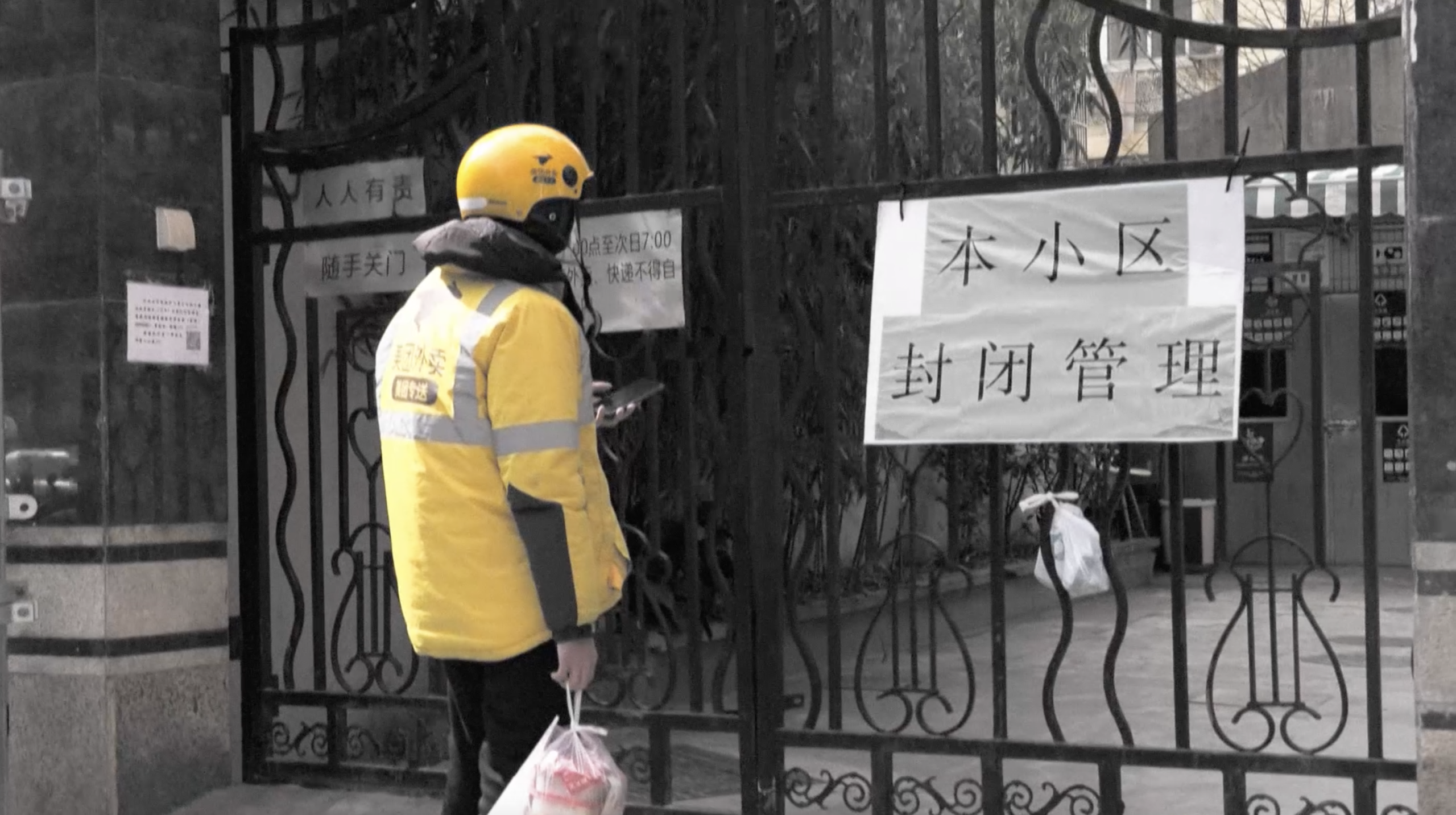
Cheng started delivering orders himself the next day and recalled every detail of that day. He bought three things from the dispatch station manager: an electric scooter, a takeout carrier, and his rider's uniform. He then got a blood test, obtained a health certificate, set up his rider account, started accepting jobs, and hit the road. He got lost on his very first job. Unfamiliar with the system, he took a job most wouldn't want, followed his GPS navigator, and then couldn't find the gate to the residential compound, which was under restrictions because of the epidemic. After riding around the area a few times, he finally found the only open door. But by then, the job had timed out. He only delivered three orders that afternoon.

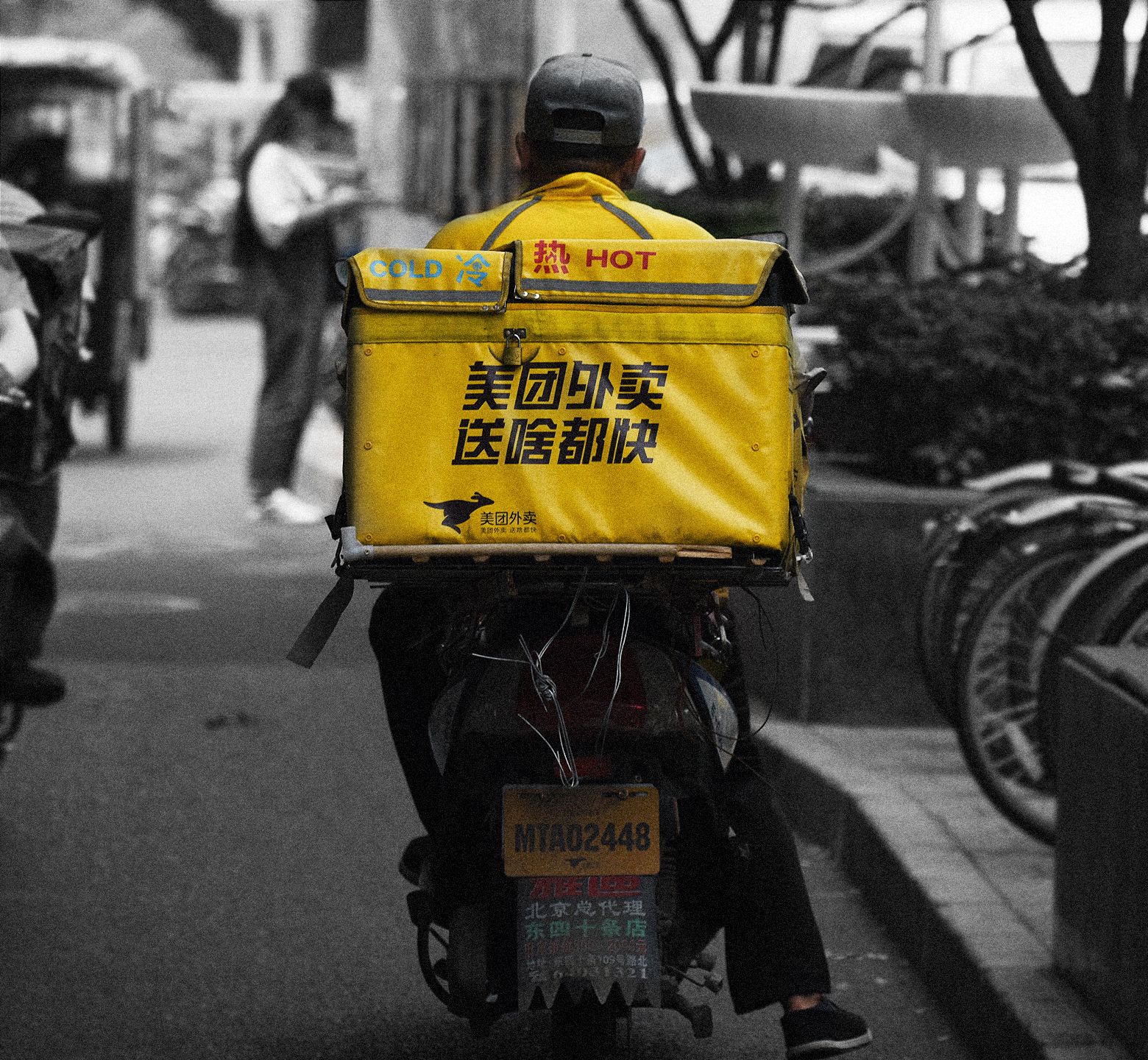
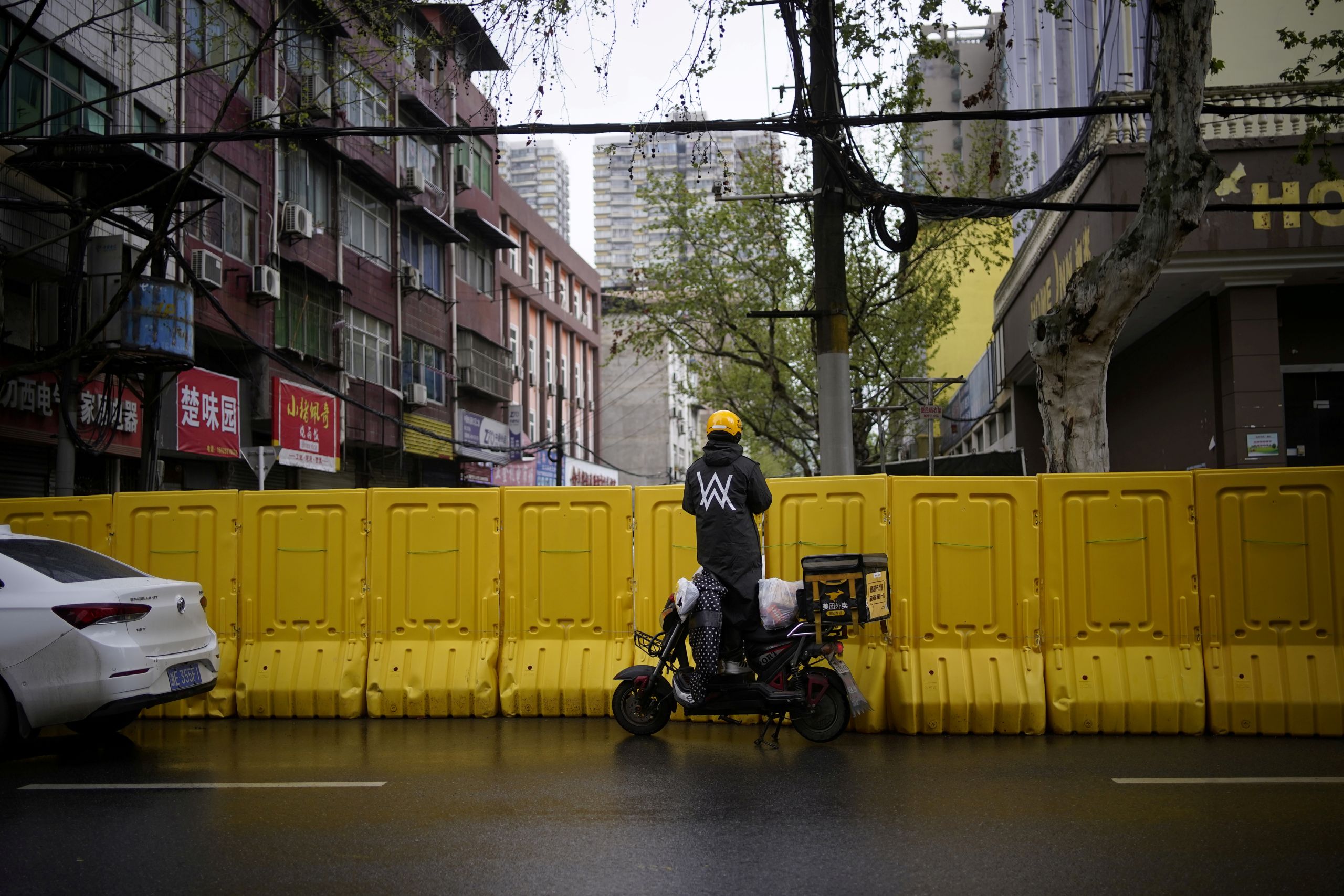
A Meituan delivery rider (Photo: AFP / Wang Zhao)
A Meituan delivery rider (Photo: AFP / Wang Zhao)
Cheng was beset at every turn by the loss of status and disorientation his move from programmer to delivery moped rider had brought. As a front-end engineer, he had been a member of the stay-late-at-the-office brigade, daily weaving our world with the JavaScript and Python programming languages. He would get both lunch and dinner delivered, but he never took a good look at the delivery moped riders. "I never thought that one day, that would be me," Cheng said.
Now, every time he delivered a meal to a software company, and a young employee wearing an ID on a lanyard came to pick it up, Cheng was struck by the huge gap in social status between the white-collar workers in those offices and himself. He felt inferior. He would make polite phone calls to them. "Hello sir, your meal delivery from Meituan is here. Please could you come and collect it?" Then he would nod, smile, and remember to ask for positive feedback from the customers. If they were slow to collect the meal, he would be even more obsequious, for fear of getting a bad review. "You can never show the customer you are angry. You have to keep it to yourself," Cheng said.
But it was the deliveries to the residential compounds that really made Cheng realize that he was now at the bottom of the social pecking order. "The security guards are the worst, the way they treat delivery riders," he said. On one occasion, he arrived in a rush at a residential compound, whereupon the security guard told him he would need to fill out a set of forms and get his temperature checked before he could deliver the order. Cheng offered him a cigarette, but the guard silently held up two fingers. Cheng had to give him two more cigarettes before he was allowed to enter.
Micro-aggressions like this left Cheng feeling isolated and prone to sudden emotional bursts. Back at the dormitory, he and his roommates would swap stories late into the night about the strange encounters they had had on their shifts. These venting sessions were the highlight of their social lives.
A safety net for the unemployed

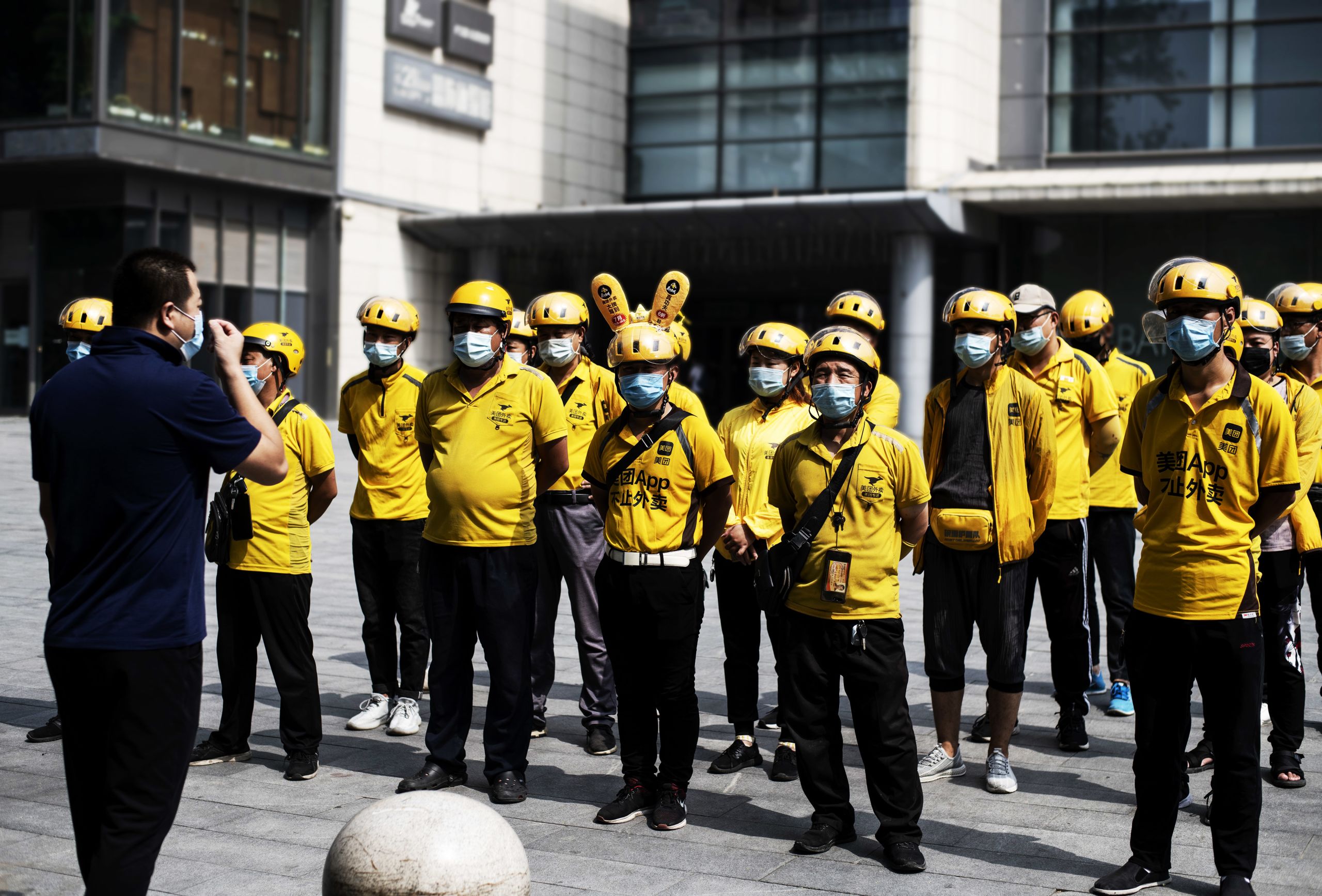
Cheng's five roommates were also new to delivery. The guy on the bunk below him had once been an interior designer who lost his job because of the coronavirus epidemic, with a wife and kids to support and a mortgage to pay. He worked from 9:30 a.m. until past midnight, only eating one meal a day after his shift ended, when he scarfed down three large portions of noodles and a few gulps of cheap liquor before falling asleep. His other roommates included a former express delivery courier, a one-time sous-chef, a former convenience store clerk, and a former factory worker. His roommates were incredulous when he told them what his last job was. "How did it come to this? " they seemed to be asking themselves.
But such concerns were soon buried in their daily list of jobs to be completed. Cheng was working more than 12 hours at a stretch, but was still only managing to deliver 20-30 orders each day. Most of the time was spent waiting around for orders to come through the system. The riders all sat around playing on their phones while they waited. "It felt like we were wasting our lives," Cheng recalled. "Order coming through from Meituan; please accept it as soon as possible," the app’s female voice would pipe up from time to time. Cheng thought it was the best sound in the world. Deliveries meant money and no time to think about anything unpleasant.

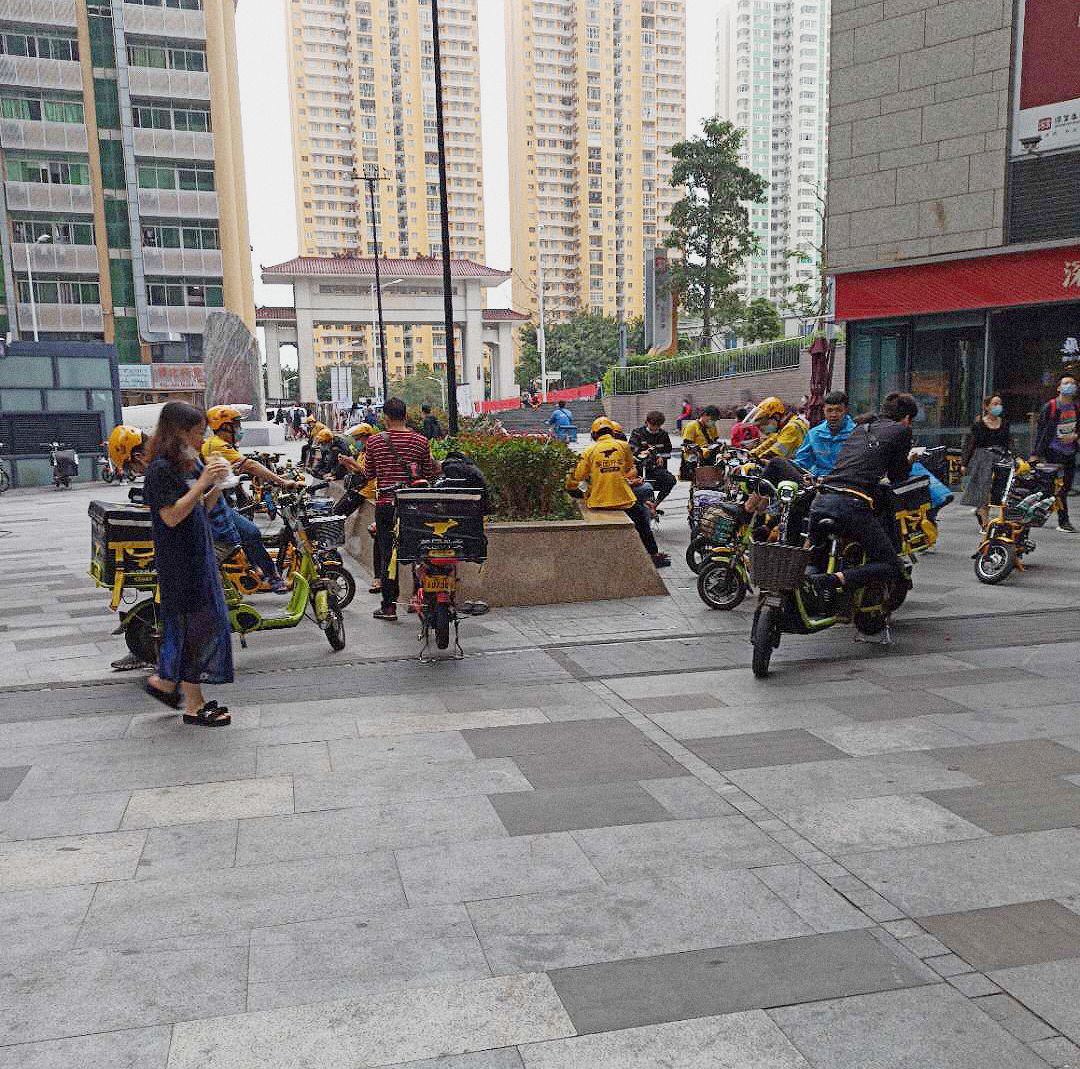
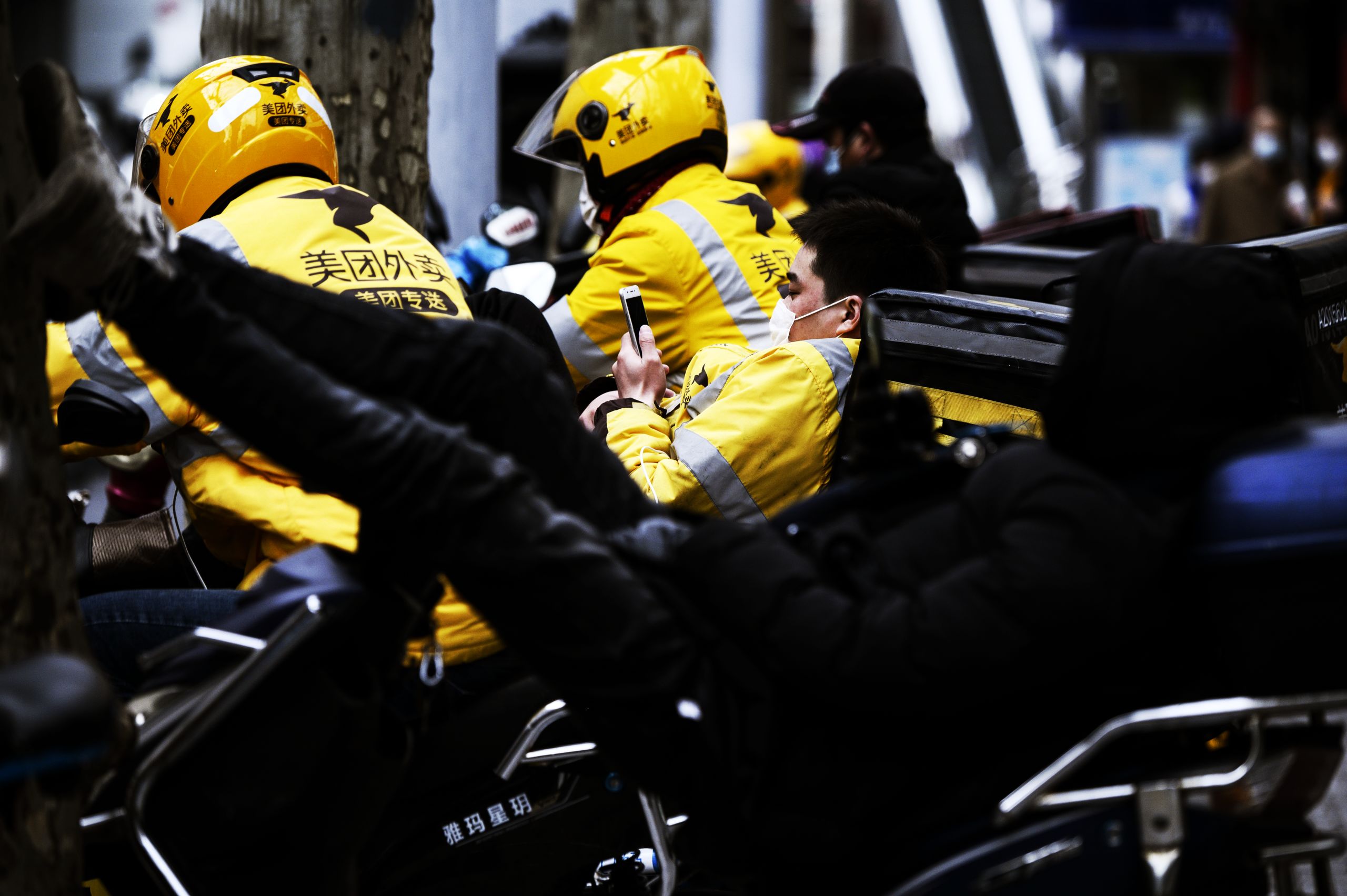
Cheng took a photo of a group of Meituan riders waiting for delivery orders to come in.
Cheng took a photo of a group of Meituan riders waiting for delivery orders to come in.
A couple of weeks into his job, Cheng figured out that he had been pigeonholed by the dispatch manager. When he first started, there were around 80 riders, but the number had risen to more than 150 in the past two weeks. New deliverers were scrambling to pick up jobs, squeezing the income of the more established deliverers. "It was as if they were snatching the rice from our bowls," Cheng said.
He was right. The newly-hired deliverers came from a wide range of professions and sectors: food and beverage, factories, barber shops, fitness coaching, nursing, teaching, ride-hailing services, software programming, photography. They had either been stranded in the hometowns, unable to return to work in another city, or they had been hit by the coronavirus epidemic in some other way. They all needed money, so they donned the distinctive uniforms of the various delivery companies, rented an electric scooter with a takeout box, and started delivering.
Cheng had initially calculated that a full-time deliveryman could make eight yuan per delivery. But once their earnings were diluted by the new moped riders, they could only do 20-30 jobs in the course of a day, however hard they tried. That would typically add up to between 5,000 and 7,000 yuan a month. It was a far cry from the fairytale promise of "more than 10,000 yuan/month" in the recruitment ad. Cheng then shelled out 600 yuan a month on rent, 10 yuan a day for bike battery rental, 30 yuan for meals, and another 30 for cigarettes. His mortgage was another 2,000 yuan a month on top of that. None of this included the initial start-up cost of buying a secondhand electric scooter, nor the fines for late deliveries or those issued by traffic cops. The best he could manage was to break even.
"The food delivery business acts to a certain extent as something for the unemployed to fall back on in a time of crisis," Cheng mused. According to data from China's National Bureau of Statistics, the unemployment rate stood at 5.3 percent in January, rising to 6.2 percent in February. Wang Zhen, director of microeconomics research at the Chinese Academy of Social Sciences' Economic Research Institute, told the media, "It’s clear that the gig economy has been more active during the coronavirus epidemic, offering employment opportunities to many." If you were delivering food, you were no longer considered unemployed, either in the figures issued by the National Bureau of Statistics or by Cheng.

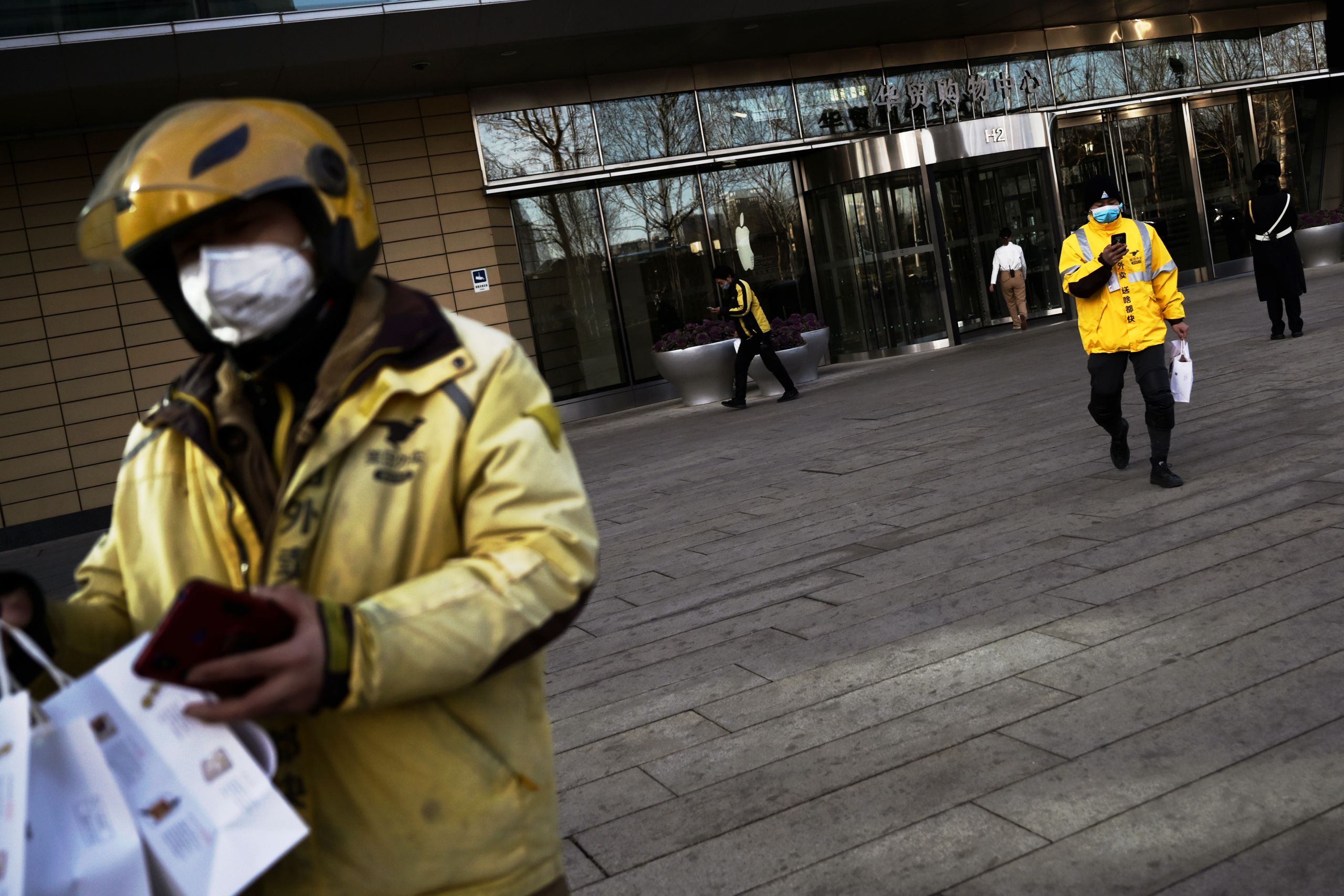

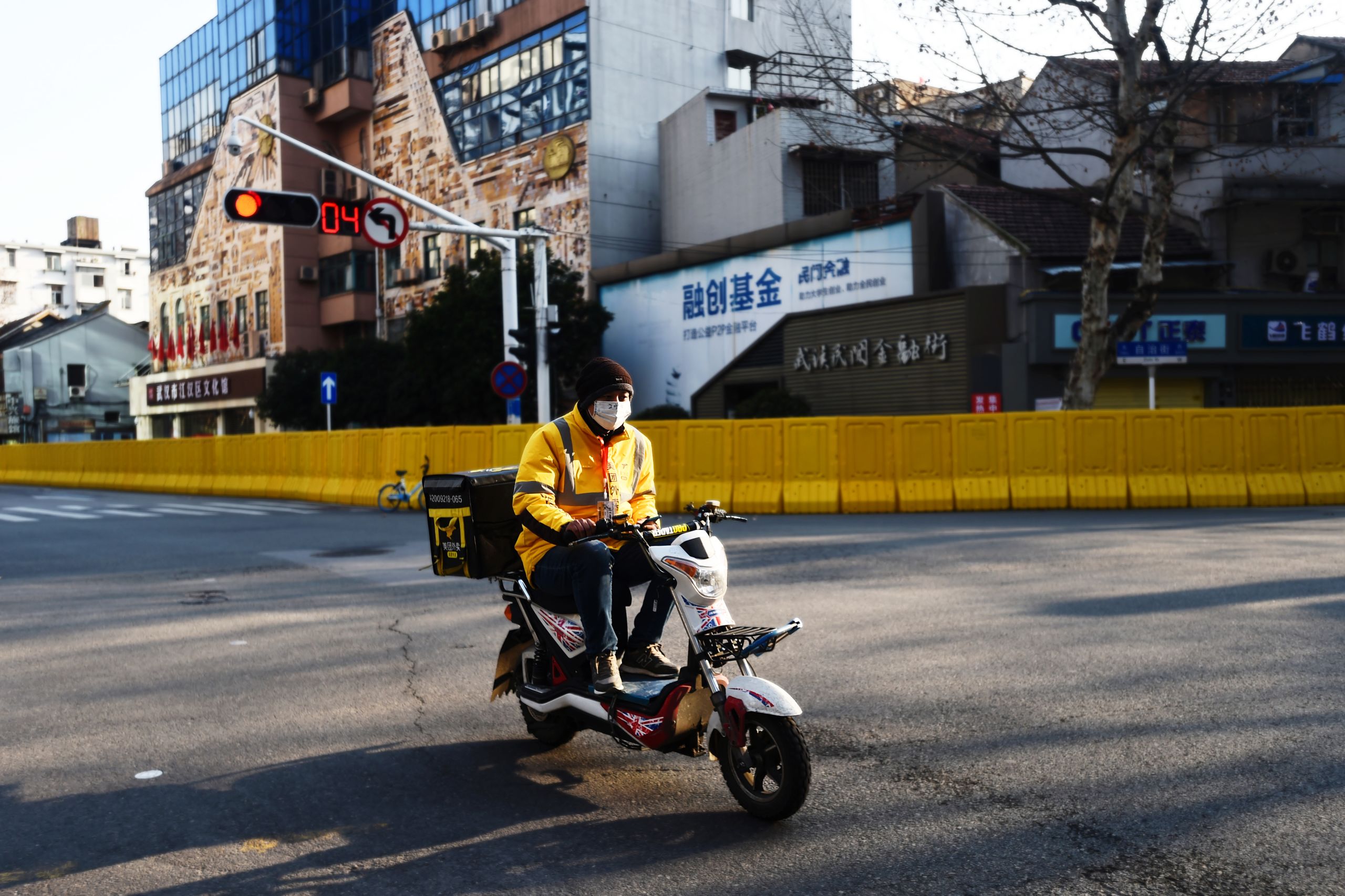

Another person to fall back on delivery jobs during this crisis was Ali, a former fitness instructor. Ali was initially furloughed, but if he had returned to work, it would have been to an industry devastated by the lingering coronavirus pandemic. Anyone who made a living charging for classes had seen their income plummet. So, needing to generate some income, Ali also took a job as a part-time moped deliveryman for Meituan. He wasn't the only one in his social circle to do so. A friend who had done it had suggested it.
After 10 days on the job, Ali figured out that, allowing for expenses and costs incurred, a part-time, crowd-sourced delivery riders could only expect to make about 100 or 200 yuan a day. So Ali started looking around for alternatives to fall back on. Lured by promises of 1,000 yuan-a-day earnings, Ali rented a van and put his muscles to good use helping people to move. He met others doing the same work, including former chefs and subway staff. "A lot of them were clearly finding themselves at the bottom of the social ladder," Ali said.

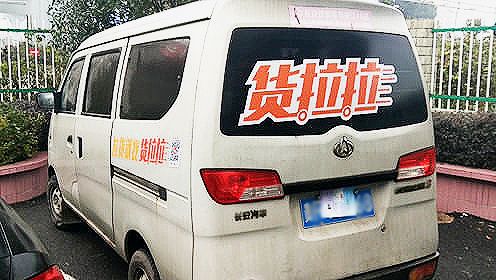
Huolala van (Photo: PTT news)
Huolala van (Photo: PTT news)
The shipping and moving app Huolala operated a similar job-allocation system to Meituan. Ali would open the app and sit staring at the screen, waiting for jobs to come in. A single job would pay up to 100 yuan. He helped move people from 140 square-meter apartments into 60 square-meter apartments, and companies from plush downtown offices away from the city center to cut costs during the pandemic. Ali was always polite to high-end customers, in the hope of getting a bigger tip. But there were downsides to this work. On one occasion, he and other moving drivers helped a company move warehouse stock, a job that lasted until 2 a.m. This gave rise to a dispute about pay, and the issue has yet to be settled. Ali realized one thing very soon: the unpredictable frequency of jobs and the commission taken by the platform meant that Huolala was only as good as a part-time job. Nobody could rely on it to make a living.
Ali, who had a monthly rent of 4,000 yuan and a four-year-old kid to think about, made an average daily income of more than 300 yuan from these two part-time gigs, which came as something of a relief. But it was far, far less than he used to make. Ali once worked as a fitness coach in a fitness center chain in downtown Shenzhen. He was an old hand at the job, and was able to earn a handsome income from private coaching fees, despite the industry’s low salaries.
He used to spend 1,000-2,000 yuan a month just on his diet, protein powder and various nutritional supplements to maintain his physique. But that all stopped when the gyms shut down. Ali had told himself that he would get a workout as a delivery rider, and that any kind of movement counted as exercise, but after three months after losing his job, Ali was losing bulk and muscle tone, and starting to look thin. He thought it would probably take him at least a month to get back into shape if he wanted to get back into fitness coaching.
However, there is no sign of this happening soon. The gym where he worked hasn't posted a reopening plan yet, and Ali worries that it will never reopen.
On your bike, grab yourself a job

Cheng couldn’t believe that he was a Meituan delivery rider living in a damp and crowded dormitory, who never even looked at the laptop that used to be the main tool of his trade. "Instead, I wake up every morning on autopilot, brush my teeth, eat a bun, and get on my scooter to find work," he said. Most of the time, his head filled with thoughts of quitting. He did not think he could bear it much longer, and desperately wanted his old job back.
Only his girlfriend knew about his work in Shenzhen. Cheng was too ashamed to tell anyone else. He lied to former classmates who were in Shenzhen, saying he was back in his hometown of Meizhou. Anyone who knew he was in Shenzhen was told that he was staying with relatives in the city, and had no free time even for dinner. He didn’t want to be a burden on anyone, but most of all, he didn’t want them wondering how he got himself into such a state.
He needed the Meituan job to gain a foothold working in Shenzhen. "If I don't do this, where else would I go? I need to establish myself here, at the very least," Cheng said. "Shenzhen has truly always been this way: a transient place where profit is the main goal for everyone," he says.

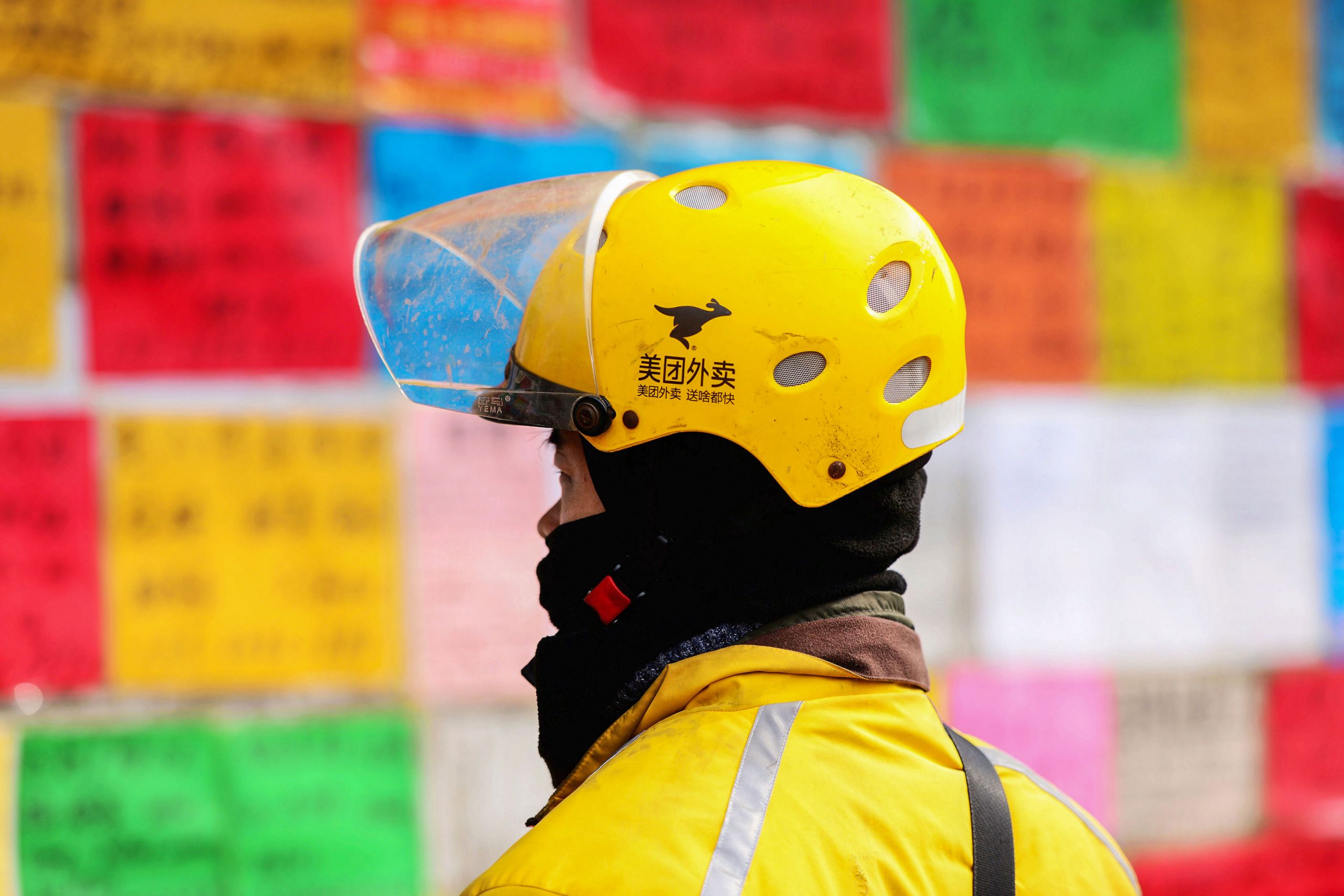
A Meituan delivery worker looks at employment postings in between jobs. (Photo: AFP / STR)
A Meituan delivery worker looks at employment postings in between jobs. (Photo: AFP / STR)
Any time not spent delivering food was spent looking for another job. He continually searched for jobs via different phone apps. "I apply for anything that looks suitable," Cheng said. "I always turn up if they offer me an interview." The past two weeks only yielded two interviews, one of which saw six other applicants turn up at the same time. In the current unemployment epidemic, and with only a technical school degree, Cheng gave up hope of working for any of the big tech companies, focusing instead on the smaller companies who weren’t so concerned with educational background. He also lowered his salary expectations, to the point where he would take pretty much offer. "If I get offered something, I'll take it, then I can quit later in the year," Cheng said. He just had to keep going. Things could only get better.
Cheng had planned to find another job, and only then announce to everyone that he was coming to Shenzhen.
But the delivery gig ended up getting him through six months, during which time he managed to start an aquaculture business, lease five fishponds in his hometown, and divide his time between Shenzhen and Meizhou.
His interior designer bunkmate returned to his hometown and his old job. Cheng wished him all the best, before changing his personal signature on WeChat to read "Abandoned by my dreams."
(Names have been changed to protect the interviewees' identities.)
 Built with Shorthand