
Analysis
Patriots vs. Enemies of the People as Scores are Settled in Hong Kong

The promises the CCP made to Hong Kong still ring in my ears. Promises such as "people will go on dancing, the horses will keep running" [famous quote from the 1980s implying that night clubs would stay open and horse races would continue after Britain handed Hong Kong back to China] and "no change for 50 years" still reverberate in my head. The late CCP leader Deng Xiaoping, who formulated the "one country, two systems" policy, once said, "Some things we will still allow after 1997, such as people in Hong Kong cursing the CCP and the PRC" and "we are not afraid of them cursing [us], the Communist Party will not fall."
Hong Kongers, including pan-democrats and some local factions, have the right to participate in politics and to strive for democracy and freedom. In the past, under the "one country, two systems" framework, the central government reluctantly gave its tacit approval. However, when the path to 2047 was only halfway complete, the anti-extradition to China movement erupted, and the democratic process abruptly reversed. Democrats and dissidents who have been active in the public eye for the past few decades are now being jailed one by one, regardless of age, background or status.
Under the interpretation of the Hong Kong Special Administrative Region (SAR) National Security Law, all past and present voices that opposed the regime and pursued democracy are now being called to account. Anything can be deemed as "inciting subversion," and the period for retroactive enforcement is still unknown.
Anti-Rightist, from "a hundred flowers bloom" to "settling scores"

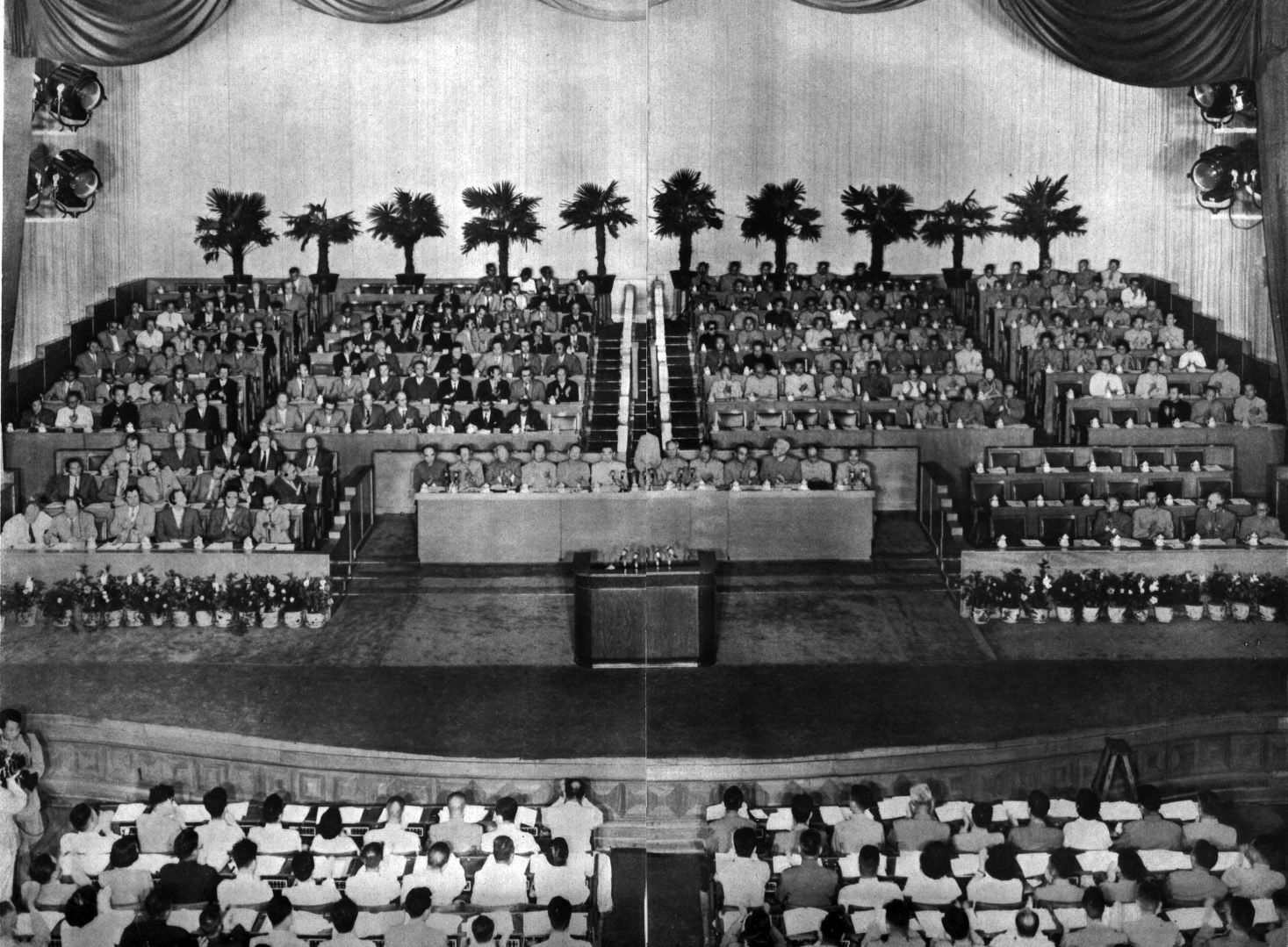
The last time figures from democratic factions were purged on a large scale under the China Communist Party (CCP) can be traced back to the late 1950s. After the land reform, "three antis" [early CCP purge of anti-corruption, anti-waste and anti-bureaucracy] and "five antis" movements, China declared at the Eighth National People’s Congress in 1956 that “the contradiction between the proletariat and the bourgeoisie in our country has been basically resolved." However, in April 1957, the CCP decided to launch a rectification campaign composed of anti-bureaucracy, sectarianism and subjectivism to encourage people outside the party to offer comments.
In line with the principle of "letting a hundred flowers bloom and a hundred schools of thought contend," Mao Zedong convened a discussion with the leaders of the democratic parties at the Tiananmen gate stating, "Speak frankly; those who speak out are not guilty and take heed of their warning; correct any mistakes you made, but maintain your good record" and called on "all those with lofty ideals who are determined to reform" to criticize the Communist Party in the spirit of "be willing to sacrifice one’s own flesh and dare to topple the emperor."
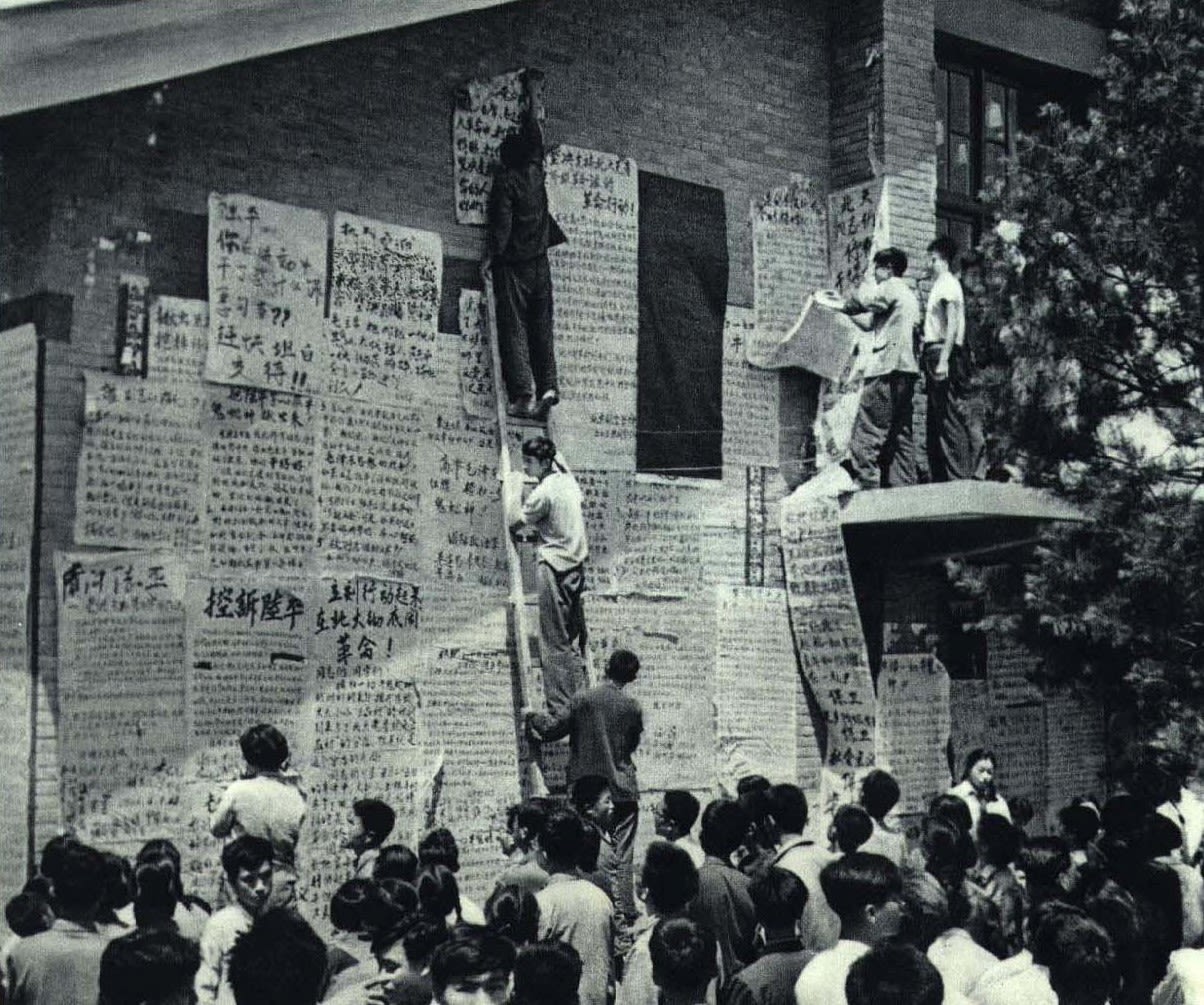
As a result, people from all walks of life, mainly intellectuals, responded to this ‘sincere’ invitation, offering suggestions or expressing dissatisfaction to the Party and the government. The press vigorously followed suit, and college students were even more vocal in “freely airing their views." From May 19 to 22, 1957, Peking University students posted hundreds of ‘big-character posters’ [large, handwritten posters pasted on walls for protest and propaganda], demanding the abolition of the Party committee responsibility system, and demanding freedom of speech, assembly and association, and reversal of bans on books.

The later-dubbed "Three Rightist Reactionary Theories" were Zhang Bojun's "Political Design Institutes" (stating that the Chinese People’s Political Consultative Conference, National People's Congress, democratic parties, and people's organizations should be the four political design institutes); Luo Longji's "Rehabilitation Committees" (to encourage the airing of grievances, the National People’s Congress and the Chinese People’s Political Consultative Conference can set up committees with the participation of the CCP and democratic parties to inspect deviations in the three antis, the five antis and the suppression of anti-revolutionaries, and encourage the aggrieved persons to appeal to the authorities); and Chu Anping’s " Party Empire" (the party leading the country does not necessarily own the country). At that time, Zhang Bojun was the first vice chairman of the China Democratic League Central Committee, the vice chairman of the National Committee of the Chinese People's Political Consultative Conference, the minister of transportation, and the president of Guangming Daily. Luo Longji was the vice chairman of the Central Committee of the China Democratic League, the minister of the forestry industry, a member of the Standing Committee of the National Committee of the Chinese People's Political Consultative Conference, and a member of the Standing Committee of the National People's Congress. Chu Anping was a member of the Central Committee of the Jiusan Society [one of the eight minor political parties], the deputy head of the Propaganda Department, and the editor-in-chief of Guangming Daily.
The situation changed on May 15 when Mao Zedong wrote an article titled "Things are Changing," and the People's Daily subsequently published an editorial asking, "Why is this?", claiming that the rightists used "rectification" in an attempt to overthrow socialism. In order to let the outside world feel that the rightists were "organized, planned, programmatic, and lined," Mao Zedong grouped Zhang Bojun and Luo Longji together, saying that the rightists' rampant offensive "was rooted in the Zhang Luo League." "Freely airing one’s views" became "pulling the snake out of the hole."
Mao Zedong’s explanation for this settling scores behavior was: "Let everyone air their views. Some people say it is a conspiracy. We say this is plotted out in the open. Because I told the enemy in advance: only by letting them out of the cage can we annihilate them. By poisoning the grass, they are then unearthed so that they can be easily removed." Zhang Bojun cried out after seeing this editorial: "I was completely fooled by this speech."
From then on, the Anti-Rightist Movement against independent thinking intellectuals began. At least 550,000 people were classified as rightists. It was not until after the Cultural Revolution that the rightists were corrected, and only a very small number of people were not rehabilitated, including Zhang Bojun, Luo Longji and Chu Anping.
Over 20 years later, the 1981 Sixth Plenary Session of the CCP passed a resolution reflecting on the Anti-Rightist Movement, stating, "A small minority of rightist political elements wantonly launched an attack on the CCP and the institution of socialism in a futile attempt to replace the leadership of the CCP. Regarding this attack, conducting counterattacks is completely correct and necessary. However, the anti-rightist struggle has been critically expanded, and some people have been mistakenly classified as rightists, which has caused unfortunate consequences."
In fact, the error of these actions was not even admitted, and rightists were never given compensation.
Mass movements, opportunism and condemnation by words

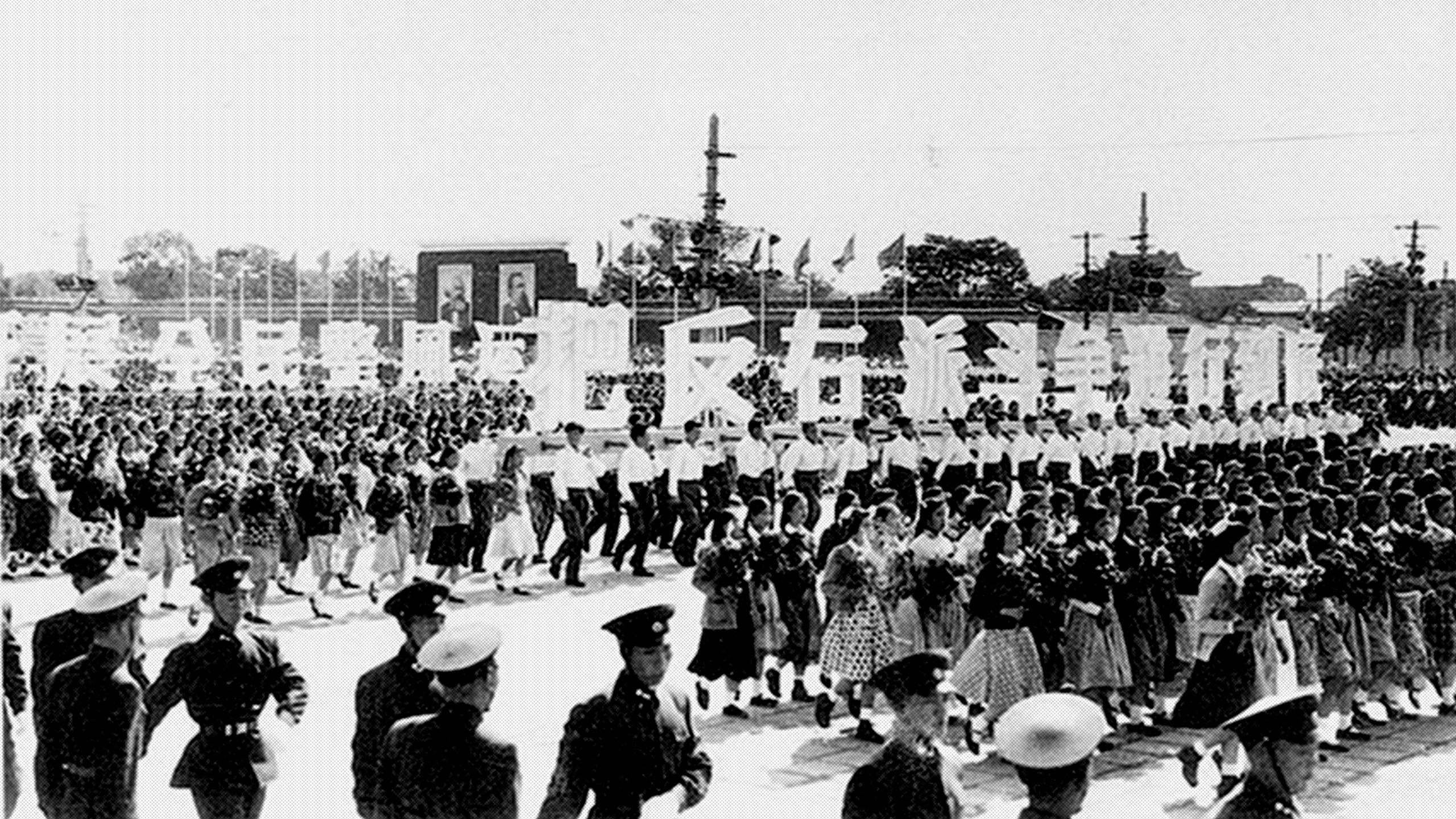
Comparing the fate of the two generations of democrats and intellectuals in China in the 1950s and in Hong Kong in the present day, it’s not hard to find surprising similarities. The historical reasons and background for the outbreak of the Anti-Rightist Movement include China's unique mass movement model and the CCP's deep-rooted political culture. Academic circles often attribute the Anti-Rightist Movement to problems in Mao Zedong's own character and the conspiracy/overt plot theory, just as the outside world also regards the CCP's violation of "one country, two systems" as a "rapid turn" under the current leadership.
In the article "Anti-Rightist Movement and Yan'an Rectification Movement," scholars and married couple Jin Guantao and Liu Qingfeng discuss that the Communist Party, baptized by the Yan'an Rectification Movement in 1942, is good at creating a ideological group identity model that can adeptly unify the whole party's thinking. The first victim in the Yan'an period was Wang Shiwei [journalist and writer executed in 1947 for openly criticizing the CCP]. From encouraging free speech to criticizing the opposition, and again to an atmosphere of rectification and imposing discipline, this political theater with mass movement characteristics has been tried repeatedly after 1949 and has gradually expanded into a national political movement in order to consolidate rule and establish authority. Those who have suffered in this ever-escalating proletarian revolution include landlords who lost their land and personal freedom during the land reform, counter-revolutionaries suppressed by the anti-rebellion movement, and capitalists deprived of property during the suppression of the "three antis" and "five antis" purge; the iron fist never failed to suppress. Intellectuals and democrats were eliminated one by one for criticizing the Communist Party and the government after enjoying a brief period of freedom of speech. This was not accidental, but the only way to eradicate threats, control society and ultimately consolidate political power.
Amidst this model of mass movement used repeatedly in Chinese society, one can also find opportunism. During the CCP's revolution, opportunism was everywhere. Mao Zedong's "if you’re winning, fight and if you’re not winning, run" is the hallmark of opportunism. Deng Xiaoping's "crossing the river by feeling the stones" for reform and opening up is clearly opportunism. Sometimes, the logic is circuitous or even contradictory. In the 1980s, Ji Chunguang, then head of the United Front Work of the Qinghai Provincial Party Committee, said: "We have repeatedly emphasized the full implementation of the policy of freedom of religious belief and the strengthening of religious work, only to win over the believers and gradually restrict and eventually eliminate religion."
Similarly, the reason why the central government temporarily acquiesced to the existence of any opposition was because it would eventually accept only "good faith criticisms and suggestions." The definition of "good faith" was narrowed again and again, and any accusation eventually became "unprovoked accusations" or "wild attacks." "Freedom of speech" was nothing but a mirage; when the time came, the "frogs boiling in water" became "absolute control of everyone." Only those lucky enough would not see the opportunism within this model of control.
From the perspective of baseline thinking, the most unbearable thing for those in power is a challenge to their dictatorship, which is regarded as "you’re either with us or against us." On August 19, 2014, Zhang Xiaoming, then director of the Liaison Office of the Central Committee, met with several legislators. Pan-democratic Legislator Liang Yaozhong asked whether the central government would allow pan-democratic members to stand for election as the chief executive. Zhang Xiaoming responded, "You’re allowed to live; you have been shown the tolerance of the central government."
Liang Yaozhong’s question is the same as the joint governance model implied in Zhang Bojun’s "Political Design Institutes," which is still a major taboo.

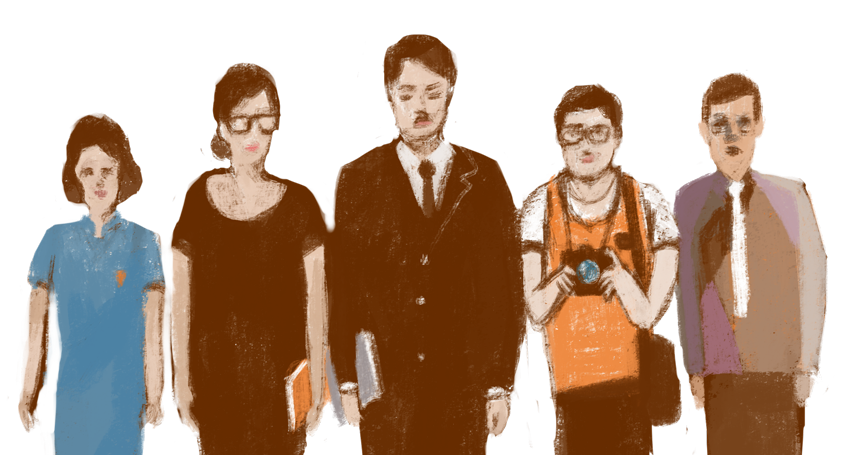
"Rightists" and "anti-China riots in Hong Kong"
On October 15, 1957, the "Notice of the Central Committee of the Communist Party of China on the ‘Criteria for the Classification of Rightists’" was issued. The criteria for rightists included those who:
- Oppose the socialist system
- Oppose the dictatorship of the proletariat and democratic centralism
- Oppose the leadership of the Communist Party in the country's political life
- Divide the unity of the people for the purpose of opposing socialism and opposing the Communist Party
- Organize and actively participate in small groups that oppose socialism and the Communist Party; plan to overthrow the leadership of the Communist Party in a certain department or a grassroots unit; instigate riots against the Communist Party and the government
- Advise the rightists who have committed the above crimes, build relationships, communicate intelligence, and report secrets to revolutionary organizations.
There are also criteria for extreme rightist factions:
- The careerists, leaders, masterminds, and backbone elements within rightist actions
- Those who put forward anti-Party and anti-socialist programmatic opinions and actively advocate such opinions
- Those who carry out particularly harsh and resolute anti-Party and anti-socialist activities
- Those who have always been anti-Communist and against the people, and have actively engaged in reactionary activities during this rightist offensive.
After the enactment of the National Security Law, Beijing put forward the policy of "patriots governing Hong Kong." Xia Baolong, director of the Hong Kong and Macau Affairs Office, clarified the definition of "patriot" in February 2021, referring to the five categories of "anti-China and Hong Kong people" for non-patriots as those who:
- Use various means to attack the central government hysterically
- Promote publicly Hong Kong independence
- Internationally Express internationally that China and Hong Kong are bad
- Implore foreign countries to impose sanctions on Hong Kong against China and violate the Hong Kong National Security Law
- Challenge the fundamental system of the country and refuse to accept or deliberately distort Hong Kong's constitutional order.
According to Xia Baolong's delineation, those supporting the alliance, those who criticized the administration of the Hong Kong government, and those democratic factions who participated in democratic primary elections are not patriots. Not only can they be deprived of their political rights for life, but they are also more likely to face imprisonment for being involved in the crime of subverting political power in violation of the National Security Law.
Long before the "patriots governing Hong Kong" policy started, the pro-Beijing camp and the mouthpiece media had dubbed Li Zhiying, Anson Chan, Martin Li and Junren He the "Hong Kong Gang of Four" and repeatedly accused Huang Zhifeng, Luo Guancong and other student representatives as the leaders of the youth chaos in Hong Kong. The pan-democrats and local factions have been portrayed as bad elements colluding with anti-China forces in the West, trying to turn Hong Kong into an anti-China base, launching a "color revolution," and ultimately overthrowing the CCP leadership.

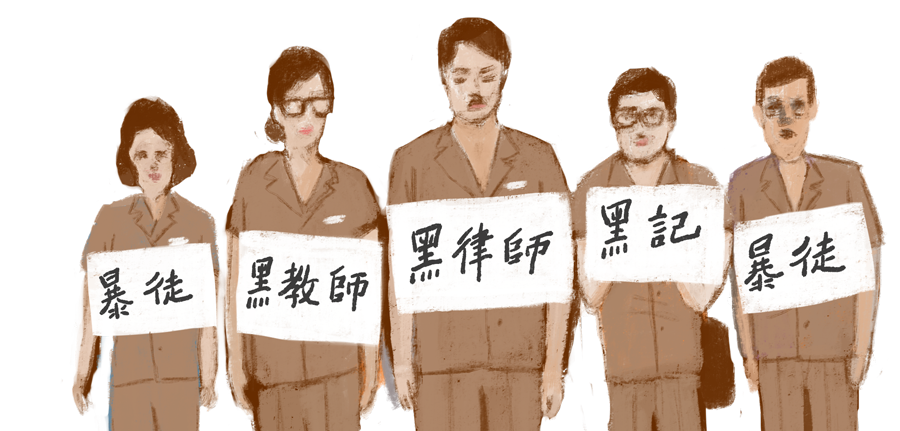
"A small minority" and an expanding scope
During the Anti-Rightist Movement, the central government always emphasized that the number of rightists was very small. But the Anti-Rightist Movement has inevitably expanded. Especially in the later period of the movement, many work units simplified the standards and directly specified a percentage of workers as rightists, causing many people to be labeled rightists, perhaps incorrectly. The actual number of people labeled as rightists may far exceed 550,000 - A large number of those labeled rightists were reclassified as landlords or bad elements in the later period of the movement. Only these people are about 500,000. According to statistics from Ding Shu, an expert on modern Chinese history, the movement turned 1.1 million rightists, anti-socialists, etc. into 1.8 million enemies of the people the .
Chinese independent journalist Gao Yu divided rightists into five categories, including:
- The first are the democratic parties and business figures represented by the Zhang (Bojun) Luo (Longji) League and the free intellectuals represented by Chu Anping
- The second is a large number of party intellectuals in the press and publishing circles across the country represented by Liu Binyan and Dai Huang
- The third are young students represented by Lin Xiling and the Peking University May 19h Movement
- The fourth are the leading figures and famous artists in the literary and art circles represented by Feng Xuefeng, Ding Ling, Ai Qing, Wu Zuguang, Zhong Dangxue, and Xiao Jun
- The fifth category are well-known professors and scientists in education and science and technology circles.
Since the Anti-Rightist Movement, China has had no true democratic parties. From the Anti-Rightist Movement to the Cultural Revolution, Chinese intellectuals were practically wiped out.
In 1958, the Central Committee classified rightists under six categories according to the severity of their crimes, and dealt with them accordingly from the least to the most serious: reeducation through labor, labor supervision, retention and probation, dismissal, demotion, and exemption from administrative sanctions. Rightists punished in the first two categories were forced to leave their jobs and go to the frontier, rural areas and prisons to engage in strenuous manual labor. Due to the excessive work and a short-term nation-wide famine, a large number of them died. Prominent rightists who were named by the central government and had certain international and domestic influence and leadership positions in the government, such as Zhang Bojun and Luo Longji, had their salaries reduced, administrative positions taken away, and were placed under surveillance and house arrest for the rest of their lives. Many unknown grassroots rightists’ lives ended tragically. Only more than 100,000 people survived the Anti-Rightist Movement and the Cultural Revolution until 1978 when they were rehabilitated.

In Hong Kong, the number of anti-China and Hong Kong figures has also been expanding. Like the rightists, they include members of the Democratic Party, the Civic Party and other pan-democratic parties, and figures within some local democratic factions; business people considered pro-liberal (the wealthy businessman Li Ka-shing was once scorned by Hong Kong People’s Congress representative Wu Qiubei, with Wu calling Li "The Cockroach King"); news organizations and reporters (news organizations such as Next Media, Stand News, and even the Hong Kong Journalists Association); young student representatives; movie stars, singers, and artists with a "yellow ribbon" stance (Huang Yaoming, Du Wenze, etc. have been satirized as "Hong Kong independence" stars); liberal intellectuals (senior intellectuals headed by Chen Jianmin and Dai Yaoting and even middle school teachers are called "evil teachers"); professionals (law practitioners attacked as "evil lawyers" in the anti-extradition movement, medical professionals attacked as "evil guards", and civil servants regarded as "biting the hand that feeds them"); religious persons (Chen Rijun, the Catholic bishop emeritus of Hong Kong, Luo Qingcai, the former president of the Hong Kong Baptist Federation); and demonstrators who participated in the anti-extradition movement. Regardless of age, qualifications or background, they are asked about their views and opinions. As a result, the number of opposition groups, dissidents and political prisoners in Hong Kong have been increasing day by day with various new forms of suppression casting a wide net to trap them while simultaneously rapidly narrowing the space for civil politics and speech. We tried to sort out the indicators of those currently in custody, and the number has reached 46.
Among them, those involved in violating the National Security Law, including Li Zhiying and the democrats who were arrested ahead of the primary election, have not all been sentenced to prison yet. They have almost no chance of posting bail and even if they are found innocent in the end, they have to "do some time to learn respect;" this is contrary to the "presumption of innocence" in the spirit of Hong Kong's original Common Law. Once criminal charges are established, they will be in prison for 10 years or more, far exceeding sentences imposed by similar incidents in the past (for example, in the early morning of the second day of the Lunar New Year in 2016, there was a major conflict in Mong Kok. Liang Tianqi, a former spokesperson for the local democratic front line, was convicted of rioting and assaulting police and was sentenced to six years in prison.) In addition, the Hong Kong government continues to list other new accusations, including the charges of "participating in an unauthorized assembly." In 2020, Huang Zhifeng, Cen Aohui, Yuan Jiawei and Liang Kaiqing participated in gatherings commemorating the June 4th incident and Li Zhiying participated in protests on August 18 and 31. Many people, including Zhiying, He Junren and Li Zhuoren were tortured and imprisoned; this hadnever happened before in Hong Kong where freedom of assembly is allowed. Even to the extent that, in the early morning of June 4 this year, plainclothes police arrested the lawyer working for the vice chairman of the Stake Zou Xingtong on the grounds of "propaganda or announcement of unapproved assembly." This was called a "preventive arrest" by Zou Xingtong himself.

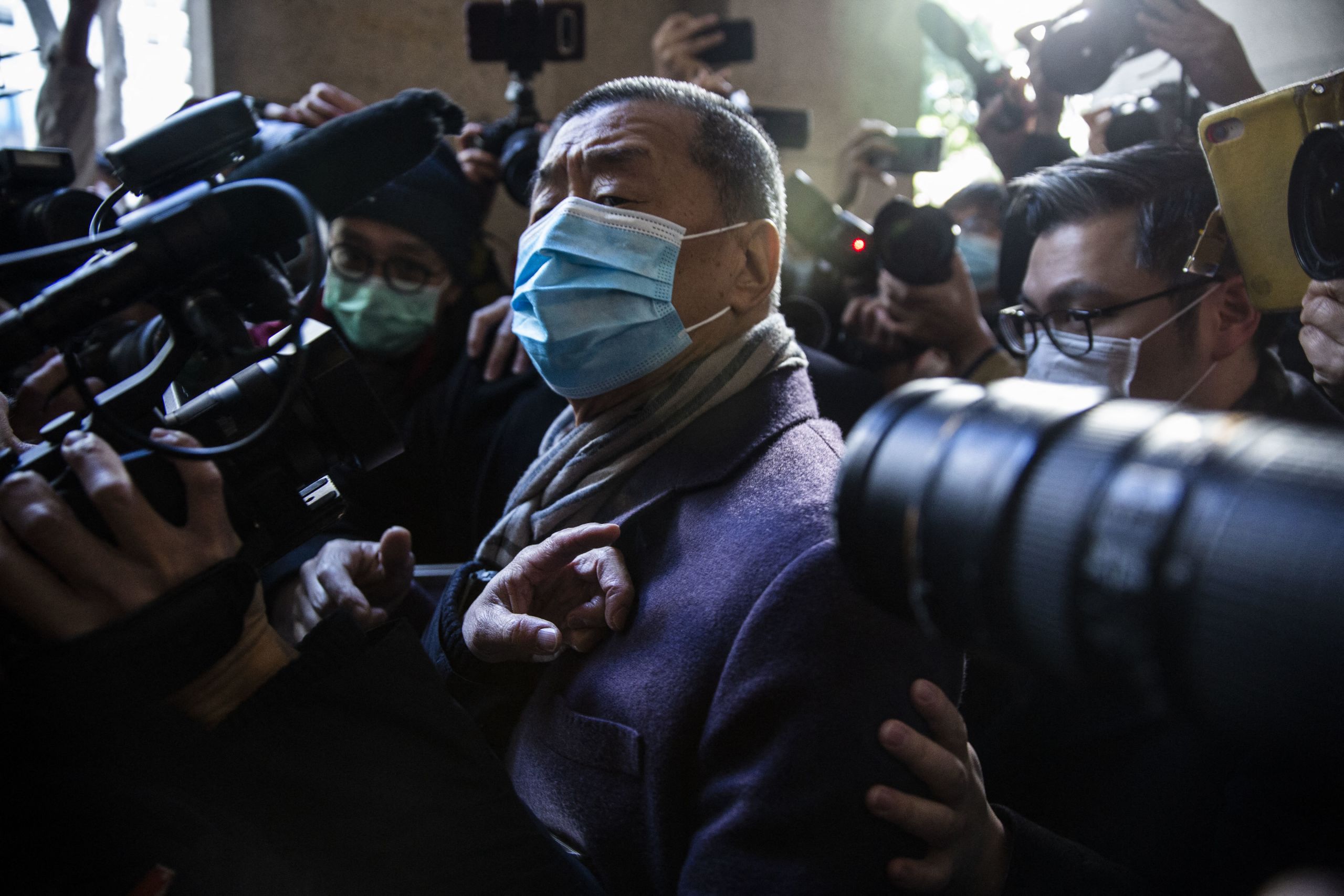
Hong Kong pro-democracy media tycoon, Jimmy Lai, arrives at the Court of Final Appeal in Hong Kong on December 31, 2020, to face the prosecution's appeal against his bail after he was charged with the new national security law. (AFP)
Hong Kong pro-democracy media tycoon, Jimmy Lai, arrives at the Court of Final Appeal in Hong Kong on December 31, 2020, to face the prosecution's appeal against his bail after he was charged with the new national security law. (AFP)
Even those not in prison are not doing so well. Many of those who are pro-democracy have been charged with crimes and are either awaiting trial or awaiting sentencing. In addition, the Hong Kong government requires public officials to swear an oath in accordance with the National Security Law. This has ruined the political future for most of the democratic district councilors who won in the 2019 district council elections, and the "yellow ribbon" civil servants and teachers lost their jobs and opportunities. Not to mention Hong Kongers who have been silenced by fear, emigrated or went into exile.
After the Anti-Rightist Movement, democrats and intellectuals in China no longer dared to express their opposition, leading to further dictatorship by the CCP. Mao Zedong then launched the Great Leap Forward, ultimately leading to the tragic Cultural Revolution. Looking at history, who can possibly be optimistic? In this current harsh atmosphere, what tragic consequences will Hong Kongers face in the future? No one wants to imagine.
“You love the country, but does the country love you?”

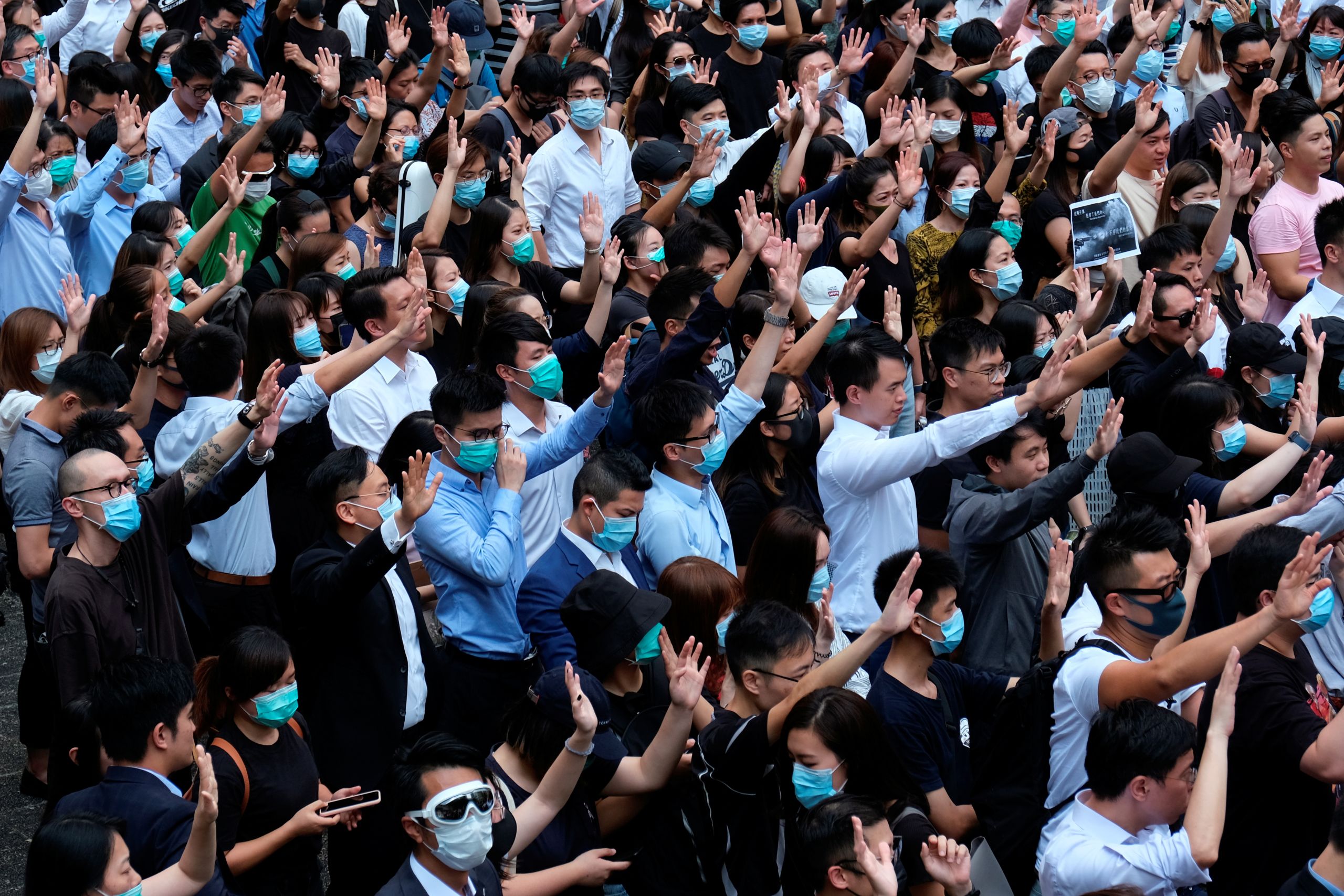
Deng Xiaoping said in the past that Hong Kong people must love the country, but not necessarily the CCP. But now Xia Baolong said that Deng Xiaoping's patriot standard was only relevant prior to Hong Kong’s return and questioned, "If a person claims to support the 'one country, two systems' but opposes the founder and leader of the 'one country, two systems', wouldn't that be a contradiction?"
During the October 1 unauthorized assembly case, former Hong Kong Legislative Council member and current stake chairman Li Cheuk-ren’s lawyer read out the Li’s pleas. The letter described patriotism as a "bitter love" and he sighed asking, "You are patriotic, but does the country love you?" "If patriotism is equal to loving the party, it’s easy. Just follow the CCP, but I choose to stick to the truth."
Li Zhuoren and his group have always been regarded as the "Greater China" element by Hong Kong local factions. Like other pan-democratic members, they have continued their return to democratic line for more than 30 years, and their position as an opposition party that advocates moderate discussion of politics and rational communication has been criticized by many people. Regrettably, however, as the political space continues to shrink, the democratic elders have been prosecuted and imprisoned one after another. These elders, who were once the mainstay of the Hong Kong democracy movement and the opposition’s main force, have formally entered into history. Not only the local politicians who were suppressed after the Umbrella Movement, but even the moderate pan-democrats who upheld "Building a Democratic China" were also abandoned by the central government, declaring that there would no longer be any real opposition in Hong Kong's political arena. Now what Beijing demands is no longer a united front, but absolute control.
Coincidentally, if we carefully analyze the remarks of the rightists back in the 1950s, we find that most of them did not explicitly oppose the Communist Party’s leadership or advocate a capitalist path for China. The "big poisonous weeds" of the rightists, including Zhang Bojun, were known for opposing the Kuomintang dictatorship and sympathizing with the Communist Party, workers and peasants before 1949. They happily accepted Marxism-Leninism in 1949. Most of the opinions put forward as airing grievances were guided by Marxism-Leninism. Their starting point was how to build socialism. At best, they were liberals, but they did not oppose the leadership of the Communist Party.
Even if this is the case, it is still unacceptable. What happened to these rightists was not a "bitter love." As far as the political and cultural changes of the CCP are concerned, the Anti-Rightist Movement in 1957 was undoubtedly a watershed moment. Before that, whether it was the blueprint for a new-democratic society or the basic program of the Eighth National Congress, the CCP was mainly focused on the task of modernization. It was the Anti-Rightist Movement that changed the CCP's judgment of the domestic and international political situation. The left began to dominate, and the political movement became more and more fierce. The class struggle from outside to inside the Party was overwhelming. In 1966, Mao Zedong launched the Cultural Revolution, later called the "decade of catastrophe," to combat Liu Shaoqi's challenge to him in the Party.
Hong Kong, once regarded as an international financial center as famous as London and New York, dropped in the latest Heritage Foundation Economic Freedom Index ranking and became a "regional financial hub." The direction of financial development has also shifted from the world to the Greater Bay Area. With the further deterioration of Sino-US relations and the increasing uncertainty in the domestic economic environment, the left-leaning policies of those in power have returned, and Hong Kong's future has fallen into an unknown maelstrom. Whatever the case, the true patriots no longer can control it.


 Built with Shorthand