
In-depth report
The Battle for Memory: State-Induced Amnesia in Hong Kong
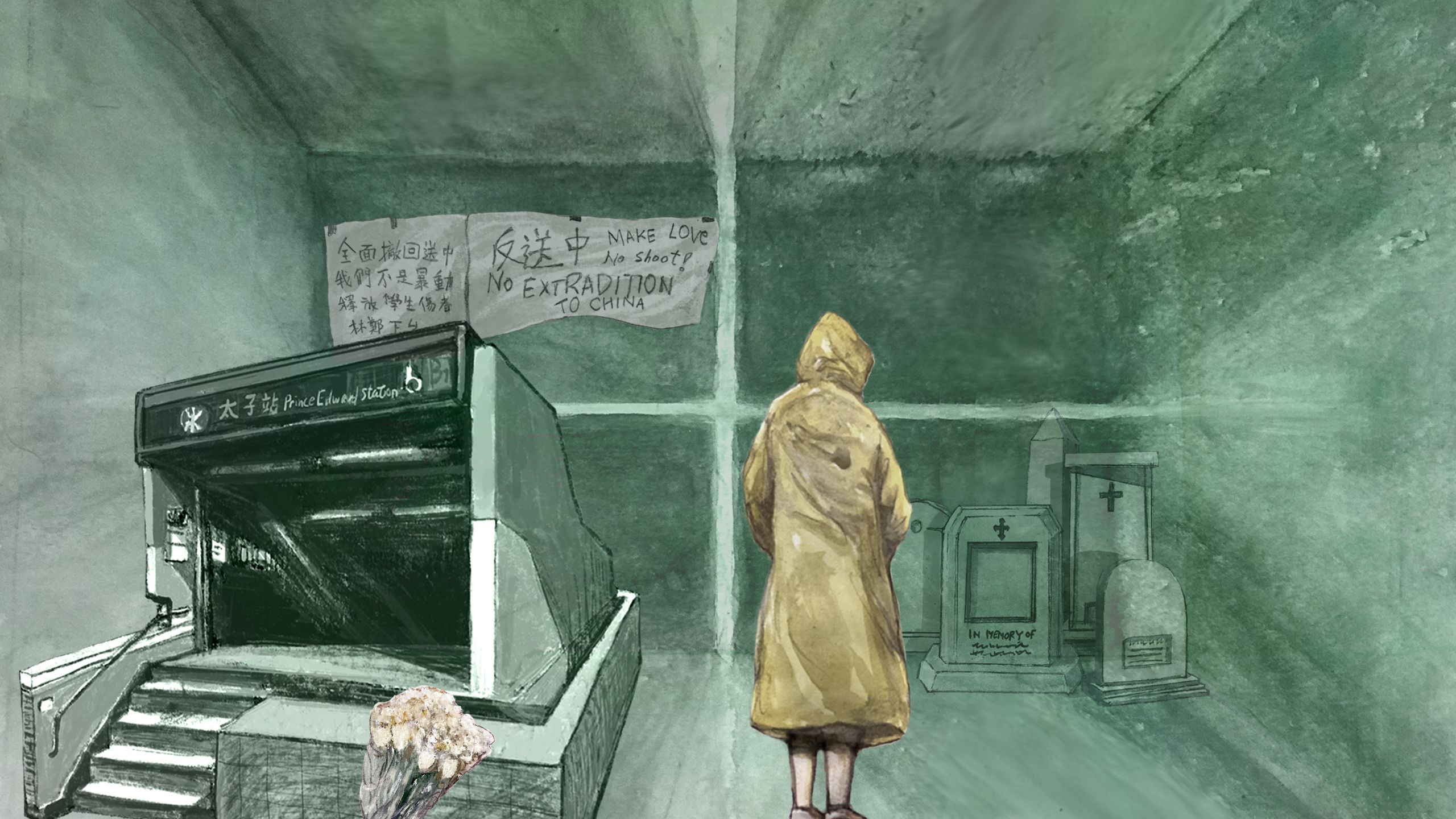

Hong Kong’s National Security Law officially took effect at 11 p.m. on Jun. 30, 2020. Lennon Walls full of colorful Post-it notes from the protests were taken down overnight. Protest graffiti and slogans were painted over.
And that was just the beginning. In the year since the National Security Law was implemented, many more things have disappeared from view in Hong Kong.
The protest movement itself began to disappear in the face of restrictions on public gatherings in the wake of the coronavirus pandemic, as did memorials for those who died in the movement, including Marco Leung, Chow Tz-lok and Chan Yin-lam. Gatherings marking the attacks on subway passengers and protesters at the Yuen Long Station on Jul. 31, 2019 and inside Prince Edward Station on Aug. 31, 2019 also stopped.
Writings from during the mass protest movement are also getting harder and harder to find.
Since the National Security Law took effect, public libraries under the aegis of the Leisure and Cultural Services Department have removed 34 books from their shelves, including I Don’t Want to be Chinese Again by political commentator Joe Chung, Liberating Hong Kong by engineer and Civic Party co-founder Albert Lai, Civil Disobedience and the Occupation of Central by former University of Hong Kong law professor Benny Tai, and Hong Kong Nationalism published by the same university’s student union.
In his book Return to Tiananmen Square, journalist Lin Mulian writes, "Memory—whether personal or national—is unpredictable and subject to all manner of vanity and self-serving impulses, as well as to distortions imposed by the current political structure."
Lin views the tendency for people to forget as the direct result of not being allowed to remember. Memories, however vivid, lose their solidity when they lose their place in the collective consciousness, when they are no longer public or legitimate. People forget because those in power expect them to.


Hong Kong television producer: "Now the programs are gone, they want us to forget our history"

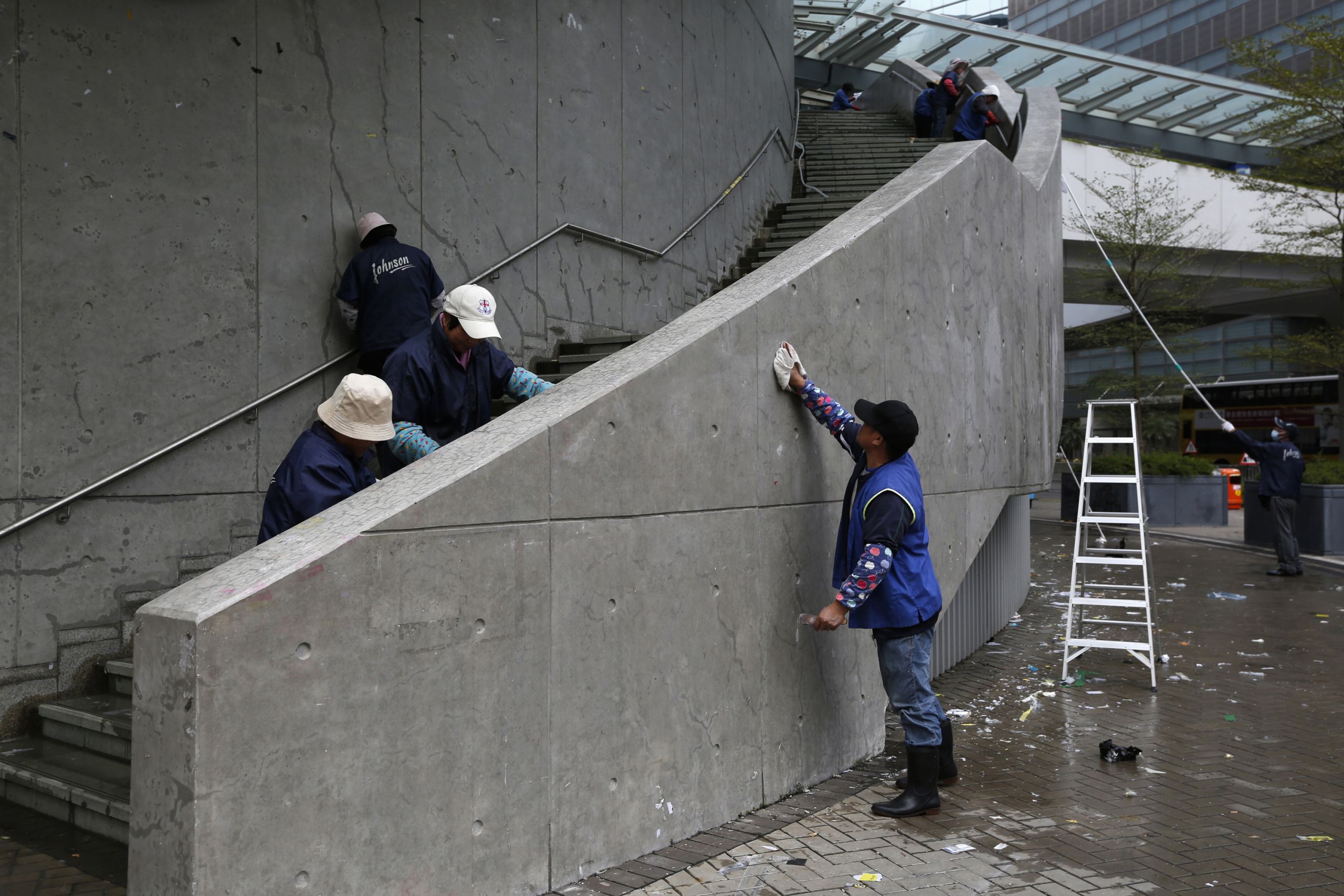
This process of memory suppression is also seen in the government’s clampdown on the media in Hong Kong. Government broadcaster RTHK has disappeared, or at least has lost its role leaving it a shell. A large number of popular current affairs shows –– including Talk Show, This Week and 830 Mag –– were removed from its schedule during a May 2021 restructuring.
A new policy decreed that all RTHK programs must be removed from the station’s YouTube channel one year after airing. This wiped out large numbers of reports on the 2019 protest movement from the internet, huge swathes of collective memory vanishing overnight.
RTHK producer Wing will never forget what happened at 4 p.m. on May 2, 2021. She watched as programs she wrote, directed and produced were deleted one by one from RTHK’s YouTube channel.
"The decision to delete these videos was basically a political one," she says with anger and sadness.
This was supposedly because the official RTHK website only offers reruns from the past 12 months.
"But leaving the videos on YouTube won’t crash the site," Wing says. "And the shows will reach more people that way."
Wing and her colleagues started a group chat that day to split up the huge task of downloading the videos themselves to create their own archive and preserve the memories.
She remembers bursting into tears while downloading the election forum shows.
"This was the fruit of our painstaking labor," Wing says. "It’s obvious that we didn’t do anything wrong, so why were they punishing us?"
In the case of a 2016 election forum show featuring pro-independence activist Edward Leung, who is currently serving a six-year jail term for rioting during the 2016 fishball revolution in Mong Kok.
Leung, who is widely regarded as the spiritual leader of the pro-democracy and anti-extradition protest movement, once headed the now-defunct political group Hong Kong Indigenous, which campaigned for Hong Kong to be allowed to maintain its separation from mainland China.
He is credited with coining the slogan "Liberate Hong Kong, Revolution in Our Time" during his 2016 Legislative Council election campaign, which became the rallying cry of the movement that rocked the city for several months beginning in June 2019.
Wing was devastated to see this video deleted.
"I used to think these programs were ordinary, but the government seems to be doing everything it can to wipe out all traces of Leung from the internet," she says.
"Now, not everyone will be aware that there ever was such a person, and some may never hear of his ideas."
Wing is a mother, a fact she believes makes her especially emotional.
"Without these reports, our memories are lost. When my child asks me what happened in 2019, I won’t be able to search for it online to show them," she says. "It will only be preserved on an external hard drive hidden under the bed, kind of like a banned movie."
She agrees that Hong Kong’s memories are fast disappearing, and it’s not just a question of videos being deleted from YouTube. Wing says that a large number of excellent programs never made it to air after they were completed. Take Hong Kong Connection, a current affairs show that first aired in 1978. The show has been ordered by management to focus on stories about people’s livelihoods. Its specials on the Jun. 4, 1989 Tiananmen Massacre and on the Jul. 31, 2019 Yuen Long mob attacks were canceled.
In late May 2021, a political program titled LegCo Review, debuting in 1986, was taken off air, probably because it aired shots of a long-distance running event commemorating the Tiananmen Massacre at the end of one show.
"This is no longer a question of crossing a red line," Wing says. "We’re awash in a sea of red now."
"These programs have been deleted because they want us to forget our history; because journalism is the first draft of history," she states. "They want to replace our voices in the historic record."


Veteran journalist and Tiananmen Massacre witness Mak Yin Ting: “We have to fight against forgetting”
This particular form of political amnesia has happened before, and not in Hong Kong.
The ruling Chinese Communist Party (CCP) has been busy erasing memories of the Jun. 4, 1989 Tiananmen Massacre for the past 32 years.
Police in Beijing form a tight security cordon around Tiananmen Square every year around June 4 to nip any potential memorials in the bud.
Chinese internet service providers filter out related keywords to make it impossible to search for or post about June 4.
Fu King-wa, associate professor at the Journalism and Media Research Center of the University of Hong Kong, used to lead a team that tracked down deleted posts on the Twitter-like platform Sina Weibo between June 1 and June 4 every year. They collected around 54,000 censored posts from 100,000 Weibo accounts.
Some of the content lasted less than half an hour online.
Clearly, June 4 and the pro-democracy movement at Tiananmen Square that year are highly sensitive topics and politically taboo, and public memory of those events is still being eliminated.
The constant, deliberate forgetting and cover-ups across state-run media and online platforms create a chilling effect, with those who refuse to forget treated as criminals in mainland China.
Activist Chen Yunfei was sentenced to four years’ imprisonment on suspicion of "picking quarrels and stirring up trouble" after he and other rights activists visited the graves of students who died in the Jun. 4, 1989 crackdown by the People’s Liberation Army (PLA).
Meanwhile, what was once an annual candlelight vigil to commemorate the victims of the massacre in Hong Kong’s Victoria Park has been banned, with the authorities citing restrictions linked to the coronavirus pandemic. So that has disappeared too.
Rights lawyer, vigil organizer and vice chair of the Stake Chow Hang-tung was arrested on the eve of June 4, 2021. Gradually, Jun. 4, 1989 is disappearing from public view in Hong Kong, becoming a sensitive word. Unlike mainland China, it’s still possible to search and view content relating to the events of June 4. But the feeling of powerlessness from the ban on the vigil has left Hongkongers feeling voiceless.

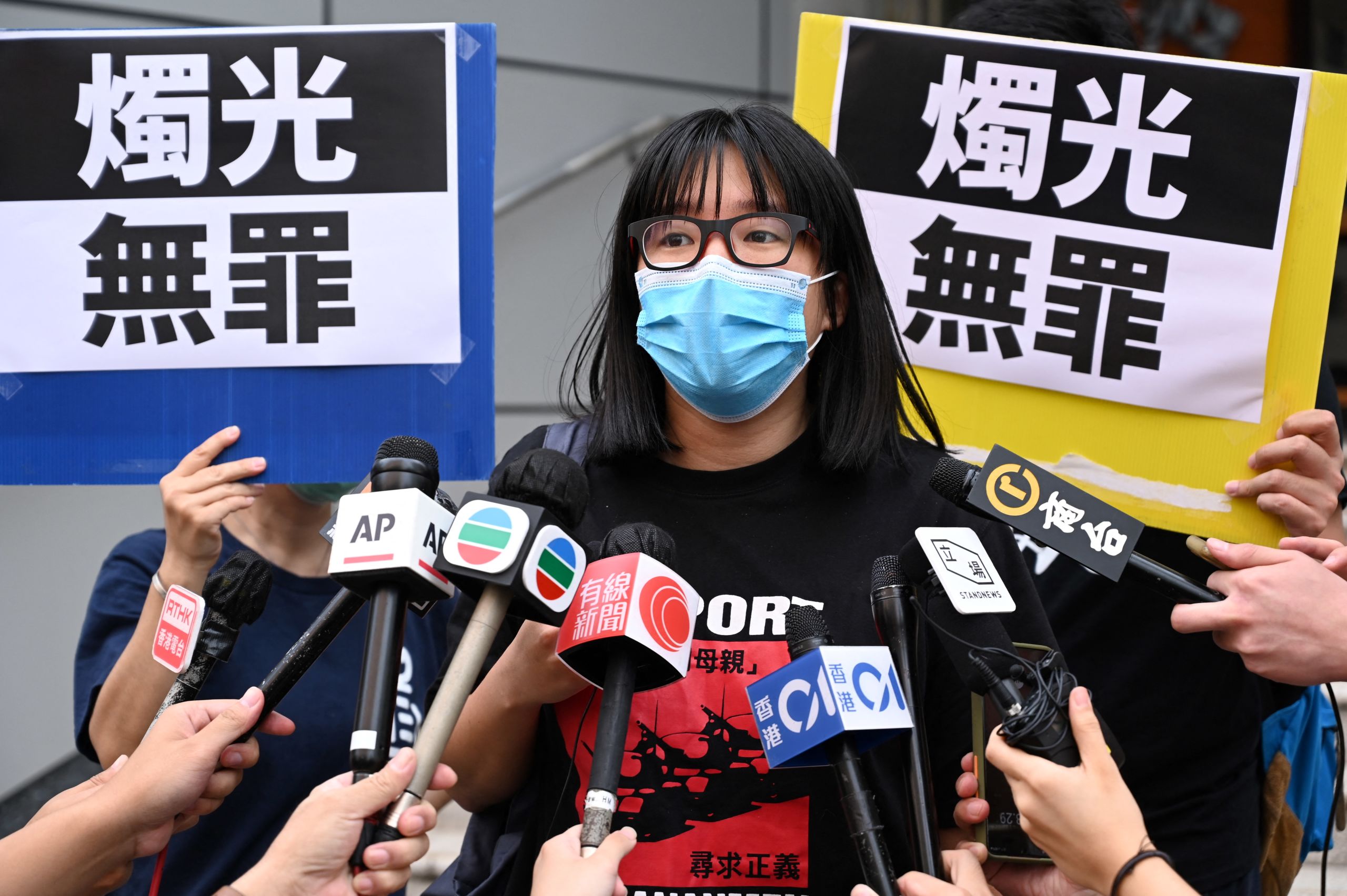
Political activist Chow Hang-tung speaks to the media after leaving Tsuen Wan police station a day after being arrested in Hong Kong on June 5, 2021. (AFP)
Political activist Chow Hang-tung speaks to the media after leaving Tsuen Wan police station a day after being arrested in Hong Kong on June 5, 2021. (AFP)
Hong Kong journalist Mak Yin Ting has personal experience of how the CCP instigates amnesia and muddies the historical record.
She arrived in Beijing on Apr. 22, 1989 to take up her post as deputy assignment editor on the Hong Kong Daily News. She left on June 5 after witnessing history first-hand the night of June 3.
On the evening of June 3, she and her fellow reporters were on a terrace at the Beijing Hotel, which offered them a clear view of Chang'an Avenue [which leads from there to Tiananmen Square]. They called in their stories from this relatively safe vantage point.
"There were a lot of people going back and forth to start with," Mak recalls. "In the early hours [of June 4] I heard someone yelling at the PLA, asking them why they wouldn’t let the ambulances through, because there were people hurt."
"After that, we saw people carrying the injured out on flatbed tricycles, taking them to hospital, in the direction of Wangfujing Street," she says.
Mak is able to pick out fragmented images from her memory, and piece them together to make a shattered picture.
"In the early hours of the morning, they started continual loudspeaker announcements calling on the students to leave the Square," she recalls. Mak remembers the tense atmosphere as she watched the armored cars heading down Chang’an Avenue in a long line, straight into Tiananmen Square.
"Then, at about 4 a.m., the lights went out, and my memory is totally blank after that," she states.
"So much news is blocked in mainland China, and the state media won’t report the truth," Mak says. "I often found while working in Beijing that people would protect you with their lives once they found out you were a journalist from Hong Kong, because they wanted the truth to get out."
Back in Hong Kong, Mak contributed to a book titled The People Will Not Forget about the massacre. The publishers reprinted it for the 10th and 20th anniversaries. Every year, Mak and the other journalists would tell people what they heard and saw, and sometimes were invited to give talks and lectures at schools and universities.
Back in Hong Kong, Mak contributed to a book titled The People Will Not Forget about the massacre. The publishers reprinted it for the 10th and 20th anniversaries. Every year, Mak and the other journalists would tell people what they heard and saw, and sometimes were invited to give talks and lectures at schools and universities.

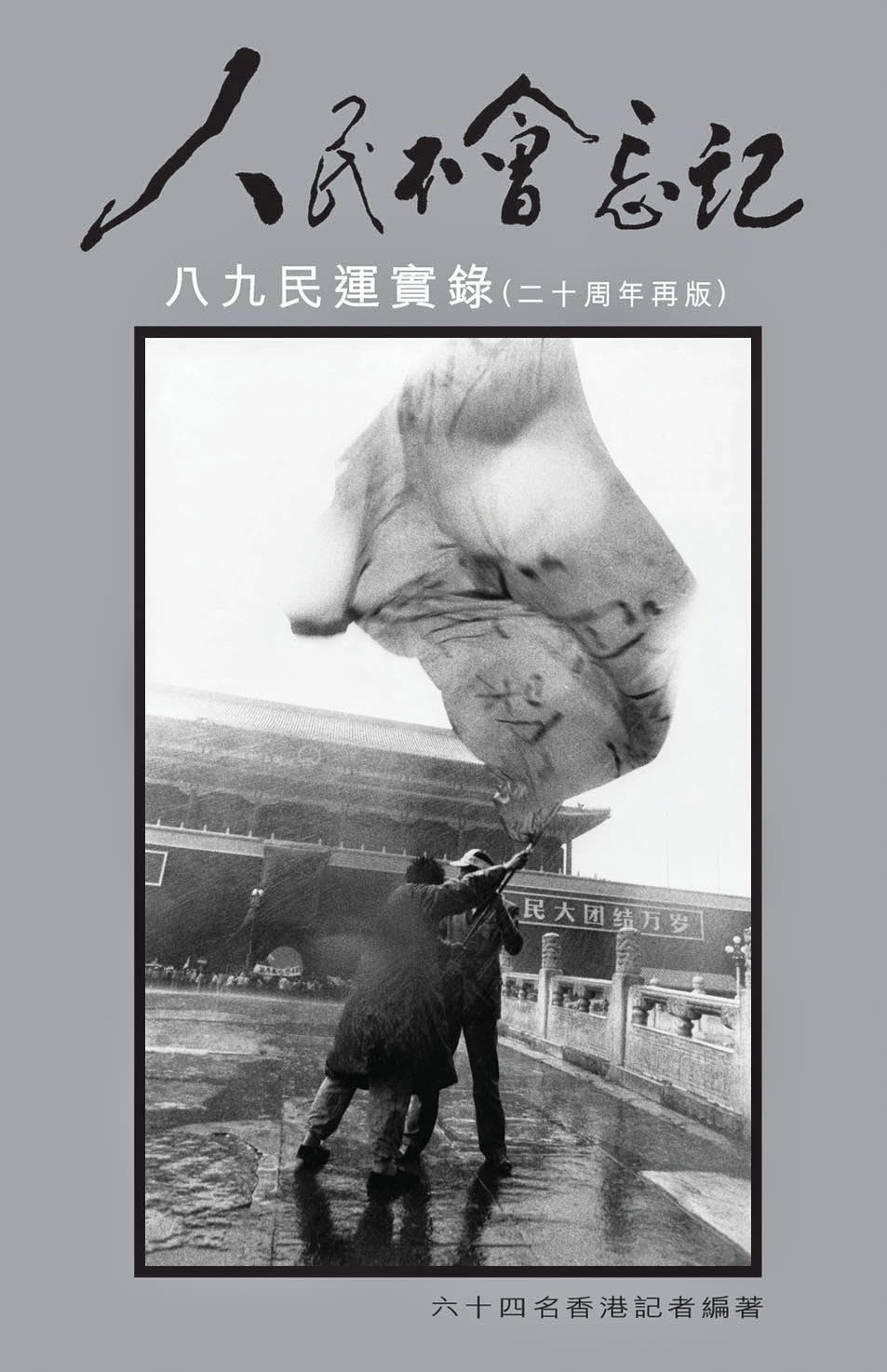
Mak Yin Ting's book The People Will Not Forget
Mak Yin Ting's book The People Will Not Forget
In the wake of Jun. 4, 1989, the CCP used economic development as a strategy to stabilize public opinion in mainland China. There was no official mention of the bloodshed in the media, in the education system or elsewhere.
The government targeted large numbers of people who talked about the massacre, to erase their memories and voices. People known to have been there weren’t allowed to visit Tiananmen Square. Ding Zilin, who founded the Tiananmen Mothers victims’ group and who investigated the incident for many years, lost her university teaching post, as did her husband. The group’s organizers were followed and monitored, prevented from moving around freely, even kept under house arrest.
According to Mak, state media relied on directives from the central propaganda department telling them what not to write about, which meant that nobody wrote about the Tiananmen democracy movement or the massacre.
Most of the methods used to cover up the events of April-June 1989 were hidden from public view, Mak says, with automated censorship of any keywords related to the topic. Some cover-ups were obvious.
Mak cites the example of reading a novel written in the 1990s and finding asterisks in some areas blocking the characters from view.
"It’s not until you look more closely at what comes before and after [the censored parts] that you realize that they are blocking out the number '89' or the number '64'," she remarks.

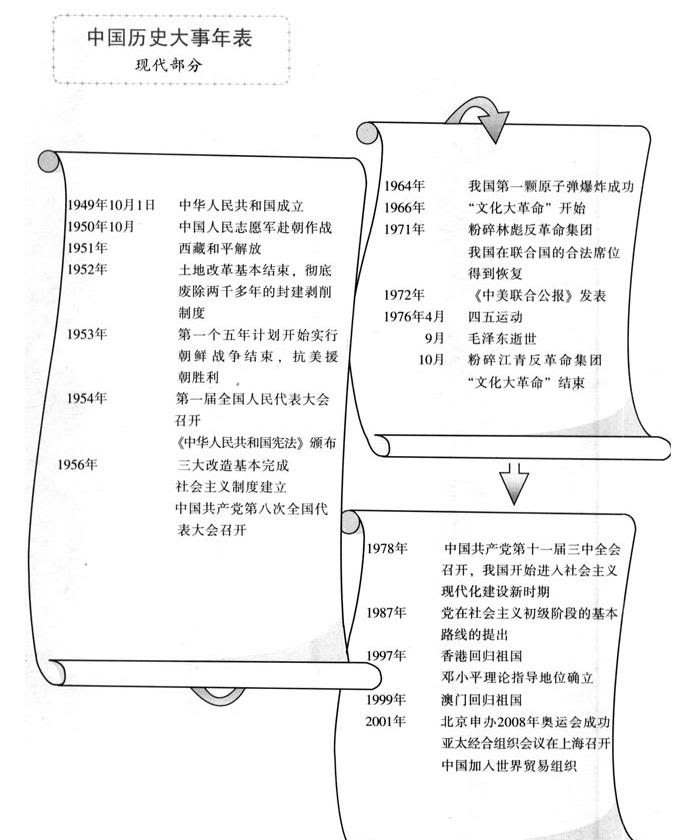
In an 8th grade Chinese textbook, the chronology of Chinese historical events jumped from 1987 directly to 1997. (Web)
In an 8th grade Chinese textbook, the chronology of Chinese historical events jumped from 1987 directly to 1997. (Web)
Gradually, writers started self-censoring to avoid having their work pulled from the shelves, and deliberately avoid having those numbers in the text.
Books like The Truth About June 4 and Princelings of the CCP, which contained documents from internal government meetings around the time of the 1989 protests, were eventually banned in China.
All of the power of the state was enlisted to ensure that public and private sectors cooperated with government censors to block any reports or other content about that time, until, after several years, there was nothing but a deafening silence on the matter. Now, more than one generation of people in mainland China refuse to believe the true accounts of what happened in 1989.
In the early days, the process of covering up the Tiananmen Massacre was a bit gentler.
"I was called in to drink tea [with propaganda officials], who told me some of the things I had written weren’t in line with the situation in China," Mak recalls. "But we never agreed that I would change anything I was doing."
In recent years, the authorities have become far more aggressive in promoting their media agenda.
When large numbers of former District Council members and former opposition lawmakers took part in the candlelight vigil in Victoria Park in 2020, many were later charged with inciting others to participate in, organizing or participating in an unauthorized assembly, and given prison sentences ranging from four to 10 months.
The authorities clamped down on the vigil in 2021, and Victoria Park was no longer a sea of candle flames. The event, according to Mak, was pretty much erased. Things were getting a lot more like mainland China.
There are signs that the authorities are gradually building an internet firewall in Hong Kong. National security agents are empowered under the National Security Law to require internet service providers to block certain websites to users in Hong Kong, a fate which has already befallen sites like HKChronicles, also Hong Kong Charter 2021, which was blocked in June 2021.
Mak states that while these blocks aren’t directly linked to the June 4 massacre, they give an inkling of how memories may continue to be erased and controlled in future.
And the strategies used by the CCP to erase the 1989 protests from collective memory are similar to those employed against the 2019 protest movement, which began as a mass protest against a law allowing extradition to mainland China, she says.
She cites a centennial retrospective of CCP history published by state news agency Xinhua that describes the 1989 movement as "a counterrevolutionary rebellion," with the Party forced to take action to defend the regime and protect the people.
Similar themes were apparent in Chinese media attacks on the 2019 protest movement, which described the anti-extradition protesters as having been "infiltrated and manipulated by foreign powers."
"The way the official propaganda distorts memory is very similar [across these two incidents]," Mak says.
"The next step is punishment. Anyone commemorating the Tiananmen Massacre is punished. The members of the Tiananmen Mothers victims’ group are just one example," she states.
"In Hong Kong, the purge of the Hong Kong Alliance in Support of Patriotic Democratic Movements of China and democrats who commemorated Jun. 4, 1989 is another," she says, adding that such memorials and collective rituals serve to keep memory alive.
"Officials will always seek to justify themselves. But we must try our best to keep a low profile and preserve the raw materials of memory," she describes. “"It doesn't matter how we do it, but we will produce some form of systematic record in due course."
"At first, we thought it was quite straightforward; a matter simply of preserving the truth. We didn’t realize the CCP would start trying to tamper with history,"Mak declares.
"We never thought we’d have to fight a battle against forgetting."

Local Youth Will: Without memory, there is no Hong Kong identity



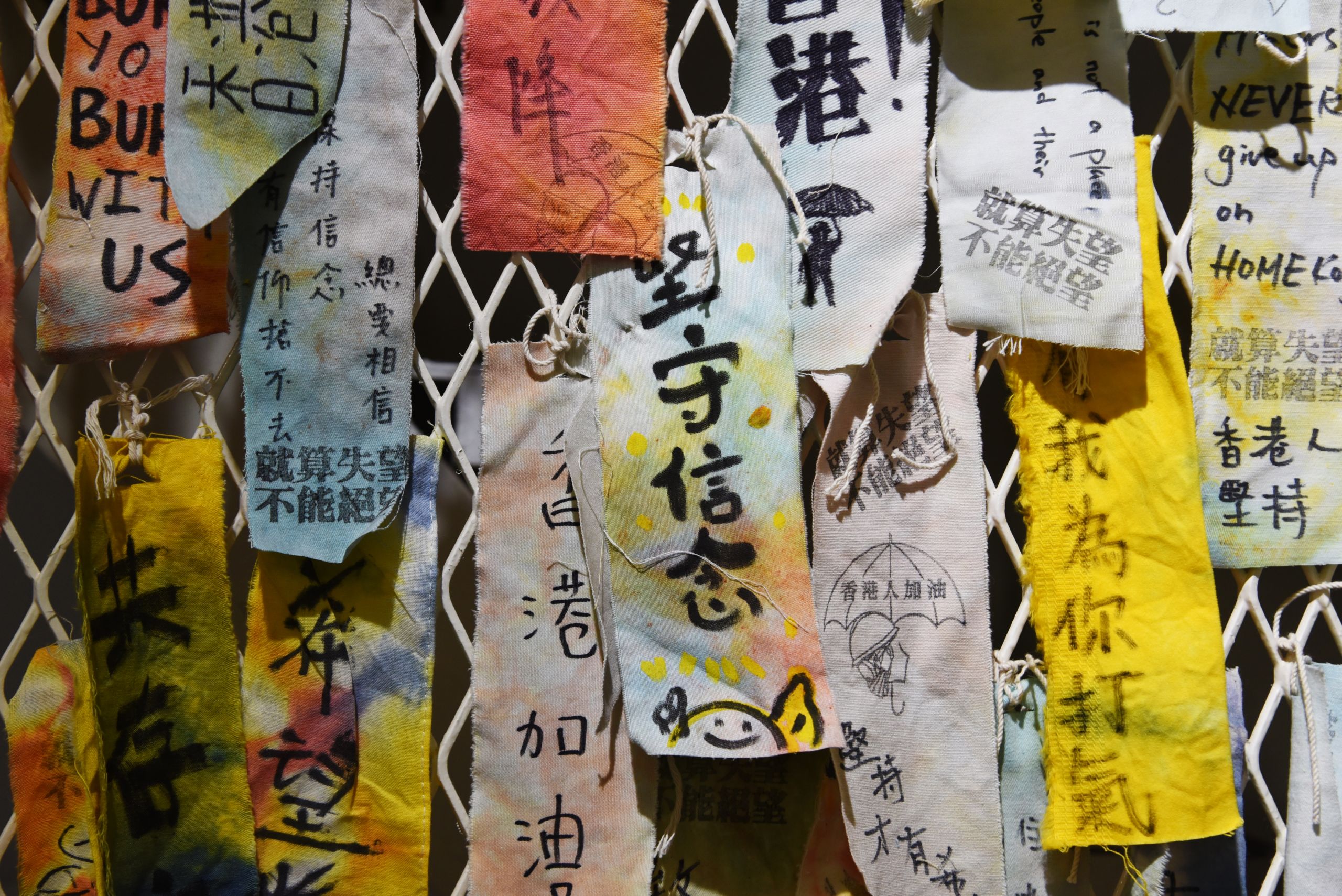
This June saw the second anniversary of the start of the 2019 protest movement.
There are still people trying to preserve collective memories despite the deliberate attack on remembering..
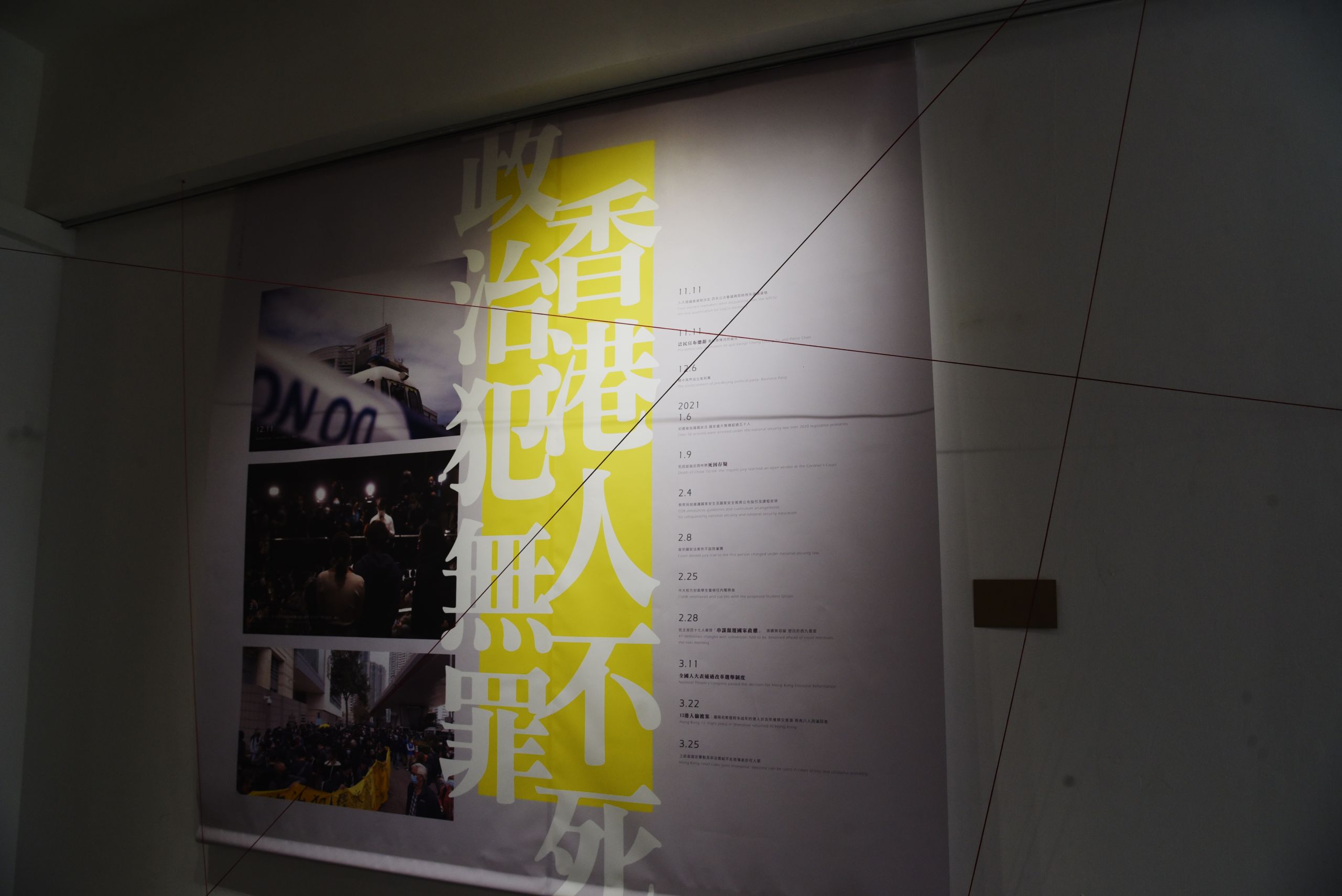
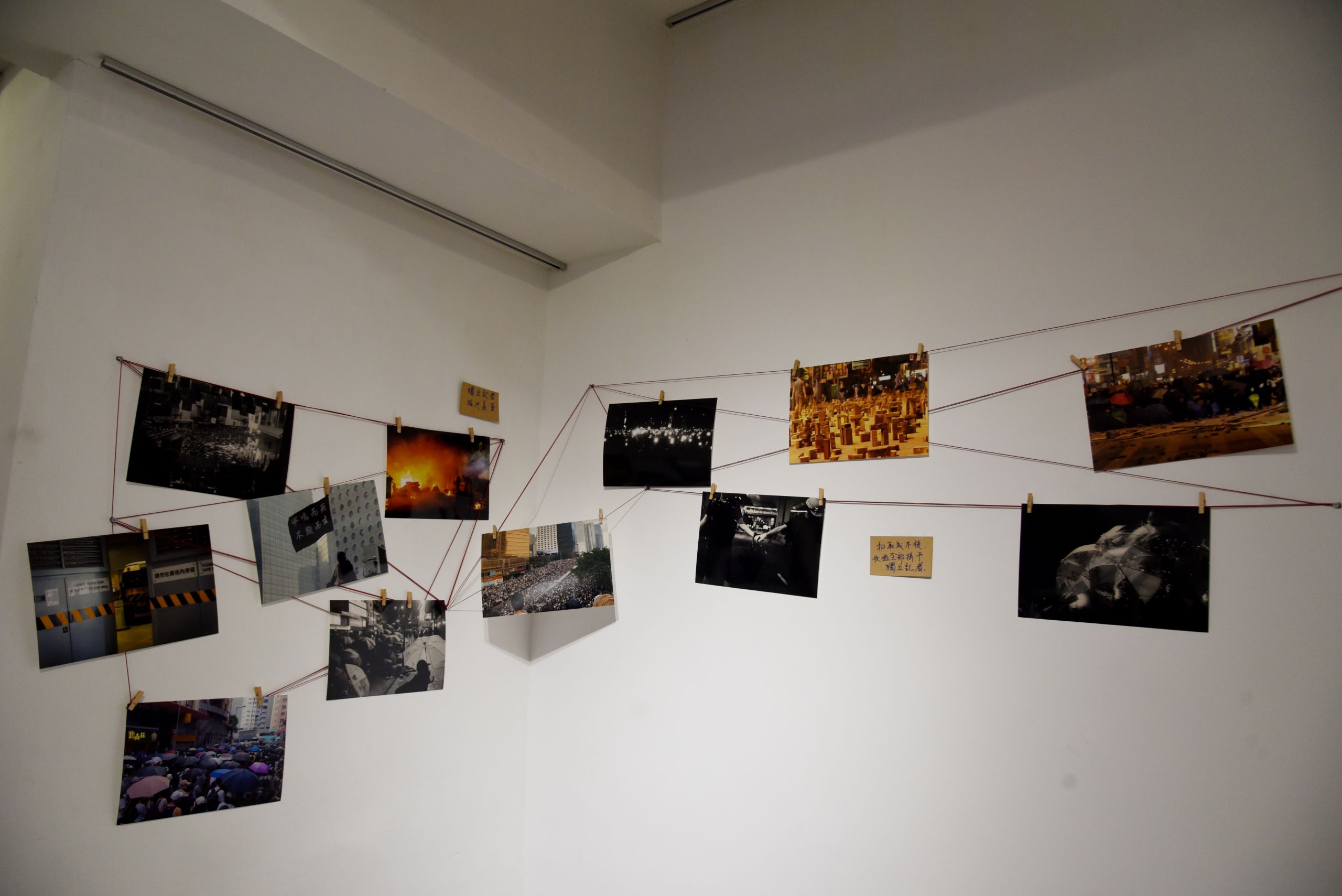
Loh Tz-wai, the 21-year-old convener of Local Youth Will, put on a retrospective event at Parallel Space in Sham Shui Po, where he exhibited works of art designed to allow visitors to relive some of the key moments of the protest movement.
He says it’s not just the traces of important dates in the movement that are in danger of disappearing; much of what happened throughout the whole of 2019 is being erased, with the authorities trying to falsify people’s memories.
So, his exhibition showed events in their correct timeline as well as how they were being tampered with by the authorities.
For example, RTHK documentary producer Bao Choy being found guilty of an illegal search of vehicle records while researching the mob attacks on passengers in the Yuen Long Station on Jul. 21, 2019.
How the new National Security Education Day held in schools is changing memories.
Loh is acutely aware of how hard it is to counter such attacks on remembrance.
"It’s hard to pass on memories," he admits, touching the back of his head. "Luckily, memory isn’t just about facts, but also emotion."
The event included news recordings from 2019, including speeches in the Legislative Council, and recordings of live interviews by a Stand News reporter at the Yuen Long Station on July 21.
The idea was to use sounds of the past to awaken memories in people’s minds.
Loh studied politics at university and likes comparative politics. He fears that collective memories will gradually become hazy, and an entire generation will lose that sense of community among the people of Hong Kong.
"To put it in a more old-fashioned way, I’m a Hong Konger born and bred: it’s my fate," Loh says. "And being a Hong Konger is so bound up with memory and community."

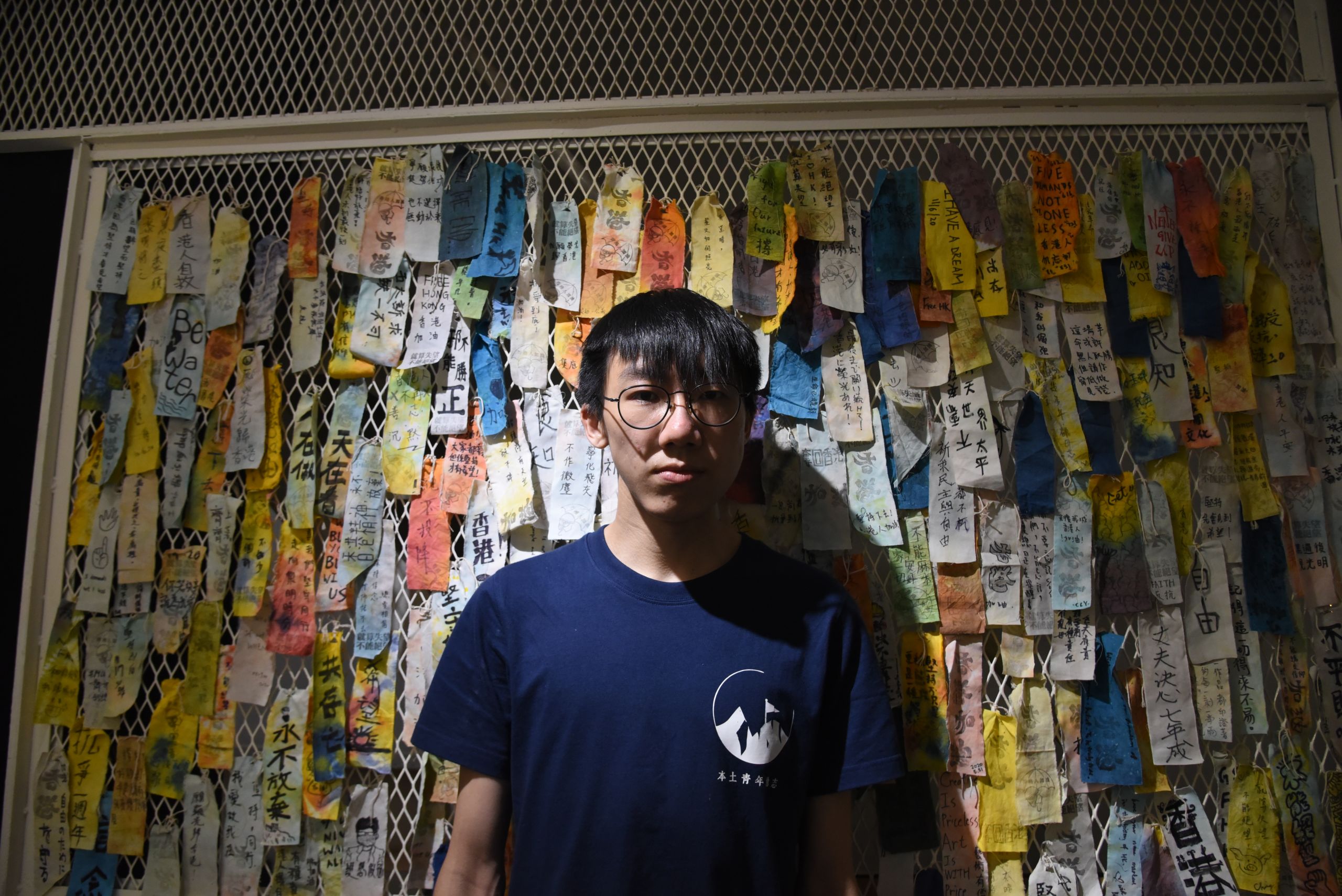

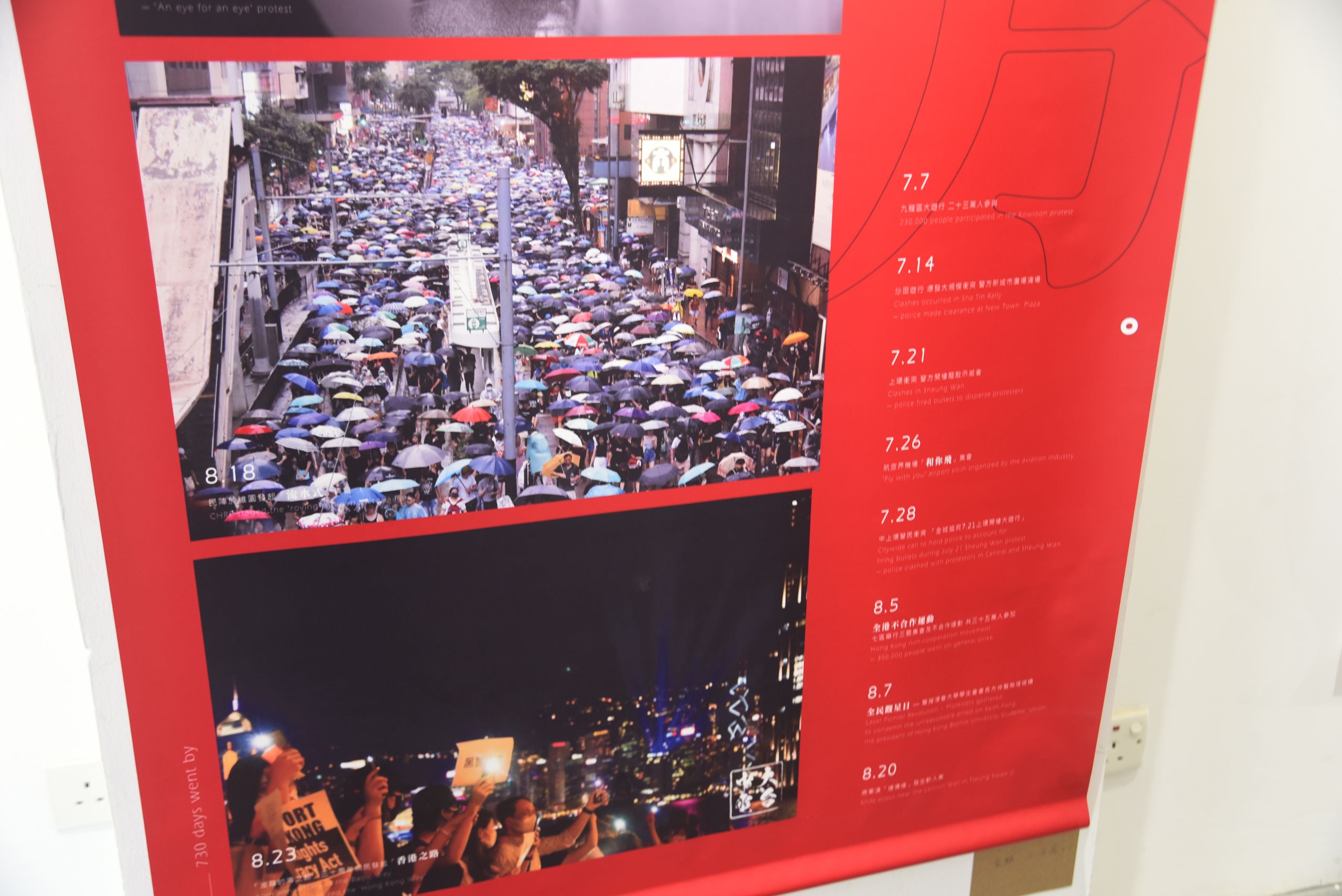

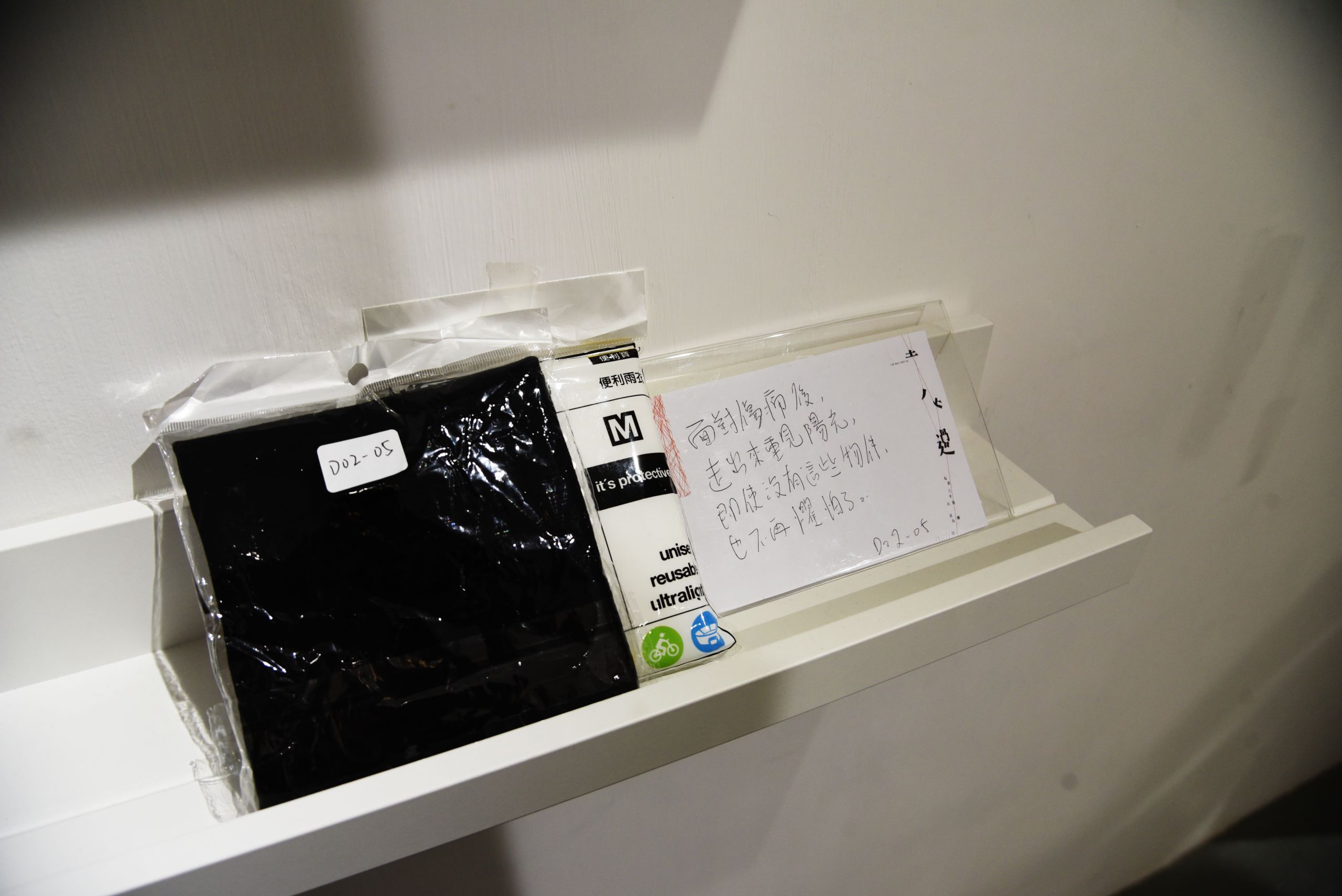

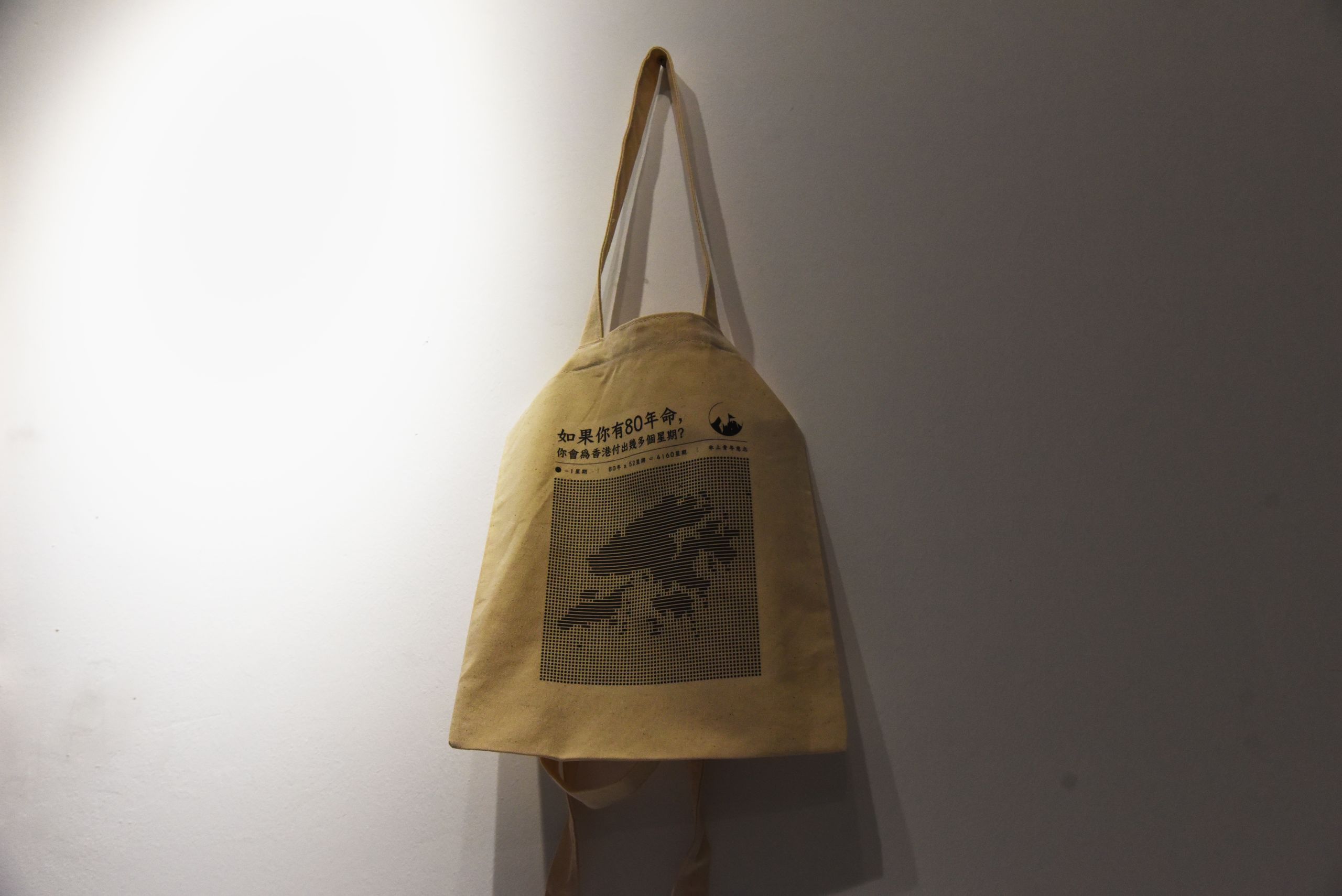

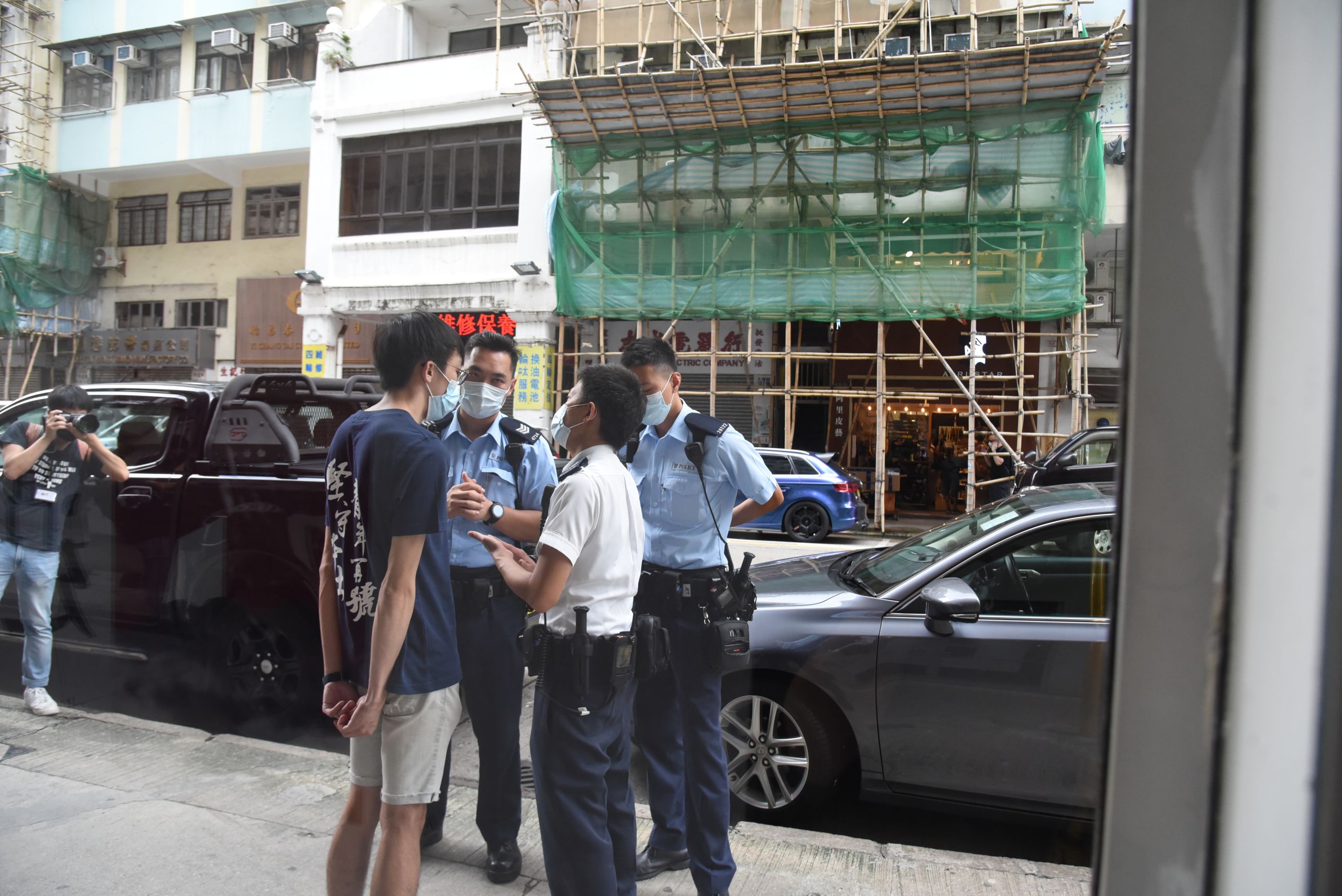
Such activities bring with them the risk of prosecution under the National Security Law. But Loh can still remember weeping when he heard that protester Marco Leung had jumped from the top of the Pacific Place shopping mall on Jun. 15, 2019. He remembers going for a long run alongside the river near his home, drenched in sweat from head to foot, as if he could sweat out his grief through his pores. He got home, showered, then sat down to write a declaration, which he took out onto the streets soon afterwards.
That declaration was included in the exhibition alongside the other artefacts of the protest movement. Loh also encouraged visitors to share their own memorabilia, exchanging them for another item left, leaving a letter telling the story of the item in question.
"Once memory loses touch with feeling, it becomes a meaningless and trivial fragment," Loh says.
"Memories are the basis for mobilization in a democratic movement," he declares. "They underpin our identity. That’s why they’re so important, and that’s why they have to be saved."


 Built with Shorthand