
In-depth report
In the Name of "National Security":
Patriotic Brainwashing In Hong Kong's Schools

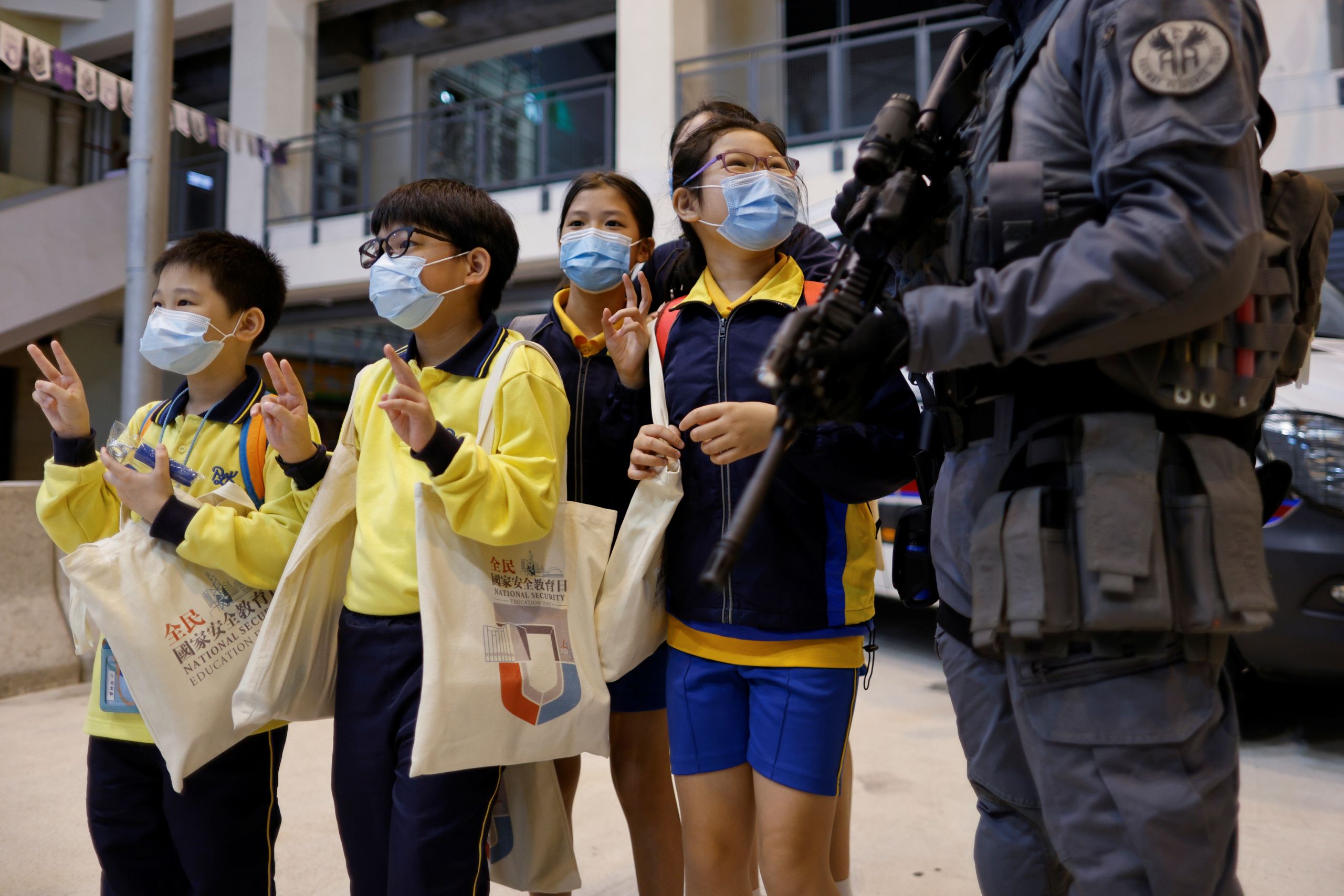
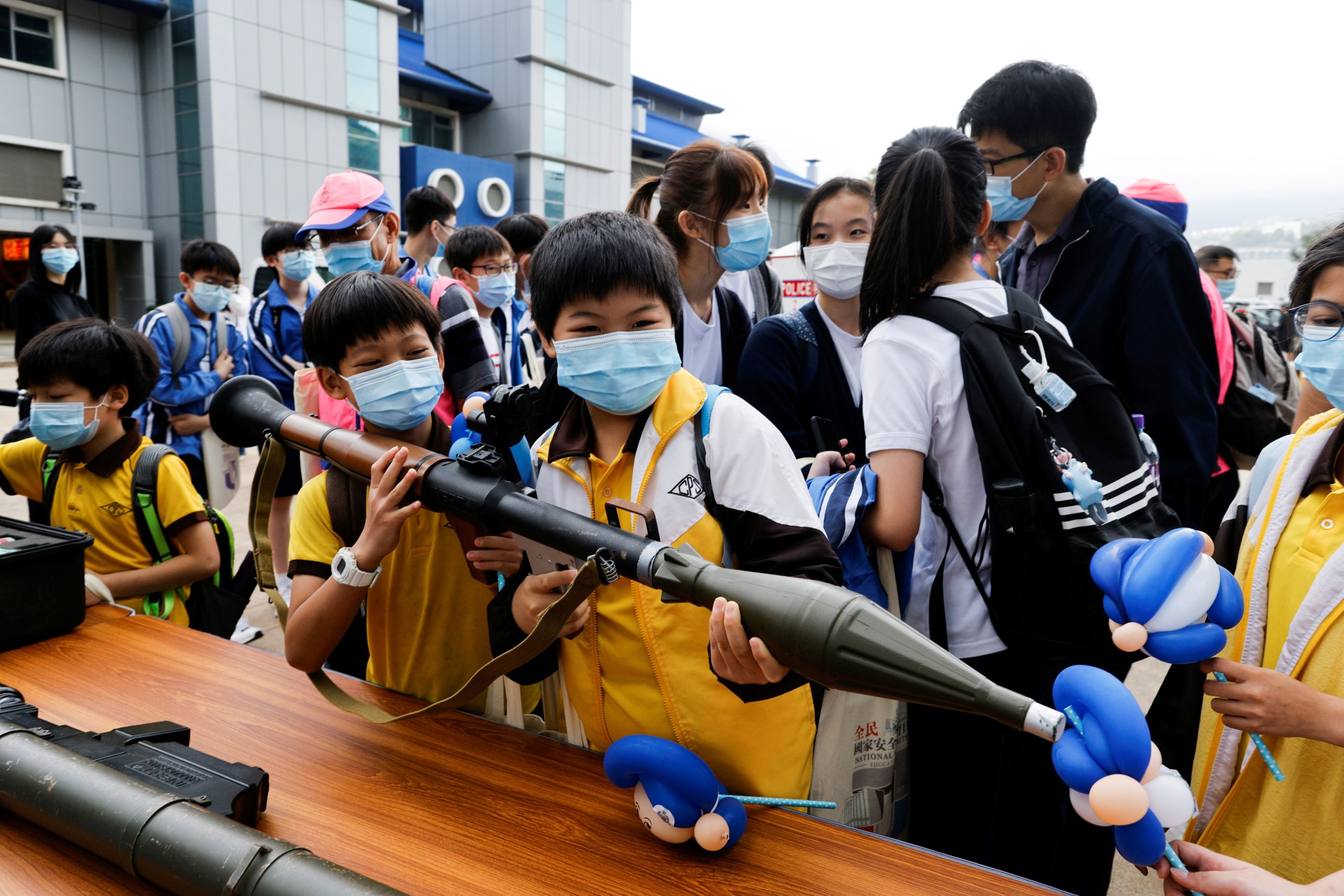
2On Apr. 5, 2021, a group of Hong Kong schoolchildren went on a visit to the police training academy, where they role-played as police officers in a mock-up of an MTR subway car, brandishing dummy automatic weapons.
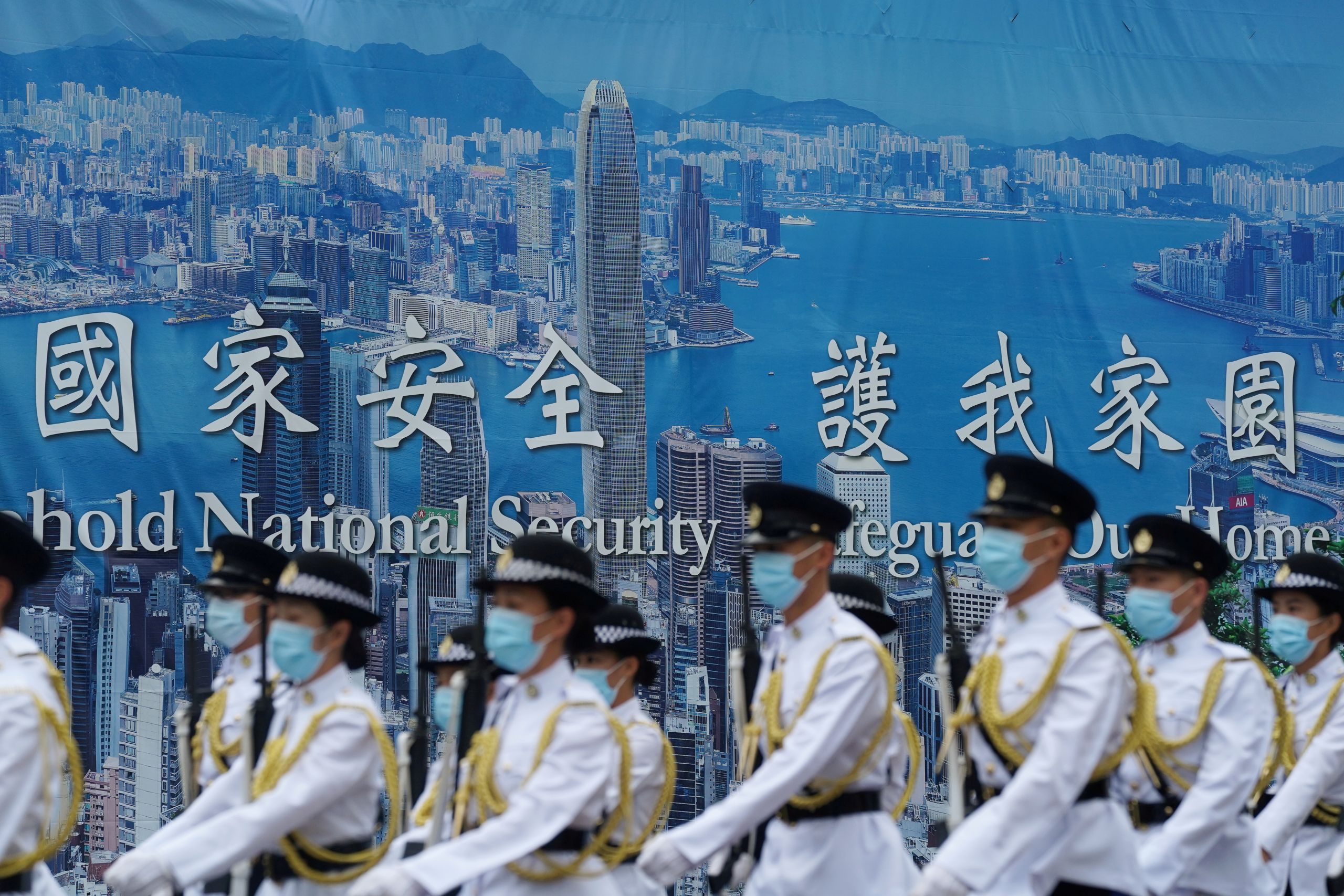
The visit marked the first government-backed National Security Education Day , following the ruling Chinese Communist Party’s (CCP) enactment of a draconian national security law on Hong Kong on Jul. 1, 2020, criminalizing many forms of public dissent and political activism.
A photo of a schoolchild pointing a fake gun at the head of a classmate made the front pages of the Hong Kong and the international press that day. The scene was eerily familiar: it seemed to be a mock-up of the Aug. 31, 2019 attack by riot police on trains inside Prince Edward MTR station that left dozens of unarmed civilians injured at the height of the pro-democracy protests. This shook people up, sparking widespread concerns over the future of Hong Kong's education system.

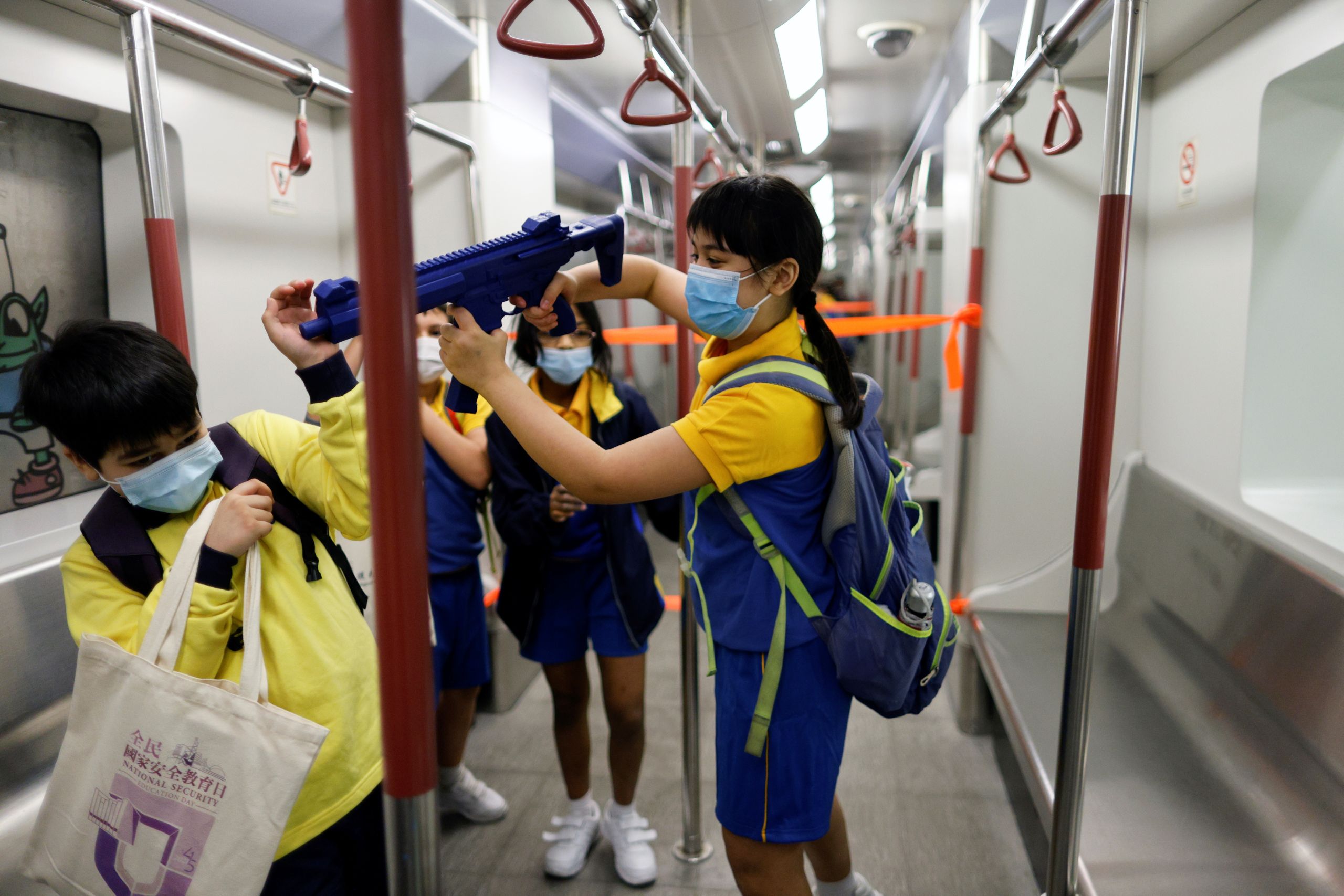
During the open day to mark the National Security Education Day at Hong Kong Police College, a child plays with a mock submachine gun at a model Mass Transit Railway (MTR) station in Hong Kong. (Reuters)
During the open day to mark the National Security Education Day at Hong Kong Police College, a child plays with a mock submachine gun at a model Mass Transit Railway (MTR) station in Hong Kong. (Reuters)
Earlier that day, national security adviser Luo Huining, who also heads Beijing's Liaison Office of the Central People's Government in Hong Kong, presented a large number of textbooks on the National Security Law, intended for Hong Kong primary and secondary schools. They were received by Hong Kong chief executive Carrie Lam, who also chairs the National Security Committee. This ceremony was described as "significant." An account on a website promoting the event made it clear why, proclaiming that "safeguarding national security is everyone's responsibility," and promising that life would be better than before under the protection of the new law.
Articles had already appeared on the Hong Kong government news website calling for multiple approaches to support schools to develop the national security education curriculum.
National security education hadn't even been fully developed, and people were already beginning to feel the full power of the state apparatus in this new and shocking manifestation. A city once known for its freedom was about to learn what it felt like to get uncomfortably close to the motherland.

Goodbye, liberal studies
Goodbye, liberal studies
Public high school teacher Tz-kin has felt extremely uneasy for more than a year now. Since the start of the 2019 protest movement, the liberal studies syllabus he taught became the target of public criticism.
The pro-China, pro-establishment faction and even the Chinese state media and CCP mouthpieces were blaming liberal studies for the protest movement, saying it had radicalized the current generation of Hong Kong students.

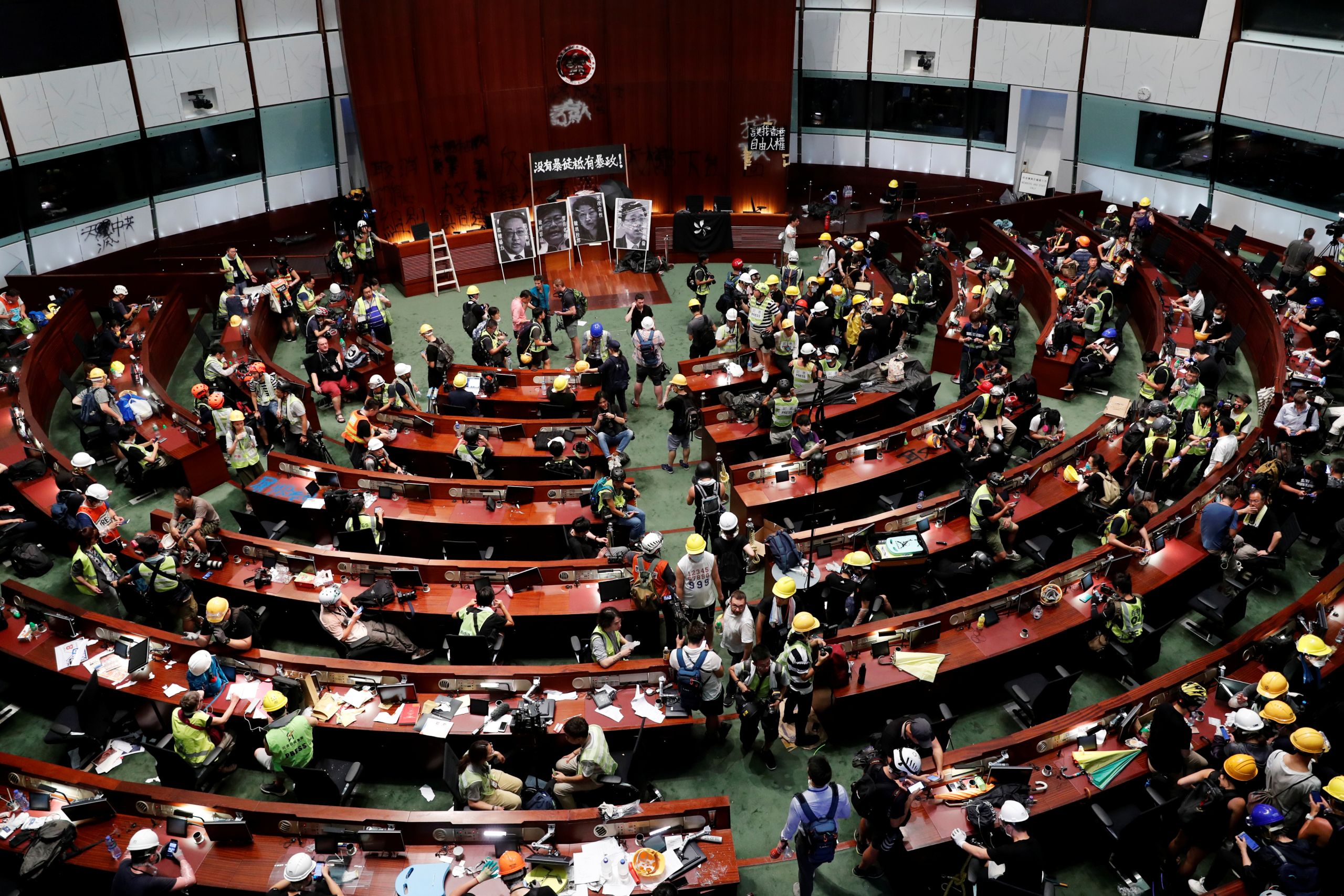
On Jul. 1, 2019, protesters broke into and briefly occupied the Legislative Council (LegCo). Former chief executive Tung Chee-hwa immediately called for the demise of liberal studies, saying that it had totally failed during his tenure, and had served only to turn large numbers of people against the government.
And, once the National Security Law took effect on Jul. 1, 2020, the government set about reforming the education system.
In March 2021, the education bureau announced that the liberal studies syllabus in secondary schools would be replaced by the citizenship and social development program starting in the new academic year, and would be implemented starting in the fourth grade of secondary schools (equivalent to the 9th grade in the US).
Tz-kin was in despair.
The reforms were rushed through, with the consultation period only lasting a few short months. Prior to the new semester starting, he just had a syllabus without any specific teaching materials.
"Even the smartest cook can't make a meal without rice," Tz-kin lamented at the time. In particular, he worried about crossing the ubiquitous but vaguely defined political red lines.
The education bureau said it was compiling curriculum and assessment guidelines in conjunction with the examinations and assessment board, and promised to come up with teaching materials.
In the meantime, teachers will be expected to teach students about "one country, two systems" using existing teaching materials. The bureau said it was confident that teachers would manage, given the abundance of existing material.
This did little to dispel teachers' concerns, however.
According to an earlier survey by the Education Association, over 80 percent of the bureau’s consultations didn't seek out or include the opinions of classroom teachers, and over 80 percent also said that they weren't being given enough time to implement the new syllabus.
In addition, fewer teaching hours and less contents had been allocated to citizenship and social development compared to its predecessor, liberal studies.
The new curriculum focused on three themes: "one country, two systems," China's development since reform and opening up [in 1979], and a globalized world.
In about 150 contact hours, students were expected to learn the meaning of safeguarding national security, including the overall concept of national security, the National Security Law, Hong Kong’s long-term development, and how to strike a balance between the rule of law and human rights.
Symbols of state power including the Chinese flag, national emblem, national anthem, the contents of Annex III of the Basic Law, and how the government supports the relationship between Hong Kong and mainland China were also on the syllabus.
The courses also aim to provide learning opportunities for Hong Kong students in mainland China.
While the courses are compulsory, assessment procedures have been simplified from a school-based graded assessment for liberal studies based on independent, critical thinking and individual inquiry, to a straight pass/fail grade based on rote-learning.
Tz-kin used to include extracurricular information in his teaching materials, to bring current affairs into the classroom, allowing students to discuss the pros and cons of real-world events. This helped teach the students critical thinking.
Now that the concept of independent inquiry has been reduced to a pass/fail system, Tz-kin worries that students will no longer be able to acquire critical thinking skills in the classroom. He and his colleagues privately refer to the citizenship and social development program as CSD. The acronym is the same as Hong Kong's prison service, the Correctional Services Department.
"When schools become prisons of thoughts, my students become prisoners," he says. "I never thought that critical thinking would be regarded as a crime."
Tz-kin graduated college with a joint honors degree that included liberal studies. He picked this major mostly because he thought teaching would offer him a stable career. And yet it is undergoing huge and unexpected changes. After nearly eight years in the profession, Tz-kin has seen several social movements in Hong Kong, starting with the campaign against patriotic education in 2012, the Umbrella Movement in 2014, and the anti-extradition movement of 2019. Things, he says, have changed.
"I just wanted to leave my students with something useful," Tz-kin states.
But he also believes that the current political climate isn't the best time for him to show off his talents.
When National Security Education Day arrived, Tz-kin held a flag raising ceremony for his students, per the education bureau’s request.
He was also required to submit a detailed teaching plan for the school to review.
He realized that he, like his students, was also now a prisoner of the CSD.






Eggs under the red flag
Eggs under the red flag
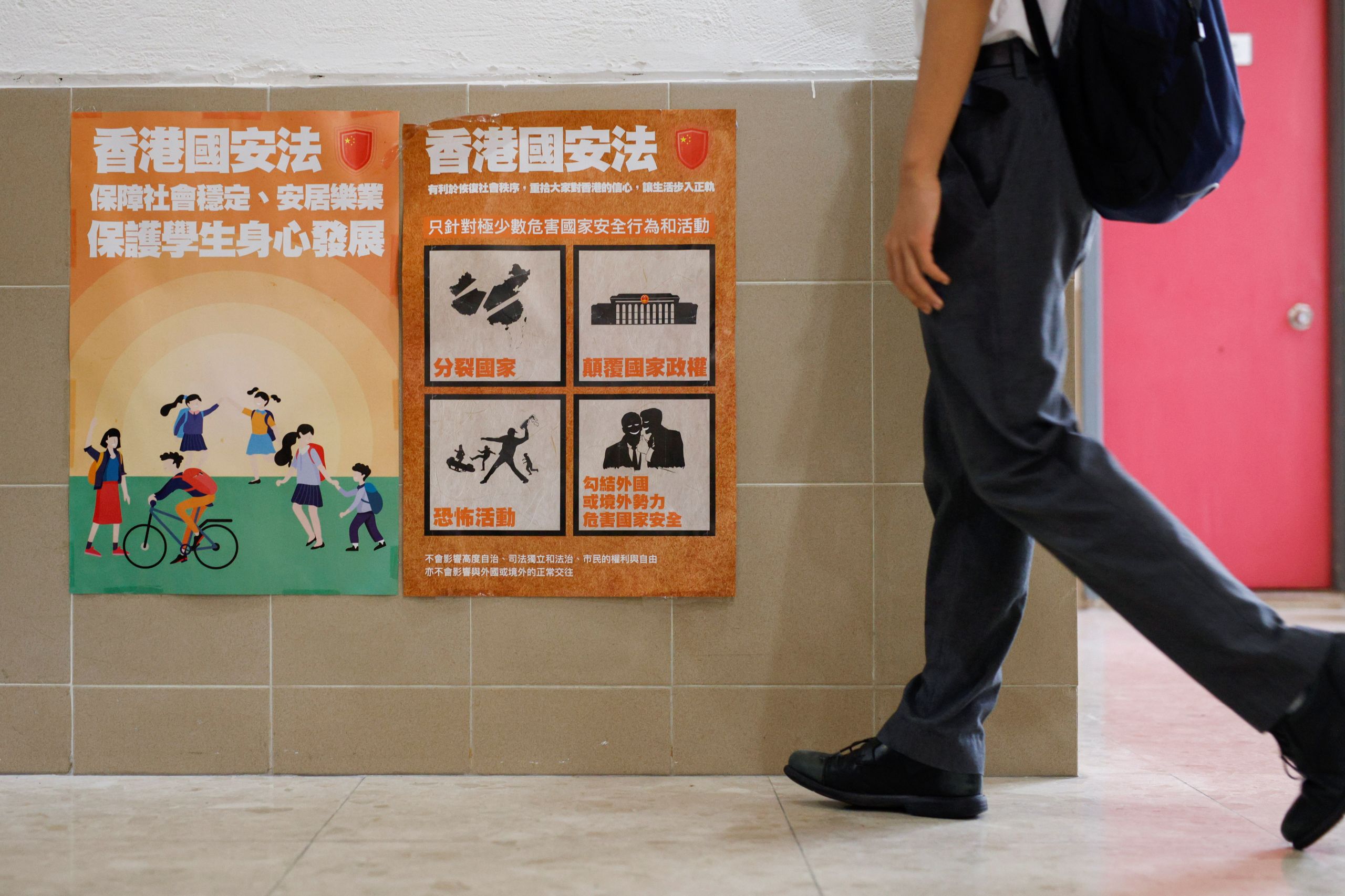
Amy teaches history at a private religious school. She used to feel that she lived a quiet life, with no major ups or downs. When National Security Education Day came around, her principal just put up a few posters around the school, and that was it.
Amy had thought that her subject was unlikely to be in the eye of the storm, and wouldn't cause her too much trouble.
In private, she even felt that the reforms to the curriculum were a good thing. Liberal studies was already controversial when it was brought in in 2009. Some people complained that the syllabus was too all-encompassing and made it too hard to achieve a high grade. Others predicted that it would lead to students who were Jacks or Jills of all trades but masters of none. In 2005, a parent asked Rita Fan, then permanent secretary at the education bureau, if liberal studies would allow students to learn by rote memorization.
The new citizenship and social development syllabus had far fewer academic requirements, with students expected to study fewer topics, reducing their overall burden.
But all of that came with a palpable change in the atmosphere at Amy’s school. Nearly 40 students had been withdrawn from the school before the second semester was even over, around one third more than in previous years. A recent survey by the Education Association found that about 40 direct-funded (private) primary and secondary schools had reported more than 20 withdrawals during the current school year, mostly because they were emigrating or going to study overseas. Four schools said they had lost more than 50 students. As a teacher, Amy had to admit that this was a little unusual. As the mother of a four-year-old, she was puzzled, and wondered whether it had more to do with changes in the situation of this generation of students.
Amy and her husband Lu Jiang had completely different views on the state of the Hong Kong education system. Lu Jiang was born in mainland China and came to Hong Kong in high school. He had always opposed China's patriotic education program, and was very cautious about the reforms to the Hong Kong curriculum.
After China’s economic reforms starting in 1979, there had been a certain amount of support for political reform, especially in the private sector, with some believing in total Westernization. After the People’s Liberation Army (PLA) massacre in Tiananmen put a bloody end to the pro-democracy movement, then CCP General Secretary Jiang Zemin proposed and began to institutionalize a nationwide patriotic propaganda and education campaign, to resist Western influences on students, and to prevent a peaceful evolution towards democracy or a color revolution. In place of lessons about class struggle and communist theory, students were fed a diet of state-backed nationalism instead. One year after the massacre, Jiang gave a speech commemorating the May Fourth Movement, in which he made the claim that socialism and patriotism were "essentially the same," setting the tone of the patriotic education campaign.
Guidelines for the implementation of patriotic education were published in 1994. The focus was on guiding young people along the path of socialism with Chinese characteristics and the Party’s basic line. They covered the long history of the Chinese nation, the excellence of traditional Chinese culture, as wells as the CCP line on the achievements of socialist modernization, the state of the nation, China's brand of socialist democracy and the legal system, national defense and national security, national unity, peaceful unification (Beijing's claim on Taiwan), and its plan to rule Hong Kong under "one country, two systems." More specifically, the guidelines set out proposals to promote a nationalistic etiquette that would cultivate a sense of reverence for the national flag, the national anthem and the national emblem. An updated version of the guidelines, issued in 2019, were titled "Guidelines for the Implementation of Patriotic Education in the New Era," and added CCP General Secretary Xi Jinping’s thoughts on the New Era, the Chinese Dream and the Great Rejuvenation of the Chinese Nation.
The patriotic education program advocated by Jiang Zemin, in place for more than 30 years, is essentially a social and political campaign. Just like the "three antis," "five antis," Cultural Revolution and every other political campaign launched by the CCP since its inception, the movement has at its heart the coercive power of the state, with patriotic education as a manifestation of it and political control as its goal.
The government reinforces these movements among the general public by establishing and maintaining new political rituals aimed at removing doubt, instilling the individual's absolute subordination to the state and bolstering the state's monopoly on truth. It also invests in information control systems, namely, the Central Propaganda Department, the State Administration of Radio, Film and Television and the Great Firewall.
As part of the patriotic education campaign, these rituals are closely integrated with educational brainwashing.
Brainwashing refers to a series of techniques and processes that intentionally or forcibly inculcate thoughts into a target, to meet the aims of a manipulator.
Among the central tenets of patriotic education are:
- Get them young. The younger, the better.
- Controlled messaging, using a top-down, centrally compiled set of textbooks presenting a unified narrative.
- Establishment of authority, namely, the supremacy of patriotic feeling, the leadership of the CCP and country before family.
- Establishment of foreign enemies, namely, foreign powers or 'forces' who are trying to subvert CCP rule in China.
- The removal of doubt, namely, instilling the individual's absolute subordination to the state and the state's monopoly on truth.
- Investment in information control systems, namely, the Central Propaganda Department, the State Administration of Radio, Film and Television, and the Great Firewall.
When these work together, then patriotic education can be fully realized, both in society and in institutions. And once this kind of education becomes embedded in political ritual and ceremony, the whole of society becomes a prison.
"To sum it up, we are just 'eggs under the red flag'," Lu Jiang says, quoting veteran rocker Cui Jian.
The image is an apt description of the patriotic education’s uniformity. And the campaign doesn't stop at schools and families. It has succeeded in mobilizing every part of modern Chinese society.
The media and publishing industries, film and entertainment, historical sites, museums and cultural centers have all responded to its diktats. Every government department, ministry and organization must participate, whether at the national or local level.
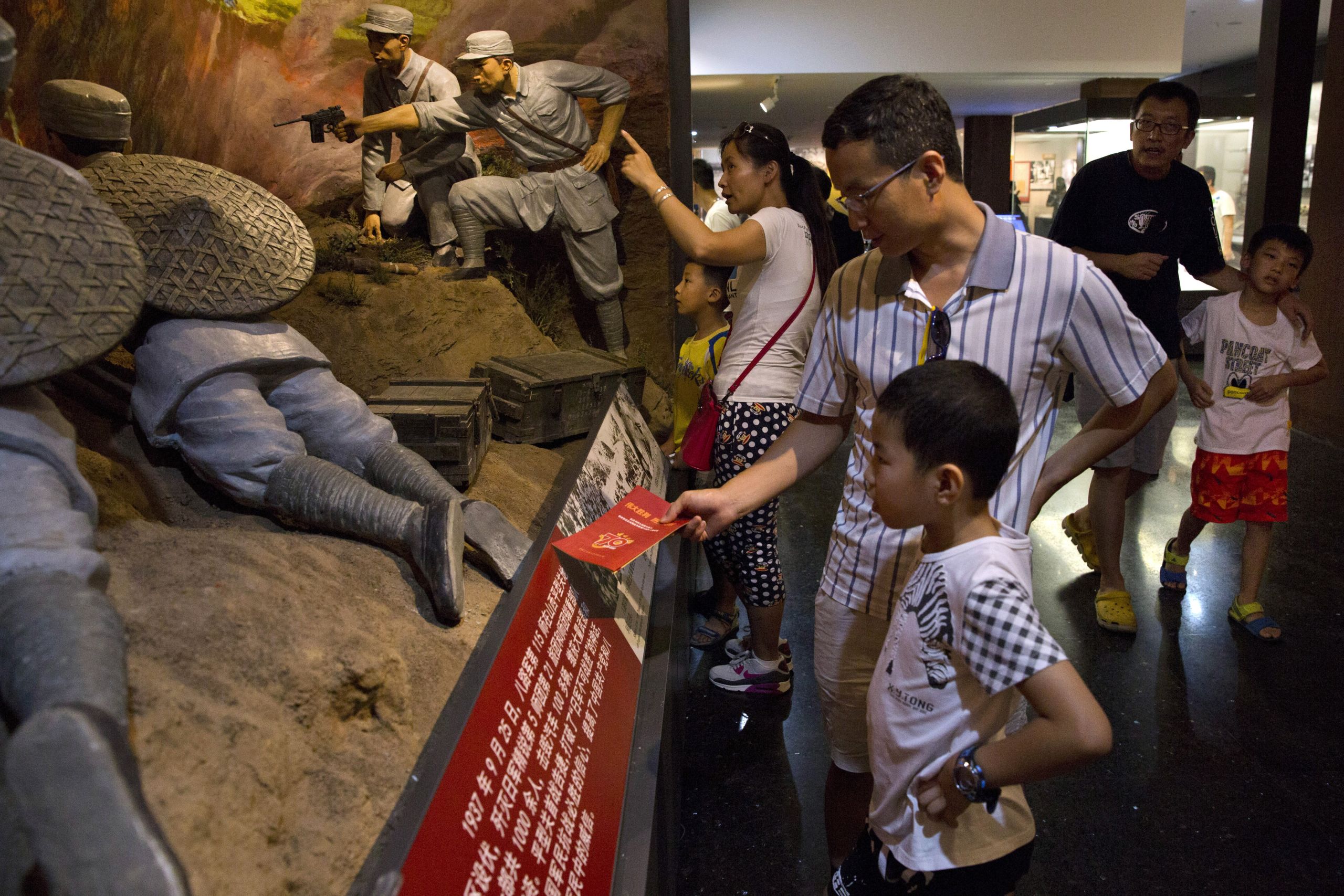
Parents teach children about history at the Memorial Museum of Chinese People's War of Resistance against Japanese Aggression near a display about anti-Japanese resistance in Beijing. The museum is one of 500 popular sites in China for patriotic education. (AP Photo)
Parents teach children about history at the Memorial Museum of Chinese People's War of Resistance against Japanese Aggression near a display about anti-Japanese resistance in Beijing. The museum is one of 500 popular sites in China for patriotic education. (AP Photo)
Yet schools are at the front line of its implementation. And they are continuing the task of taking patriotic education out of the classroom and into communities.
In primary school, Lu Jiang recalls drawing on the blackboard, taking part in patriotic essay-writing and singing competitions, lauding patriotic heroes and visiting patriotic education centers. All of these activities are still going on, and are being improved upon. From July 1997 to September 2019, 473 new patriotic education centers were built under the aegis of the Central Propaganda Department, including at Tiananmen Square and in the Forbidden City.
And in March 2021, a sign appeared on a vacant lot in Sha Tau Kok, Hong Kong, which read "Patriotic Education Center." The specific plans for the plot are as yet unknown.
"Patriotic education doesn't just affect what you know; it affects your whole outlook," states Lu Jiang, who has thought long and hard about his experience of it as a boy.
"Our teacher taught us that whenever we hear the national anthem, we must perform the Young Pioneers salute," Lu says. “So, the whole time I was in primary school, whether I was at home or out in public, I would stop everything and salute in the direction of the national anthem whenever I heard it. All of my classmates would do this, too.”
"Patriotism was regarded as the most important measure of a human being, and we always referred to China as our motherland," Lu says. "If you love your country, you must be absolutely loyal to it and always be on the alert against attempts to destroy or subvert it by hostile forces," he recalls being told.
"It's a strange sort of victim mentality, and it is also a manifestation of the lack of distinction between party and state," he admits.
The narratives instilled in children by China's patriotic education campaign have basically stayed the same since their inception in the 1980s and 1990s. China is described as a unified, outstanding nation with a splendid traditional culture, with a history of being invaded and oppressed by Western powers. Only under the leadership of the CCP can it advance in the direction of independence, prosperity, rejuvenation and global ascendancy. The lines between nation, state and party are blurred, while patriotism and support for the CCP leadership are seen as the same thing. This reshaping of the collective mindset leads to an ideological monopoly and the reshaping of individuals' personal identities. Under extreme collectivism, individuals are only allowed to act as screws in the government machine, and as the machine runs, it also strengthens the legitimacy of the CCP regime.

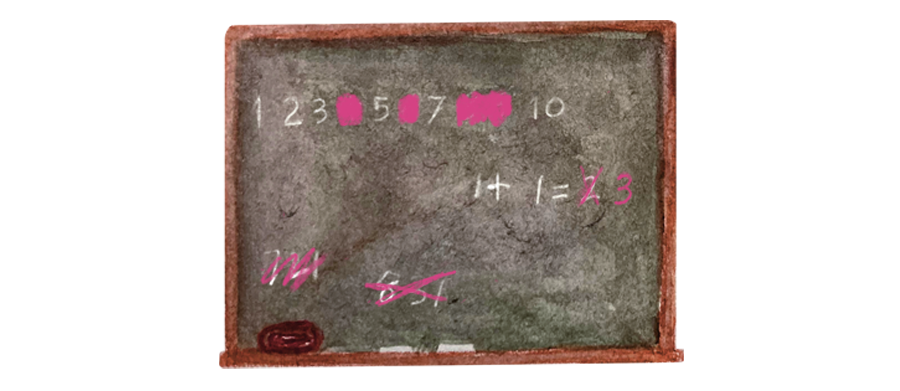
China’s troll army springs into action
China’s troll army springs into action
Now, China is getting ready to bring patriotism to its ultimate conclusion.
Some say that previous Chinese leaders including former CCP General Secretary Hu Jintao were wary of nationalism, fearing that stirring up the population in this way could undermine the process of economic opening up, not to mention political stability. This meant that they were sometimes more willing to leave room for controversial, Western ideas. And yet they subtly used patriotic fervor, allowing it to ramp up at times, as was the case during the anti-Japan movement of 2012, before clamping down on it. But under CCP leader Xi Jinping, the patriotic education campaign is more ubiquitous and more unified. Even living some distance from it in Hong Kong, Lu Jiang feels there has been a sea change.
Recently, he read in a group chat about an event at his nephew's kindergarten, where the children are expected to dress up in PLA uniforms and sing a song titled "Children Grow up Happy if Their Hearts Turn to the Party," in honor of the CCP centenary on Jul. 1, 2021.
His cousin said that children's PLA uniforms with the Eighth Route Army badge on them are selling like hot cakes on the online shopping platform Taobao.
And it wasn't just happening in kindergartens. Primary and secondary schools, colleges and universities were all required to put on special cultural performances or themed activities to mark the CCP centenary.
The November 2019 update to the "Guidelines for the Implementation of Patriotic Education in the New Era" calls on institutions to "start from a young age and focus on building a strong foundation to mold the entire personality."
According to a 2019 survey of 100 colleges and universities and nearly 2,000 college students conducted by state news agency Xinhua, just over 94 percent of college students said they "love the motherland and are strongly patriotic." And more than 99 percent of respondents in universities said they felt proud of "China's improved international status as a result of its progress."

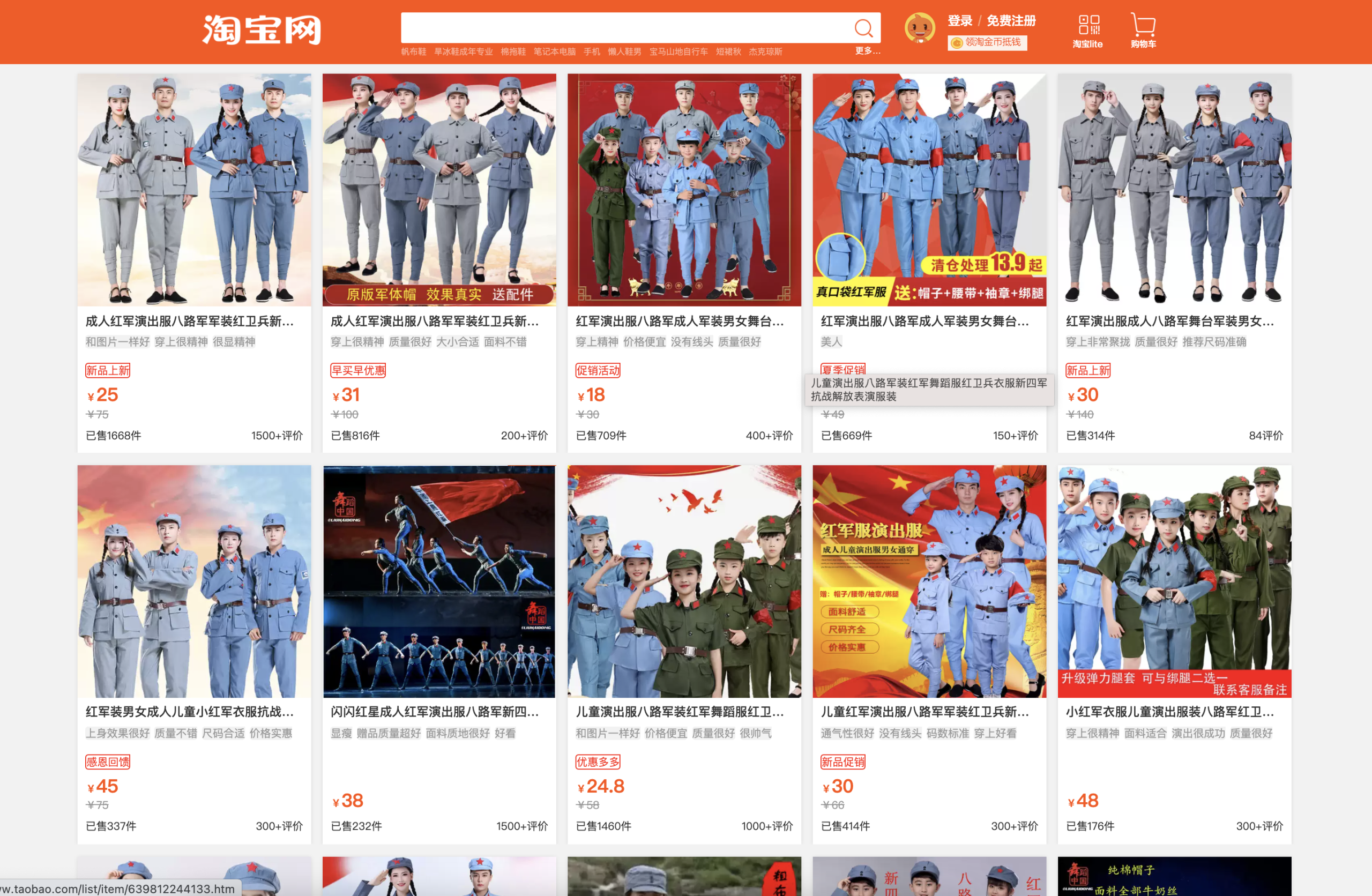
People's Liberation Army uniforms for sale on Taobao. (Taobao.com)
People's Liberation Army uniforms for sale on Taobao. (Taobao.com)
The internet is awash with patriotic fervor too, as the party harnesses young people’s interest in online gaming, cartoons, and short videos.
The CCP's Youth League and other patriotic organizations have set up accounts on popular social media platforms, including Weibo, Bilibili, and Douyin. They attract a regular army of online supporters and trolls. They often get revved up by celebrity patriotic accounts for a slight or perceived slight, or the slightest whiff of national humiliation. Not all of them are paid CCP commenters, or 50-centers. Some are just young people volunteering. During the 2019 protest movement in Hong Kong, these young people piled onto Facebook, Instagram, Twitter and other foreign websites to cheer for the motherland and curse the young protesters in Hong Kong as "waste" and "cockroaches."
In 2021, China will amend the Law on the Protection of Minors to delete a clause requiring schools to cultivate "independent thinking skills" in students.
Striking parallels, clear similarities

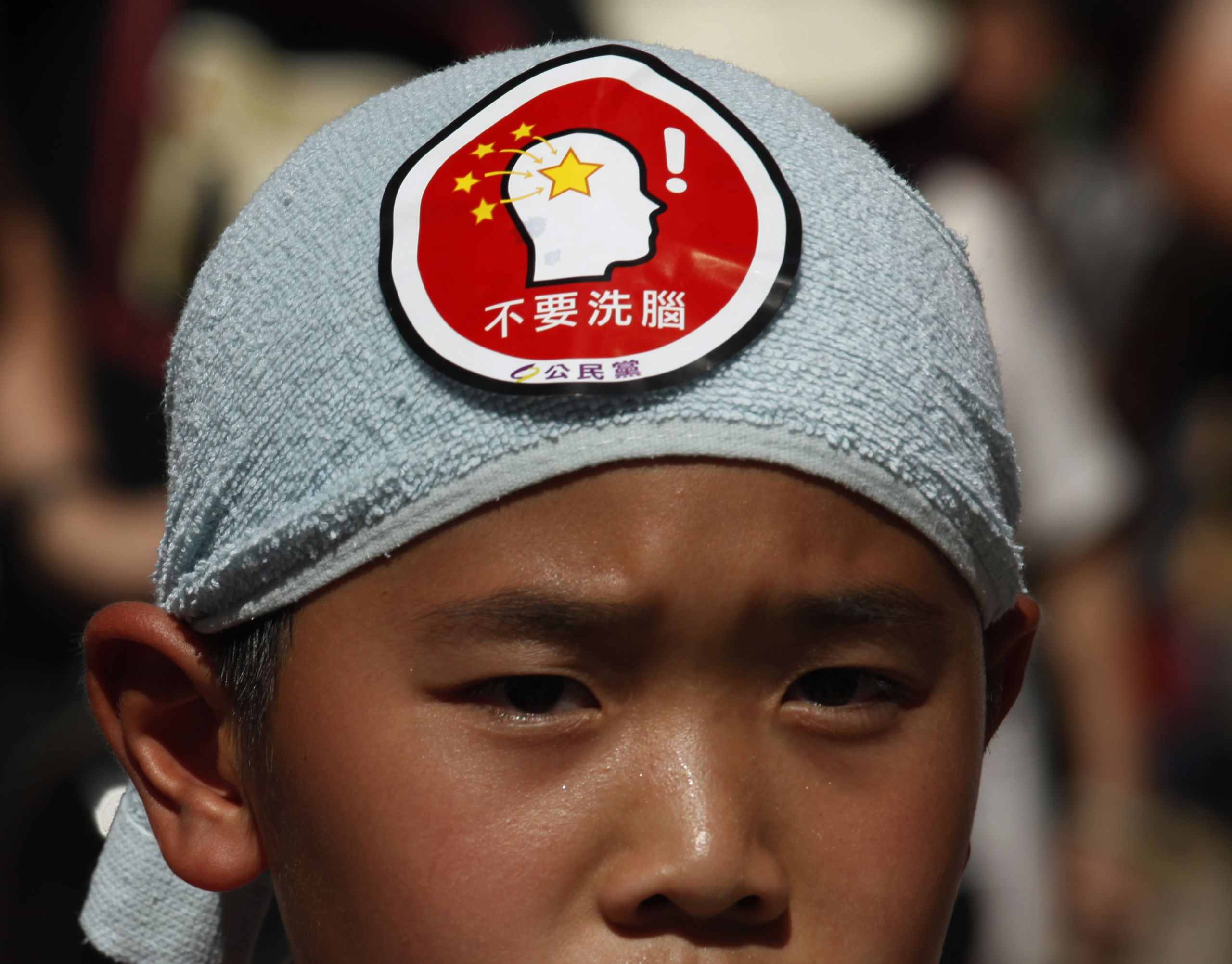
In March 2021, a sign appeared on a vacant lot in Sha Tau Kok, Hong Kong, which read "Patriotic Education Center." The specific plans for the plot are as yet unknown.
Lu Jiang has worried all along that the central government would conclude from the Hong Kong protest movement that the patriotic education campaign should also start with very young children in Hong Kong.
"The government doesn't want people thinking," Lu says, noting that once the CCP has a monopoly on what is considered true, any kind of questioning is too late.
And it seems his worst fears are being realized.
When the Hong Kong education bureau was done announcing reforms to the liberal studies curriculum, it followed up with a set of guidelines and curriculum arrangements for national security education.
The guidelines span at least 15 subject areas including Chinese language and history, geography, social studies, science, technology, general knowledge, music, morals, national and civic education, as well as economics, business studies, accounting and finance. They apply to primary through secondary school, each stage having different requirements and goals.
On the topic of criminal acts endangering national security, primary and secondary school students must learn the names of all of the actions deemed criminal under the National Security Law, as well as learning about the protective role of the police and the PLA. They must also be able to recite similar laws and regulations in other countries.
The guidelines call on kindergartens to help students learn about traditional festivals, music and art through stories, role-play, pictures, children’s songs and dances, so as to experience China's traditional culture, and to establish a Chinese identity as the basis for national security education.
And like their counterparts in mainland China, Hong Kong students will need to understand the symbols of state power that represent their country, including knowing how to sing the national anthem and how to correctly carry out a flag-raising ceremony while playing the national anthem. They must be taught about China's territory and geographical features, and understand the importance of homeland security and resource security. They must also be schooled in Beijing's line on important historical events like the Opium War, the War of Resistance Against Japan, economic reform and opening up, the promulgation of the Basic Law, and the establishment of the Hong Kong Special Administrative Region, so as to shape their national identity and ensure that they care about China's past, present and future development.
The guidelines drew strong criticism from many educators, who said they were a blueprint for brainwashing, and a re-run of the long-rejected patriotic education campaign first mooted for Hong Kong’s schools in the 2000s.
Many teachers complained that the content was hard to understand and difficult to explain to students.
Also according to the guidelines, national security involves 13 subject areas including political security, homeland security, military security, economic security, cultural security, social security, technological security, network security, ecological security, resource security, nuclear security, overseas interest security and security in other areas.
The education bureau warned that these topics can't be treated like any other topic. Students must be told that there is "no room for argument or compromise" on such matters.
So what does national security mean, exactly? The Hong Kong Federal of Education Workers (HKFEW) Wong Cho Bau Secondary School tried its hand at explaining it during National Security Education Week.
Pro-CCP Ta Kung Pao newspaper reported that many students declared at the school's event that they wouldn't have a home if they didn't have a country.
The boundaries between country, family and individual are blurred, and the meaning of security can also be interpreted as meaning social stability or territorial integrity.
Under the vast but vaguely defined umbrella term of national security, patriotic education with Hong Kong characteristics looks to reshape the identities of the next generation of Hong Kongers and possibly Hong Kong as a whole, bringing everyone in line to serve Beijing's political interests.
The parallels between patriotic education in mainland China and national security education in Hong Kong are striking and the similarities clear.
The campaign starts as a form of education in schools and on university campuses, but the real effects are felt far beyond that, as individuals become immersed in the CCP's public opinion management and control of information.
- The younger this process starts, the better, so the curriculum even includes kindergartners.
- One-track inculcation starts with the reform of liberal studies and culminates in the introduction of a comprehensive national security education curriculum.
- The state is installed as the supreme authority, coming even before family ties.
- Foreign forces are construed as likely to engage in subversion and other "criminal acts endangering national security."
- Any challenge to the system is pre-empted with the claim that there is "no room for argument or compromise" when it comes to national security.
- The flow of information is tightly controlled, with less and less room allowed for public debate on political topics.
- The first four requirements have basically now been achieved in Hong Kong through the implementation of the National Security Law and educational reforms.
- Full control over the flow of information and the negation of any challenge to the system, along with the total invasion of interpersonal relationships and controls on civil society, families and individuals are yet to come.
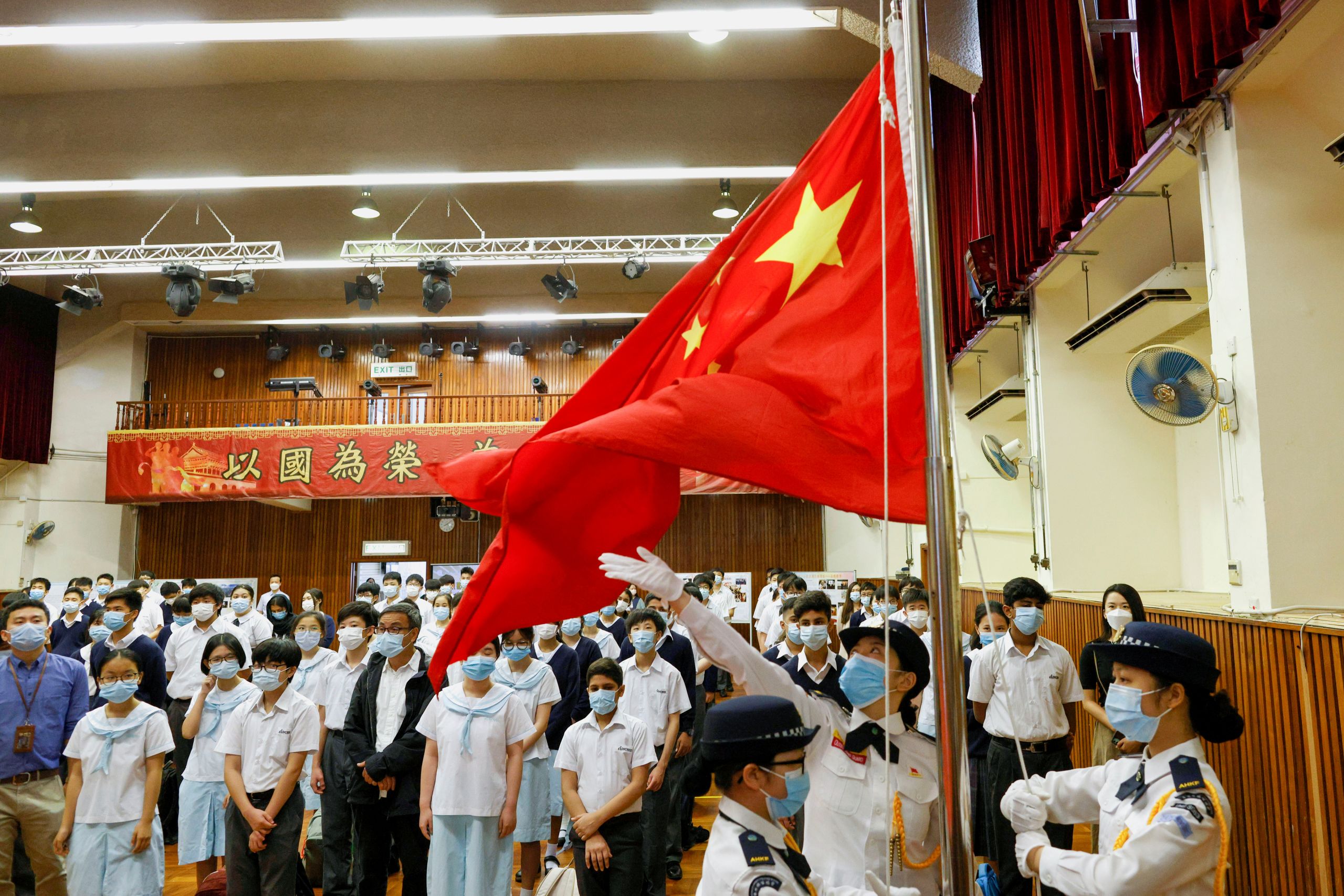
Students attend a flag raising ceremony during the morning assembly, ahead of National Security Education Day at a secondary school. (Reuters)
Students attend a flag raising ceremony during the morning assembly, ahead of National Security Education Day at a secondary school. (Reuters)
How long will Hong Kongers be able to enjoy the freedom of information that they took for granted, the city's proud tradition of a vibrant civil society, or its status as a world city?
Is there even a future?
Is there even a future?
Soon after the national security education curriculum was announced in Hong Kong, Tz-kin’s school rejected his teaching plan. Amid the harsh political atmosphere engendered by the National Security Law, his school opted to self-censor, requiring Tz-kin to stick to official narratives and language, and not to include any personal opinion or unauthorized quotations. Tz-kin was shocked that students as well as teachers would lose the freedom to think independently.
Amy is unhappy too.
The national security education curriculum included guidelines on the teaching of history. Junior high schoolers were to learn that "Hong Kong has been Chinese territory since ancient times" from a historical perspective, via the Opium Wars and the history of post-war British colonial rule in Hong Kong. These histories would teach them the importance of safeguarding China's national sovereignty and territorial integrity. Secondary school history was to teach students that Hong Kong became a part of Chinese territory following the unification of the country by Emperor Qin Shi Huang in 256 B.C.
Amy was deeply confused by this; after all, there is a huge difference between the map of China from the Qin Dynasty and the People's Republic of China. Until a few months ago Amy had tried to persuade her husband that the education bureau guidelines were just that - guidelines. She argued that Hong Kong's education system had always been different from mainland China's, and that the government had limited power over schools.
Hong Kong schools can be roughly divided into three categories.
Public schools provide free primary and secondary education. They must teach a curriculum set by the education bureau, while direct-funded, private schools, which charge tuition and are set up by an independent sponsor, are able to customize their curriculum, as well as set their own fees and admission criteria. International schools, which admit both foreign nationals and local students, charge relatively high tuition fees but can teach whatever they like.
Amy had always thought that private schools - which currently account for around 20 percent of all schools in Hong Kong - weren't subject to the education bureau. After all, most of their income come from parents, so they should enjoy a certain degree of educational and administrative freedom.
"And don't forget we still have the internet and the education kids receive at home!" she argued.
But now, Amy has changed her approach in the classroom. She has stopped cracking jokes. Students have also become more cautious and less willing to express their personal opinions in class.
Amy has been warned by her peers to be cautious about her words and her actions, for fear of being reported to the authorities by colleagues and even students.
Recent figures show that the education bureau received a total of 269 professional malpractice complaints from teachers on matters linked to "social unrest," and upheld 160 of them.
By the end of April 2021, the bureau had canceled the qualifications of three teachers, issued letters of criticism to 42 and written warnings to 43.
During the same period, three teachers were convicted of taking part in illegal acts, according to the education bureau. One had their qualifications revoked, while the other two were fired.
Another six teachers indicted for serious crimes were suspended from teaching.
On National Security Education Day Amy and Lu Jiang’s child was given patriotic propaganda stickers at their kindergarten. This was the last straw.
"The child doesn't even know what the word 'patriot' means," Amy fumes.
Now she is looking at other job options, maybe even an administrative post at an international school. She and Lu Jiang have sent their child to an international school, paying a hefty price for a limited amount of freedom.
Tz-kin is still wavering, unwilling to resign but unsure of what the future holds. He recently learned the term "lying down" from the Chinese media, and he liked it very much, seeing it as a model for practicing passive resistance.
"I will teach the script I'm given, and if my students fall asleep in my classes, I won't care too much," he says.
Tz-kin would rather keep teaching than leave the task to others who may be less scrupulous.
"I will always act according to my conscience when it is safe to do so," he says. "If I give up my job, then the state apparatus will gain full control over the language and thought processes of the next generation in Hong Kong."
On his Facebook page, where he has now blocked the majority of his friends and colleagues, Tz-kin types out a quotation from former Hong Kong colonial governor Sir Alexander Grantham, who wrote in 1948:
"There are those, and to my mind they are the most evil, who wish to use schools as a means of propaganda and poison the minds of their young pupils with their particular political dogma or creed of the most undesirable kind."
But after thinking about it, Tz-kin deletes the post, line by line, until only the blank phone screen is left, glowing white into the dark night.
(Names have been changed at the interviewees' request.)


 Built with Shorthand