The Ins and Outs of Pandemic Home-Schooling
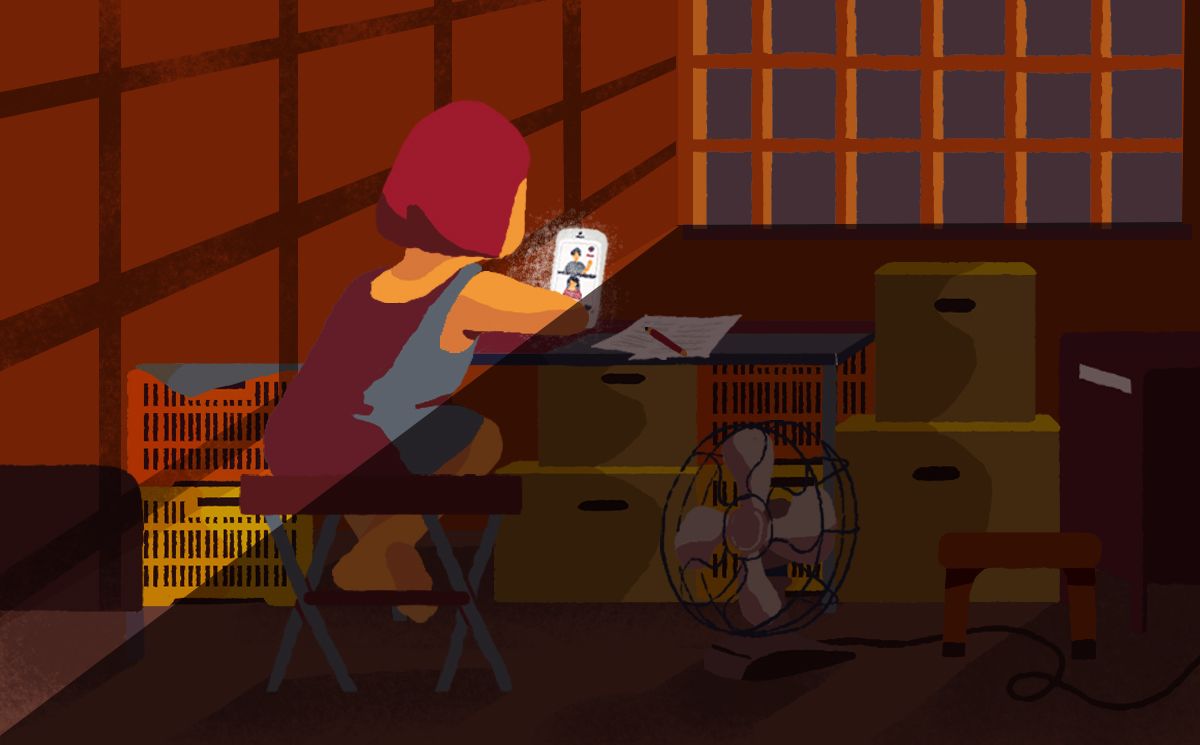



Yanjiaqiao Village in the southeast corner of Jiangsu Province, China is over 700-years-old and has a population of less than 6,000 people. Yanjiaqiao Primary School was founded in the early days of the Republic of China and is also around 100 years old. In this rural elementary school, where 70 percent of the students come from other parts of the country, the saying "knowledge changes destiny" is not always true. For students impacted by the Coronavirus epidemic who rely on the internet to take classes at home, this reality has become clearer: having a smartphone and wireless network can connect them to the classroom, but without this connectivity, they are forced to defer their studies.

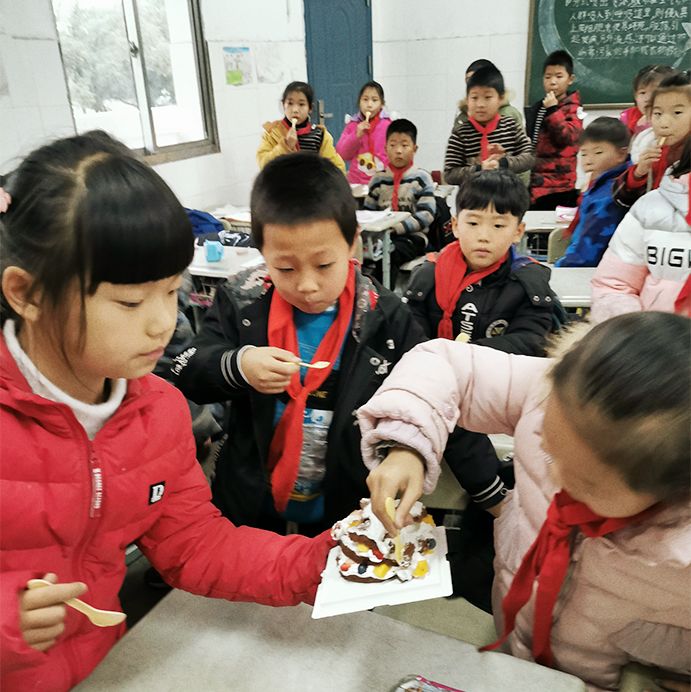
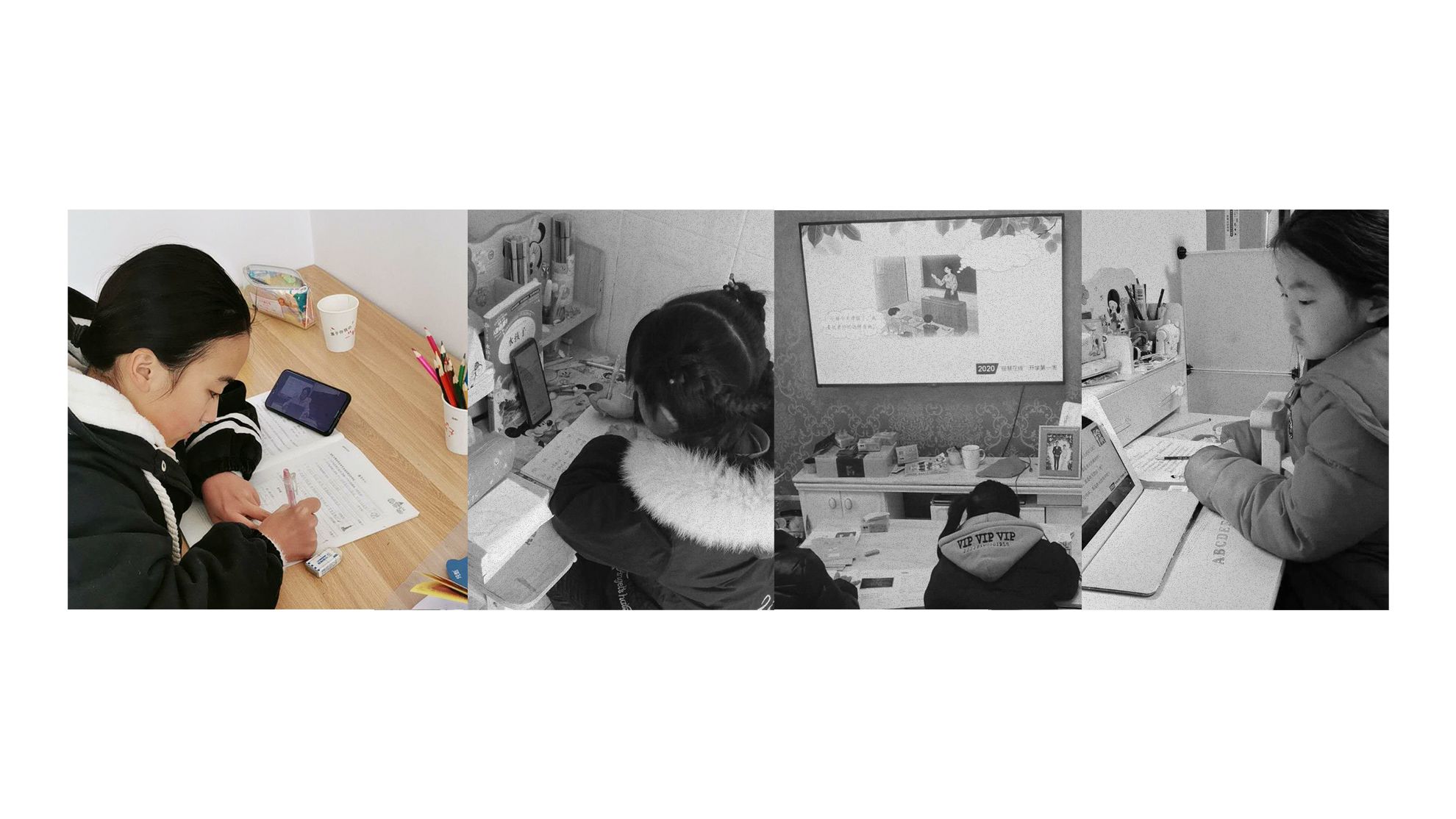
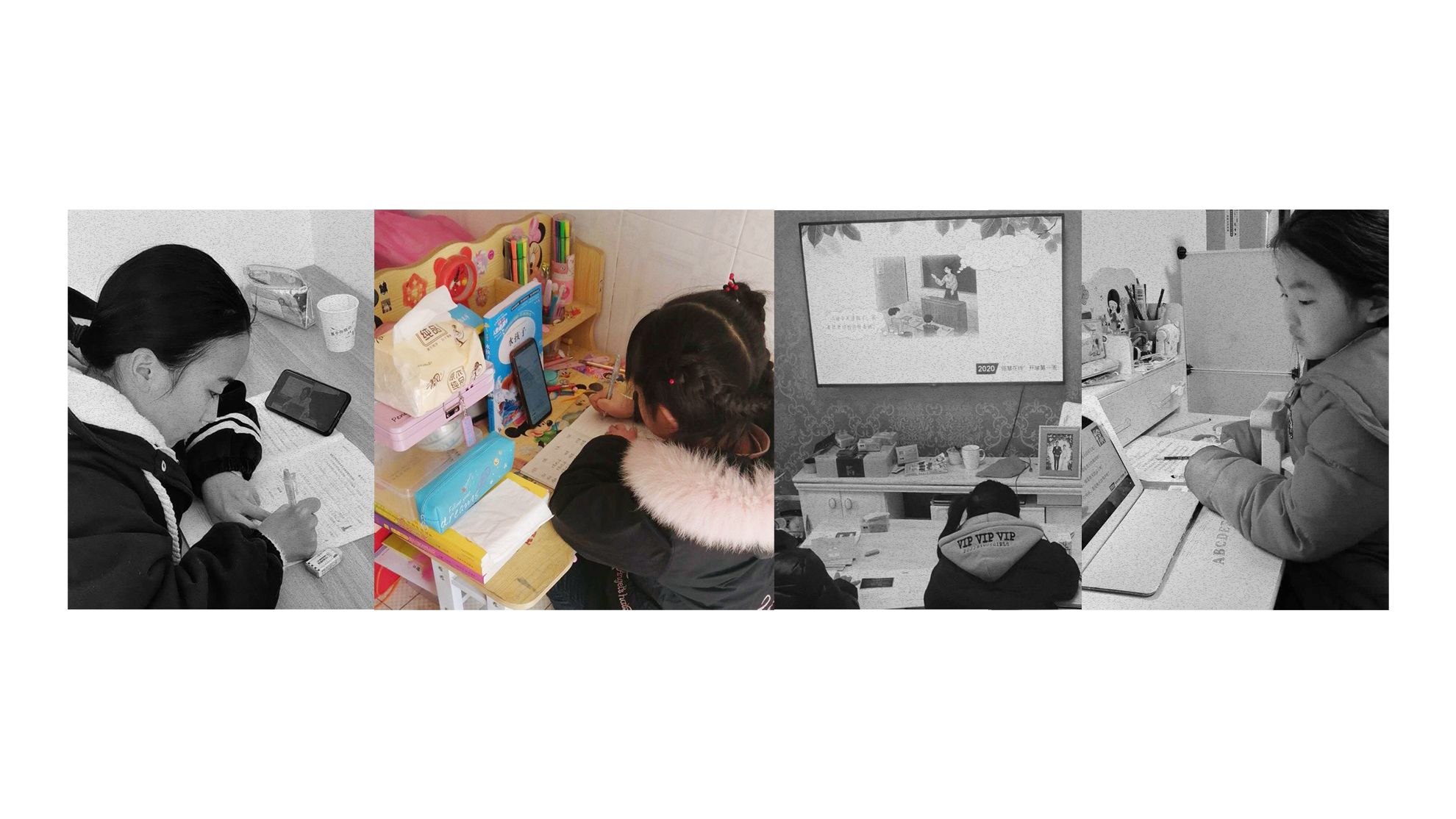
Wang Juan's students
Wang Juan's students
The schools are due to open on Feb. 10. But when the coronavirus epidemic hits China, the students are told not to return. Instead, they are to log onto a website and livestream their classes. So, one morning at 9 a.m., Zhang Zijun, the elder of two brothers, props his smartphone up on his desk and watches the livestream; his brother Zhang Zijie watches his class on the desktop computer in the next room. Chinese class runs from 9 a.m. to 9:20 a.m., math from 9:40 a.m to 10 a.m., and English from 10:10 a.m. to 10: a.m. Their mother, Wu Fang, flits back and forth between the two rooms, making sure they don't lose concentration while trying to absorb the material herself to better help them with homework. As soon as class is over, Zijun has to hand over the smartphone and Zijie the computer.
That afternoon, the two boys do their homework. But there's a problem. They can't physically go to the school to pick up their textbooks and exercise books because of the coronavirus lockdown. Their father, Zhang Guorui, looks around town, but the bookstores are either shut or out of said books. Zhang has no option but to download the electronic materials sent by the teacher. He buys two reams of paper and prints out the files using the printer at the factory where he works. He does the same for Lu Tian who lives in the same alley.
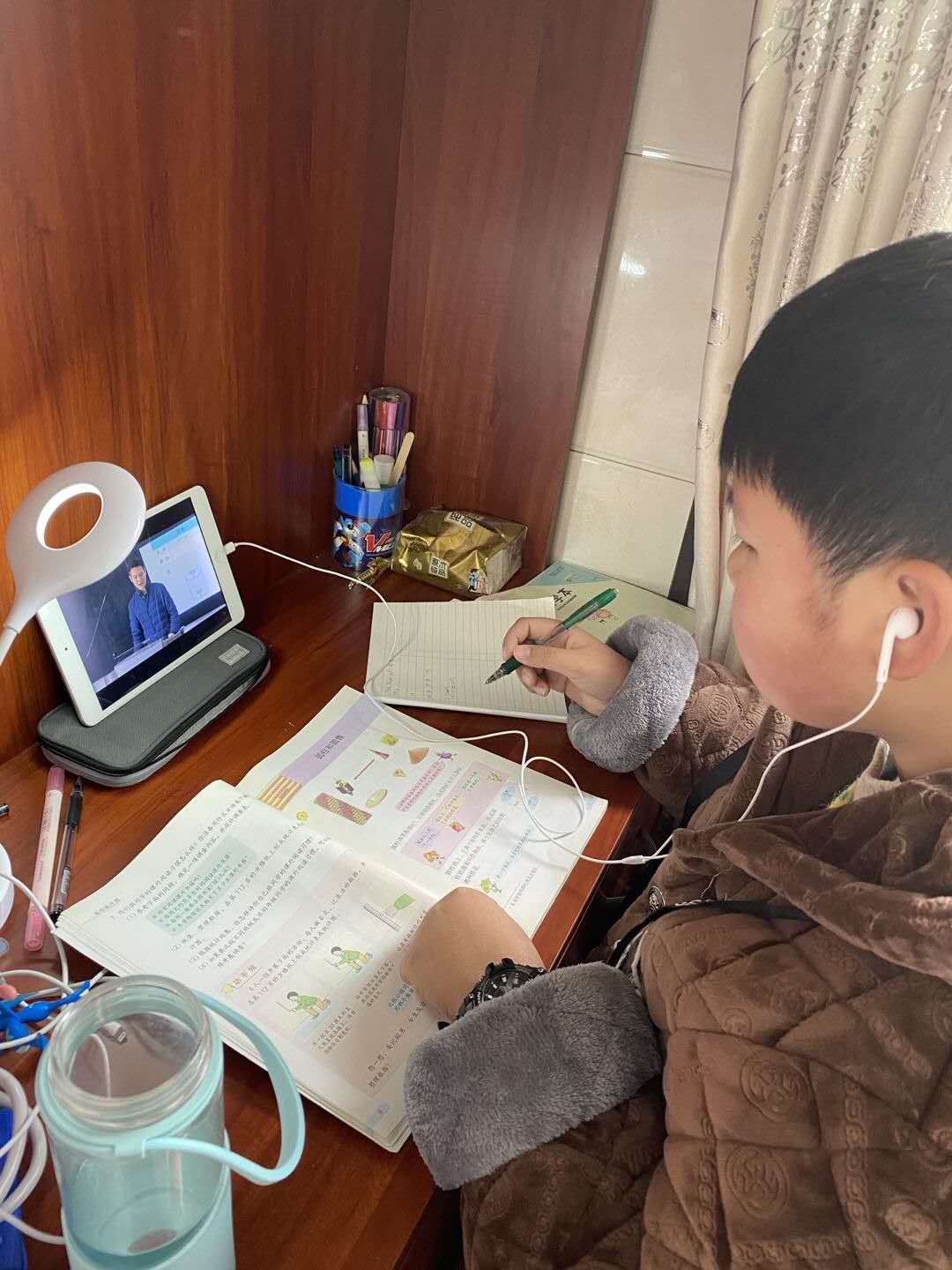
When her sons are done with their homework, Wu Fang checks it and makes them add any corrections. That evening, the two boys take turns to recite the day's texts and main learning points to their mother. Their family isn't greatly affected by the new arrangement. Neither are Zijie's studies; in fact his teacher sends out his homework out as an example to other parents. Nevertheless, the two boys don't like studying online. They miss playing with other kids, and playing soccer during P.E. Now, they have to study in their rooms, day in and day out. When their teacher Wang Juan visits their home, they ask him excitedly, "Teacher, teacher, when is school starting again?"
Zhang Guorui also wants to know. He feels that the essence of a good education should be about tailoring teaching to the individual. But the lack of in-person interaction in the online classes mean there’s less individualized and targeted teaching. Material that usually takes a couple of classes to cover is delivered in a single monologue now. For example, in English class the teacher just speaks English, and sometimes the boys don't understand what is being said. Wu Fang graduated high school, but didn't take her English studies very seriously. There are a lot of words she doesn't know, and she has to wait for her husband to come home to help the boys. What are families like theirs to do?





One day, the school principal, Zhang Weiyan, tells Wu Fang that he can't get through to Lu Fang's family. So Wu Fang gets on her bike and rides down to Lu Tian's family home. Usually, Lu Tian's mother, Yang Fengqin, sits in the doorway to do laundry, and her cell phone is left on the table inside, ringing and ringing. "Why do you never keep your phone with you?" Wu Fang complains. "Oh, I just never got into the habit of it," laughs Yang.
Lu Tian and Zhang Zijie are both 10 years old, and in the same class. Yang Fengqin, 56, is still bundled up in her padded jacket on a 70 degree spring day, her age showing in the deep wrinkles on her face. Kids at school sometimes tease Lu Tian when she goes to meet him, saying, "Your grandmother's here to pick you up." Yang was previously married, back in her hometown of Lianyungang. Both daughters from that marriage are now in their 30s. She fled her abusive ex-husband, hiding away and finding work in Yanjiaqiao, before meeting a long-term bachelor two years her senior, Lu Baoguo. The two of them moved in together. They never expected Yang to get pregnant at the age of 47. She gave birth to Lu Tian.
Lu Tian's birth was considered an "excess birth" under the one-child family planning policy, because of the two daughters from Yang Fengqin’s previous marriage. So Lu Baoguo paid the 80,000 yuan fine. He works in the local tire factory, bringing in a monthly salary of 3,000 yuan. He has 500 yuan deducted from his salary every month to pay off the 80,000 yuan fine, which won't be paid off in full until Lu Tian graduates from elementary school.
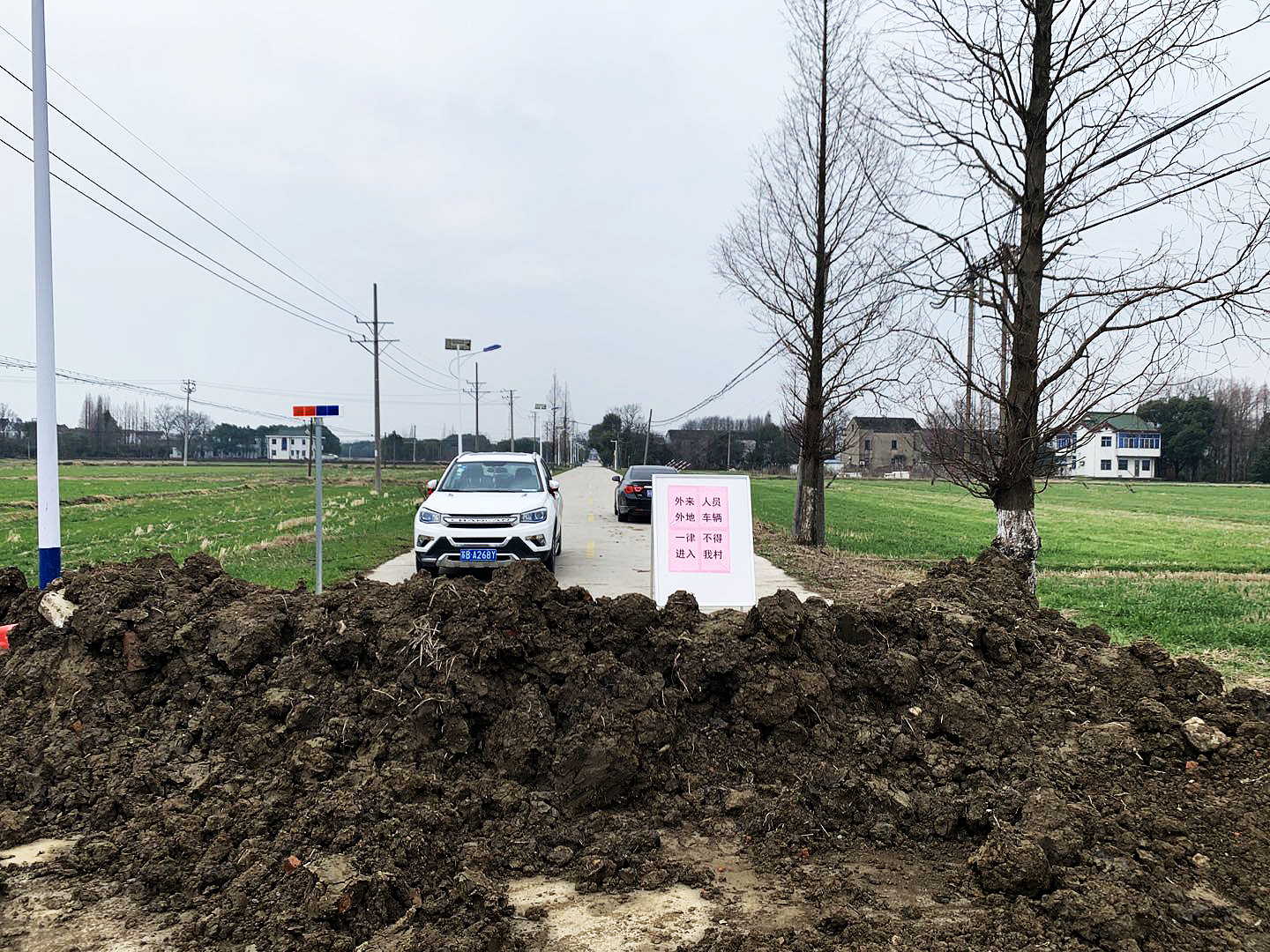
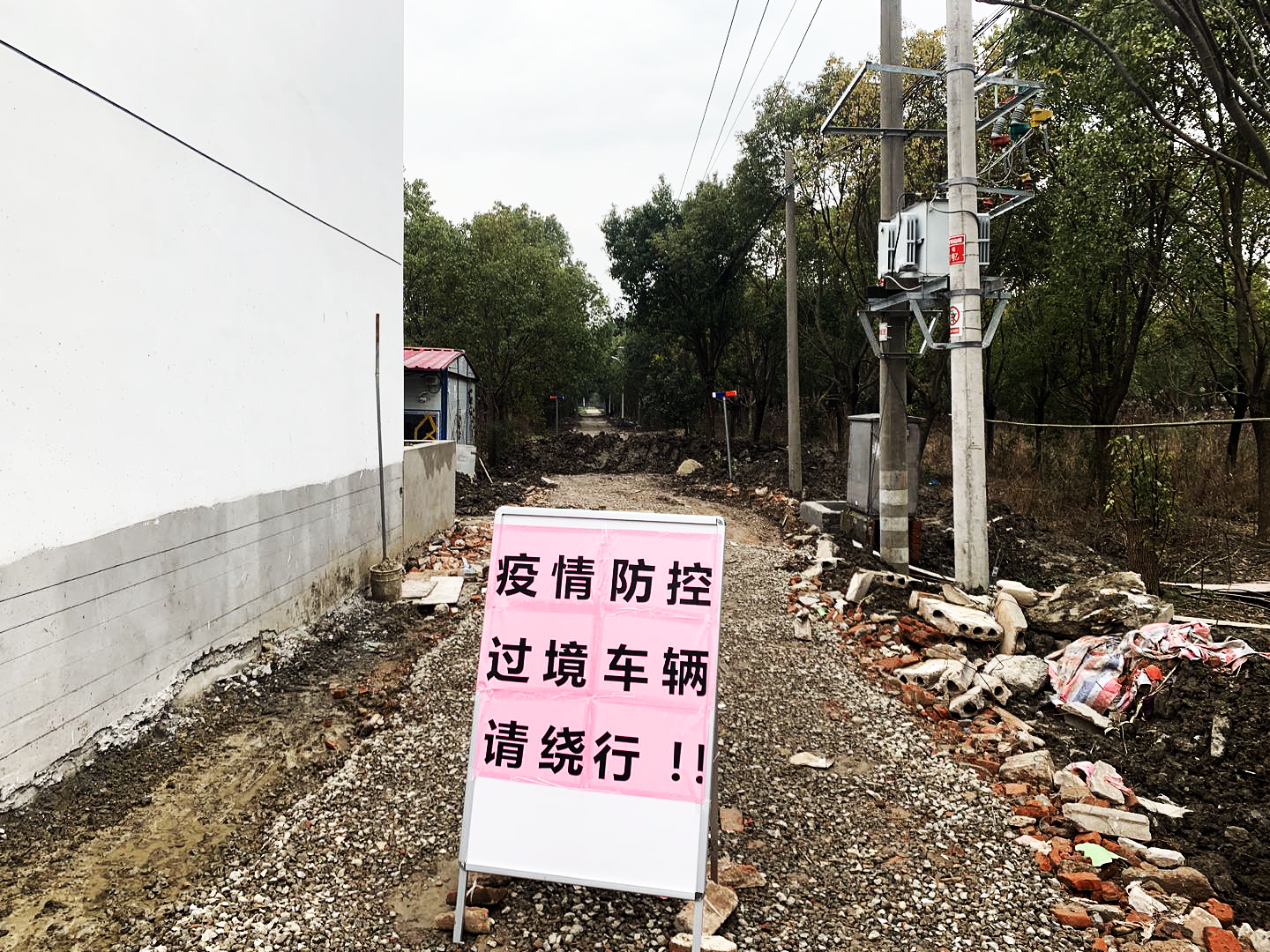
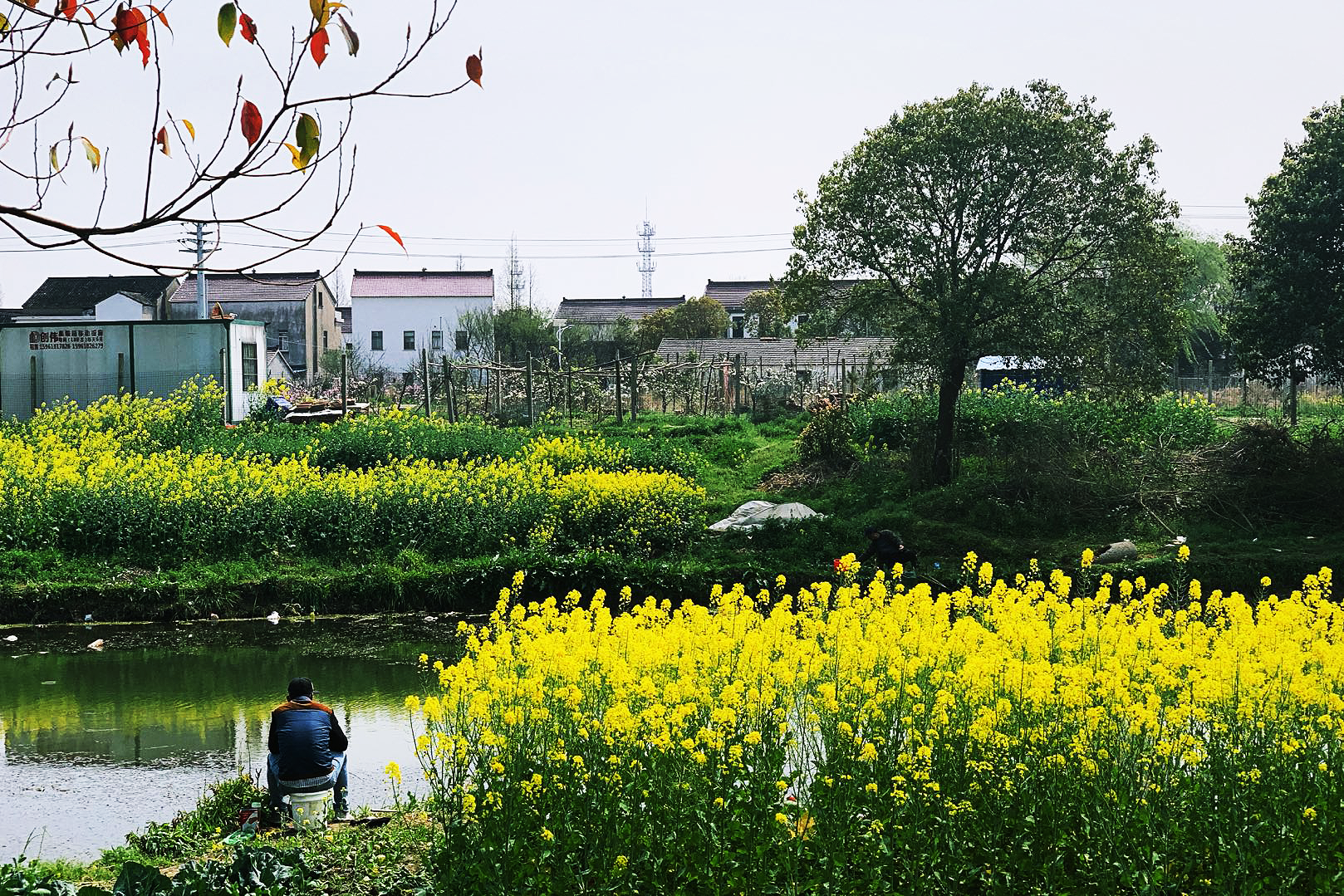
Yang hears from Wu Fang on Feb. 2 that online classes will start on Feb. 8. But the family has no computer or TV. All they have is an off-brand smartphone that fell in water a year ago, and is too outdated even to install the QQ messaging app. Yang has been thinking about buying a cell phone for Lu Tian, but the nearest mobile phone store still open is in the neighboring town 20 minutes away by bike. According to the village’s strict quarantine rules, nobody is allowed in or out unless that village is their recorded birthplace. Two volunteers stand guard on the main road around the clock. Yang Fengqin sneaks out on her bike, riding along field paths, being careful not to be spotted by the volunteers. She finally arrives at the phone shop an hour and a half later. "Because I know this place like the back of my hand," she says.

Road closure due to quarantine rules.
Road closure due to quarantine rules.
She remembers Wu Fang's advice to "get a slightly better one, good for a couple of years." Her eye spots a 1,998 yuan Huawei model with a big screen and anti-glare technology. But she only has 1,500 yuan on her. By the time she retraces her steps and borrows 500 yuan from a neighbor, it's getting late. So she makes the round trip of some three hours again the next day, and manages to buy the smartphone.
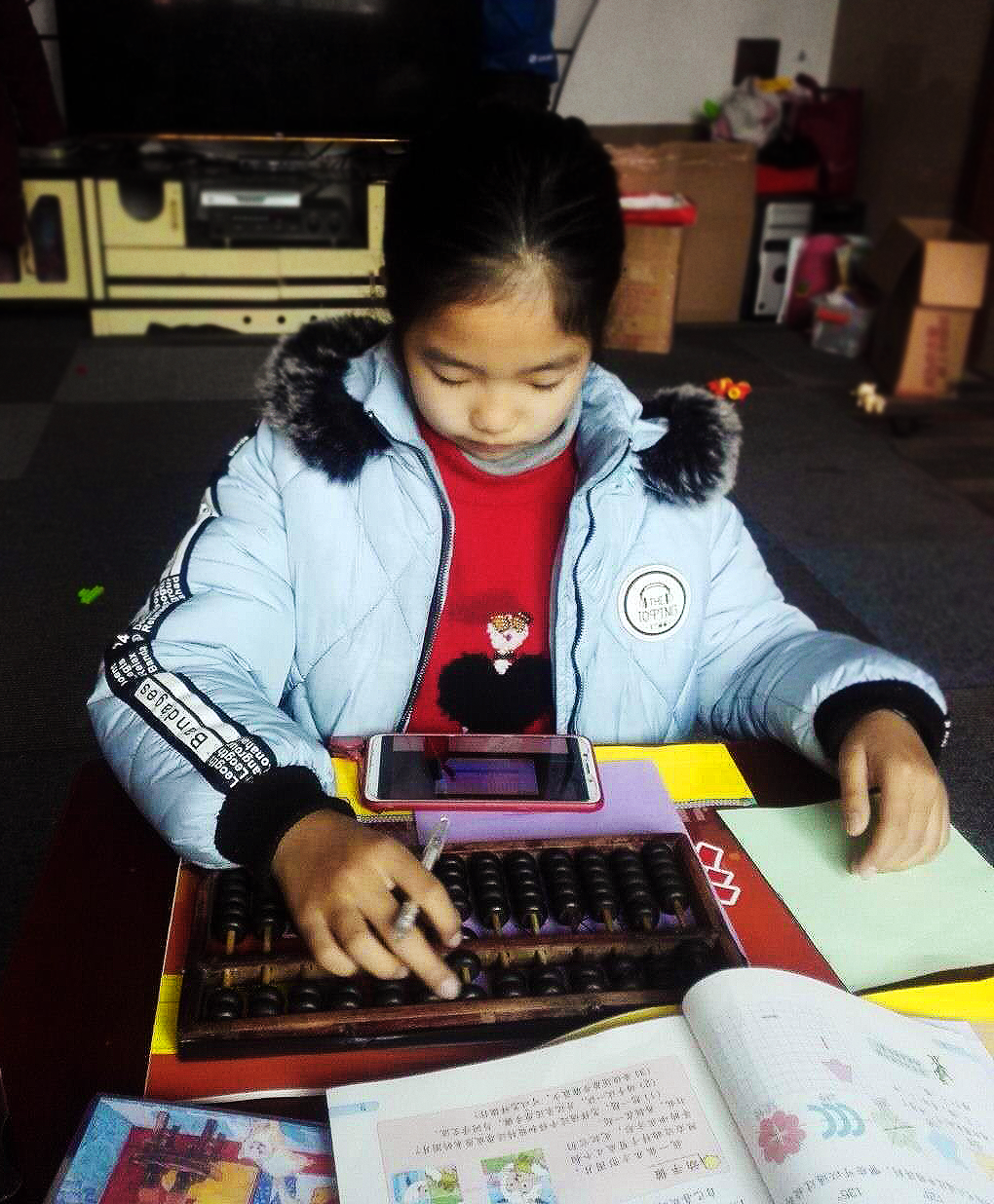
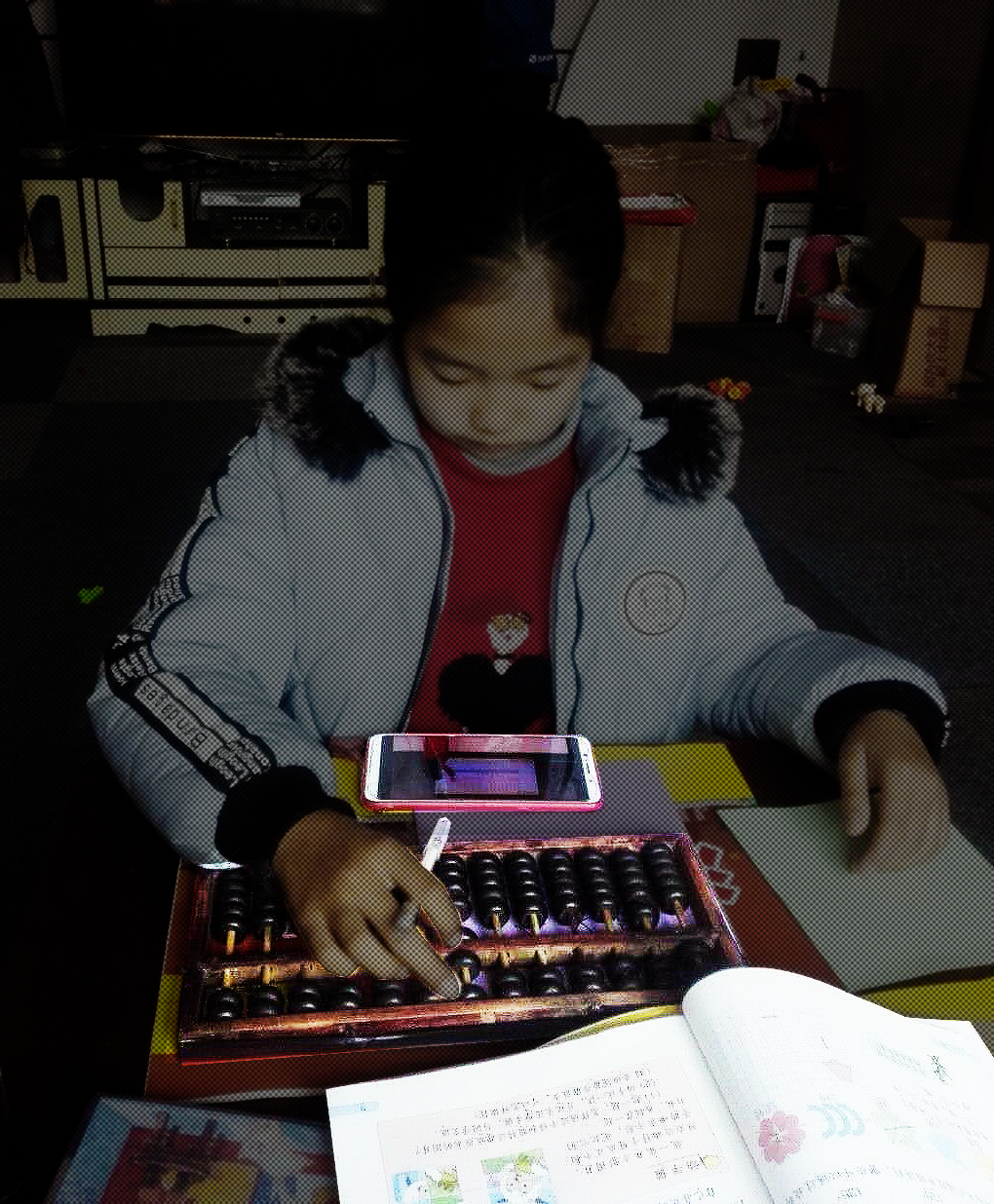
Wu Fang teaches Yang and her son how to use it. Yang feels tired of staring at the screen, and starts fidgeting, losing interest after a short while. But her son Lu Tian picks it up very quickly. Later, he confesses that someone taught him how to use a smartphone during his first-grade summer vacation, when he stayed with a classmate. So Lu watches the first class of the new semester livestreamed on Feb. 2. But two days later, he taps on the link to find it no longer works. He asks his neighbors, only to find that he has used up the 100 yuan that was pre-deposited on the phone. The girl next door lets Lu Tian use her family's Wi-Fi. He tries this a couple of times, but the signal is intermittent at best, and the livestream keeps breaking up. So Yang Fengqin borrows another 500 yuan, and pays for a year's worth of broadband.
Wu Fang sends over the printed study materials, but then Yang Fengqin has problems getting hold of the homework assignment the teacher sent out every day after that. "I didn't want to keep bugging people," Yang says. So, every couple of days, she heads to the town's printing shop. The print shop charges one yuan a sheet, making her print job cost a total of 100 yuan.
She isn't too worried about being able to repay the money. Her husband Lu Baoguo is due to receive a subsidy of 2,400 yuan as a farming family of three who lost their land. Lu’s lifetime spent working the fields has yielded a stack of A4 paper, a smartphone in his son's hand, and an invisible network in the ether.
Lu Tian is a mischievous kid who gets poor grades in school, and whose hands are often grubby. In the 10-minute break between online classes, he tells his mother he’s stepping outside just for a short while, but he loses track of time and doesn't come back for an hour or two. Yang pinches Lu Tian's butt and yells at him: "I spent all that money on you, and all you can do is go out and play!"
Most of the walls in the family home are stark and bare, making the one poster that does hang there stand out all the more. The scene is Tiananmen Square, with blooming flowers and a sky full of fireworks. China's president, with the First Lady on his arm clad in a cheongsam, gestures as if beckoning the family that lives within these four walls. Above the Chairman Xi's head are three, red bolded characters, "The Chinese Dream."



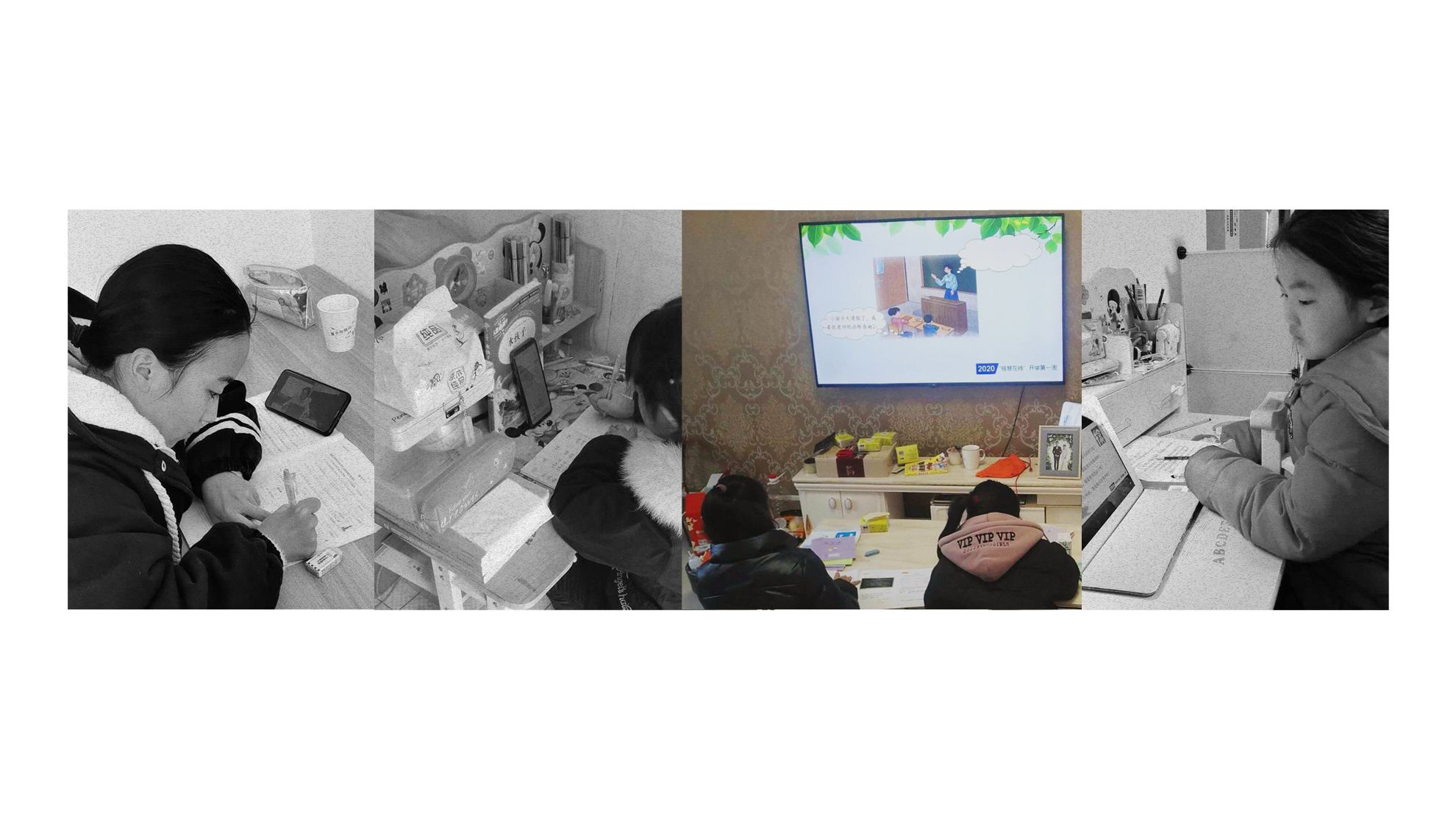

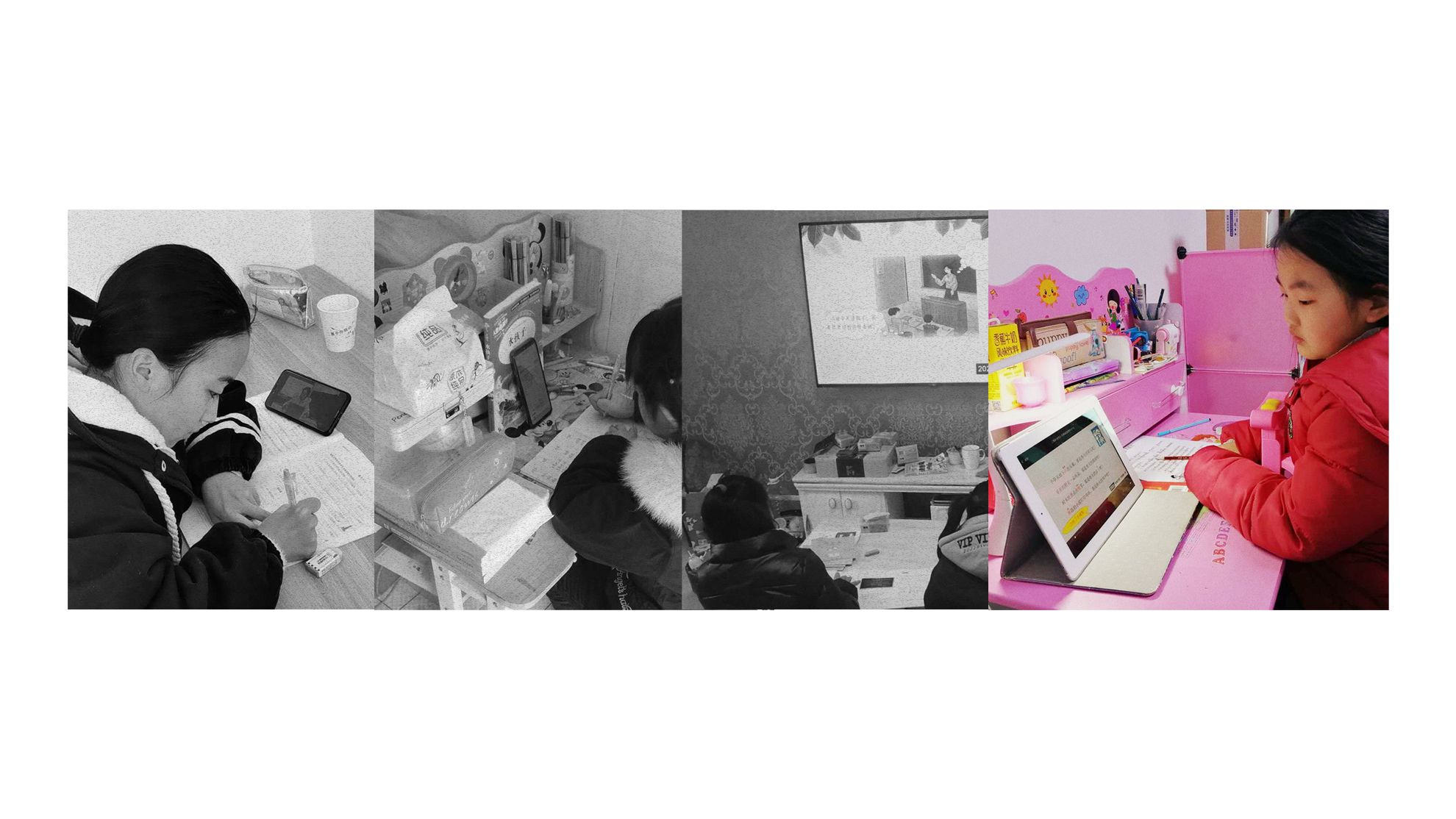

Hu Ruoqing, who has been marked out as a particularly good student by her teacher, has failed to hand in an assignment. Hu is a soft-spoken, shy child who tends to hide behind other children, but her grades always place her in the top three in the class. At first, Wang Juan thinks that Hu has just gotten a little behind, but as time goes by, she starts to feel that something isn't right. She tries to call Hu Ruoqing's father, Hu Wei. She tries seven times in a row, always met with a busy signal and then voicemail.
Later, Wang chats a teacher from another school in a WeChat professional group, who says there is a Hu Ruobing in their class who hasn't submitted any homework in days. "I haven't been able to contact the parents," the teacher says. Wang replies, "I think I have the elder sister in my class, Hu Ruoqing. I can't reach her parents, either." Wang starts to worry, and looks through Hu Ruoqing's student record, noting that she lives in Nancun. The village head is Wang’s schoolmate, and she calls him. The village head does a search, and tracks down Hu Wei to a temporary factory job. Hu Wei later explains that the factory machinery is very loud, and he can never hear his phone ringing. He says his daughters haven't attended class because there is no equipment at home for them to use.
So, one evening in mid-March, Wang Juan pays a home visit to Hu Ruoqing. Using the address provided by Hu Wei, she drives through fields, before arriving at a farm track with no more road, where the girls' father is waiting. They take a tortuous set of turns until they arrive at the last house in the village. Wang Juan thinks they have arrived. But Hu Wei ducks into a hidden doorway off to one side, to reveal a dimly lit shack where the family lives.
The living area is less than 20 square meters, with a stove in one corner, and pots and bowls hanging on the dark walls. Two beds stick out diagonally across the room, divided by a curtain, providing some kind of separation. The rest of the room is filled with a wardrobe, a dining table, and a desk, leaving very little room to move around. Hu Wei lives here with his two daughters and his elderly mother, who cuts open a watermelon for their guest. The pink juice runs off the corner of the table and drips to the concrete floor, attracting a black dog from outside.
The family is from Suqian in Jiangsu Province. Hu Wei had them join him after he moved here to work as a migrant laborer over a decade ago. At the start, his daughters led a happy family life, and their own rooms. That is until Hu Ruoqing was two years old, when "their mom ran off with another man," Hu Wei explains. Since then, their fortunes have dwindled, and here they are. Hu seems unwilling to say much more.
Wang Juan asks Hu Ruoqing to bring her his daughters’ homework books. Every assignment for the past week, and nearly all of the assignments for the past month, has been diligently completed. Hu Wei said that they were lucky enough to get a call from a mobile company a week ago offering to install free broadband with no usage fees, so they needn't worry about the huge phone bills from using data to attend online classes. Wang Juan realized that this was likely something to do with a recent government regulation. Clearly, the Hu family was benefiting from the "Notice on Reporting Online Teaching and Learning Needs" which ordered the "acceleration of internet access in remote rural areas."
Now Hu Wei goes out at 5:30 a.m to his job as temporary worker in a town an hour away, leaving the family's only smartphone for his daughters. The grandmother, now in her 60s, also goes to pick up extra income doing odd jobs at a lock factory. At 9 a.m., Hu Ruobing, who is in the fifth grade, watches her first livestreamed class, while her sister Hu Ruoqing does her homework. An hour later, the smartphone changes hands. The elder sister helps the younger with the subjects she doesn't understand, but there is nobody to help her; her grandmother is illiterate, and her father left school after third grade.
Hu Wei says it is no inconvenience to him not having the smartphone. But he does worry about whether his daughters are studying properly, and particularly whether the older daughter will be led astray on the smartphone. She has already figured out his password and has used the smartphone to chat with a boy on QQ. Hu Wei suspects she may be on the way to her first love.
Wang Juan keeps telling Hu Wei, "Hu Ruoqing is among the top students in her class. I heard that Hu Ruobing's grades are also good. As her parent, you need to take this seriously." Hu Wei just nods at this. As she leaves, Wang Juan knows it won't be easy for these two kids to develop their academic talents in this environment. Will this family support them to stay in school after their nine years' compulsory education is done?
(Names have been changed to protect interviewees' identities.)



 Built with Shorthand